
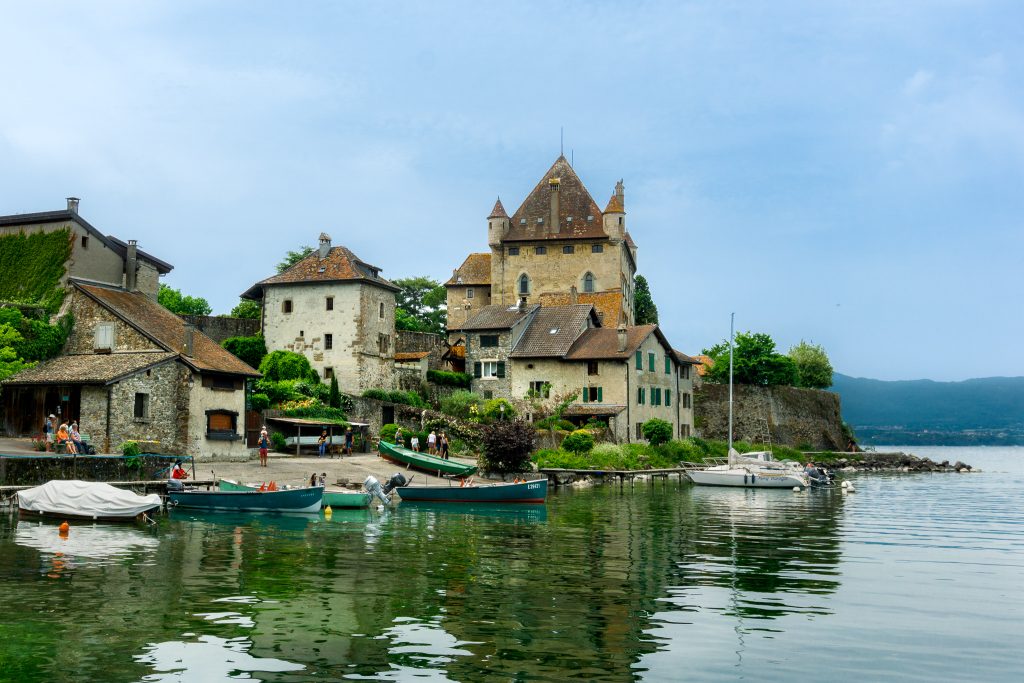
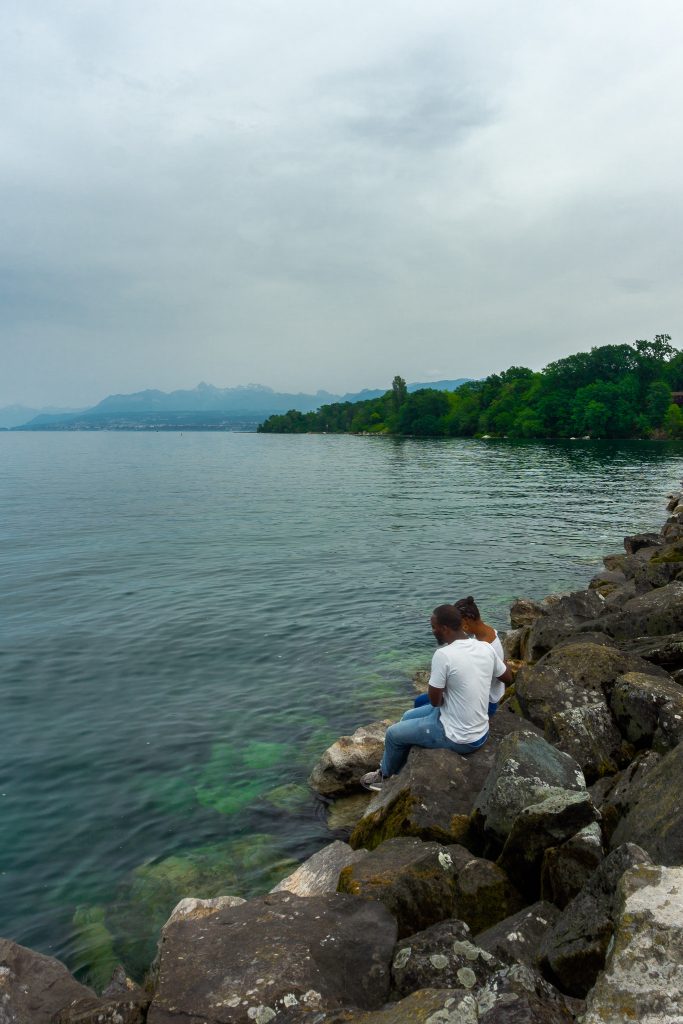
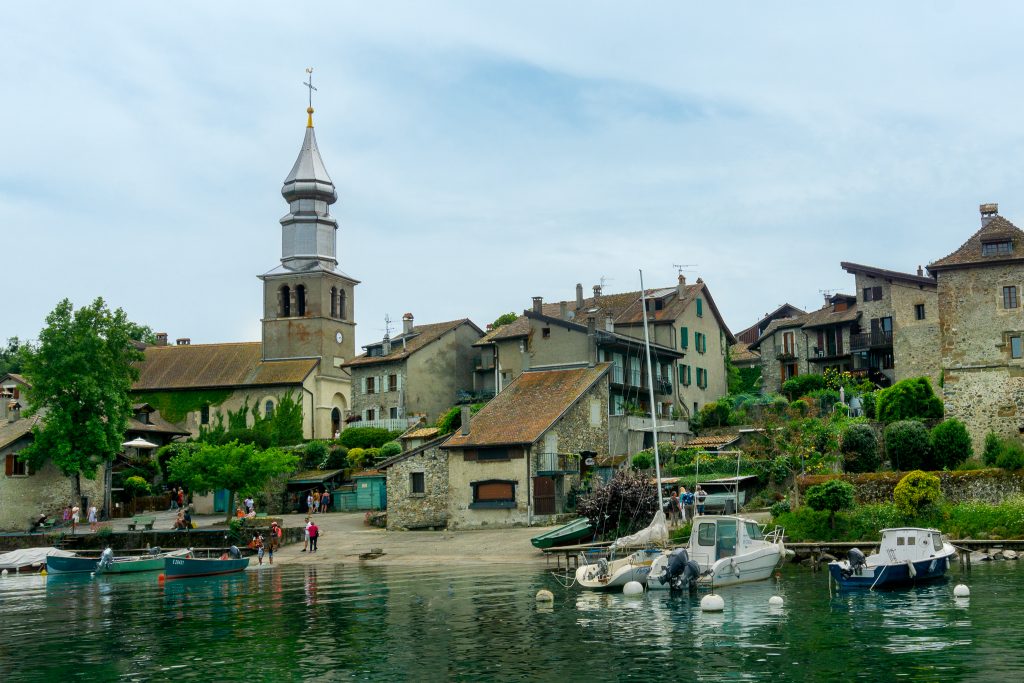
On the shores of Lake Geneva in France, lies a picturesque flower-rich medieval village called Yvoire. In 2006 the village celebrated its 700th founding anniversary and despite the fact that so many years have passed, Yvoire preserved its unmissable medieval vibe. It’s packed with stone houses and wooden balconies brightly decorated with flowers. Going through the village gates is literally like going back in time hundreds of years! Come, let’s discover all the best things to do in Yvoire, a fairytale medieval village in France.

This website uses affiliate links thanks to which we may earn a commission for purchases you made at no additional cost to you. If you like the content, consider using those links to support us. Thank you!
Yvoire, France FAQ
Yvoire is located in France on the southwestern shores of Lake Geneva (or how French people call it – Lac Leman), between Evian-les-Bains and Geneva, which both are only about 25km away. To be even more exact, Yvoire is part of the French department of Haute-Savoie in the Auvergne-Rhône-Alpes region.
Yes, yes, and yes! If you’re somewhere around Lake Geneva, don’t hesitate to visit Yvoire. It’s one of the most beautiful French villages that you shouldn’t miss. It’s no wonder that over the last few years, Yvoire has become one of the most popular day-trip destinations on the shores of Lake Geneva!
Besides being a well-preserved and super charming medieval village, Yvoire is also well-known for being part of the prestigious list of France’s most beautiful villages (Les Plus Beaux Villages de France). It’s also a 4-flower Village Fleuri since the 1950s, and in 2002 won the International Trophy for Landscape and Horticulture!
Yvoire is amazing all year round, but it’s exceptionally beautiful during spring and summer when it’s filled with blooming flowers at every step. If possible, we also recommend visiting the village on weekdays rather than weekends. Crowds are a bit smaller, making sightseeing more enjoyable.
What is the history of Yvoire, France?
Yvoire’s history dates back to the beginning of the 14th century. Back then, castles around Lake Geneva played an important role in protecting the trade routes through the Alps and along the lake. And Yvoire’s strategic position also didn’t escape the eye of the Count of Savoy. He fortified the village by building the castle and the walls, and as expected, the village played an important military role, which gave its inhabitants certain rights and privileges.
Later, from 1536 to 1591, the region was occupied by the Bernese. During that time, Yvoire was looted, its fortifications dismantled, and as a result, it lost its military role.
Yvoire became forgotten and simply became a village of farmers and fishermen, and stayed this way for hundreds of years. Only the 20th century put Yvoire back on the maps. Then it started becoming a popular tourist destination thanks to its well-preserved medieval buildings.
Things to do in Yvoire, France
Nernier & Rovoree Gates
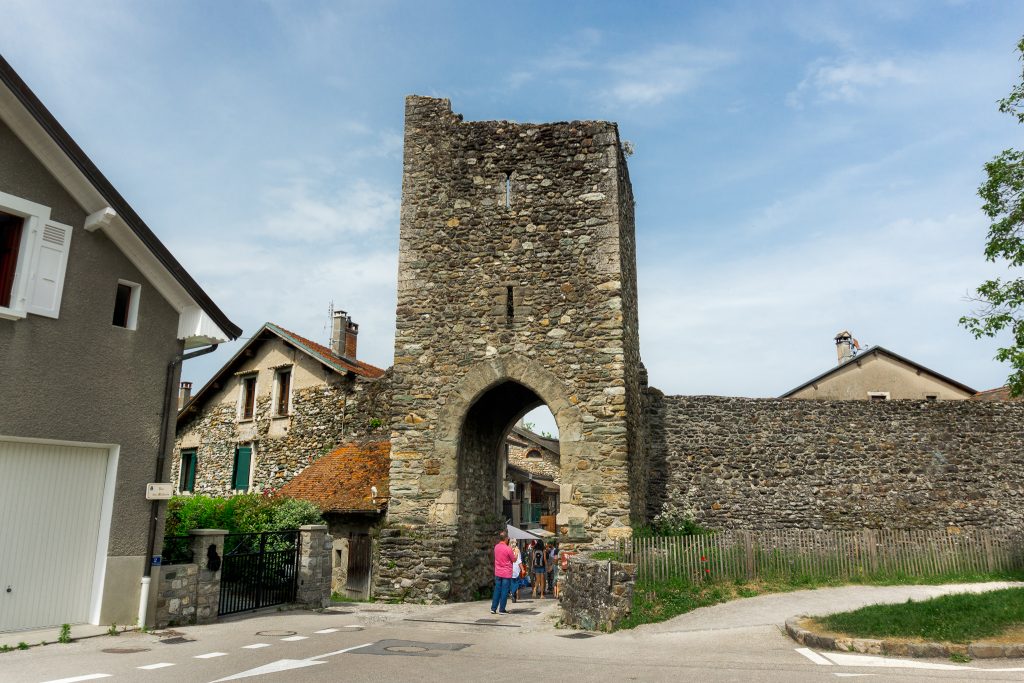
Nernier and Rovoree Gates (fr. Porte de Nernier and Porte de Rovoree) date back to the 14th century. In the Middle Ages, they controlled access to Yvoire village. The Nernier Gate, also known as Geneva Gate, gives access to the village from the West. On the other side, Porte de Rovorée, also known as Thonon Gate, gives access to Yvoire from the East.
Nowadays, any of these two gates will teleport you back in time hundreds of years. Just go through one of them and in just a few seconds you’ll find yourself in a totally different world!
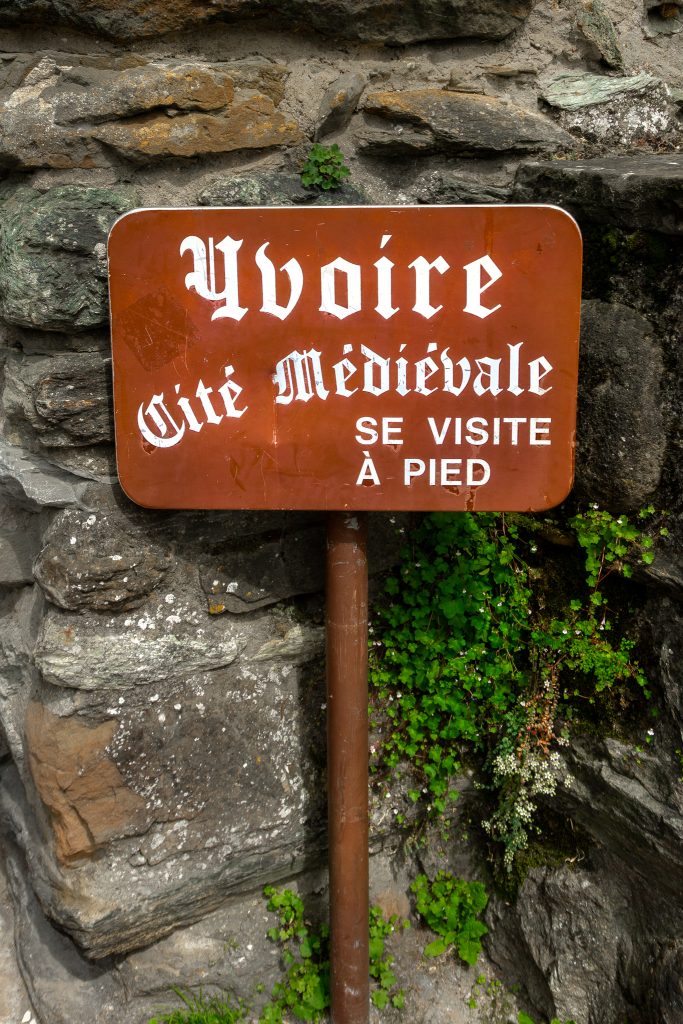
Streets of Yvoire medieval village
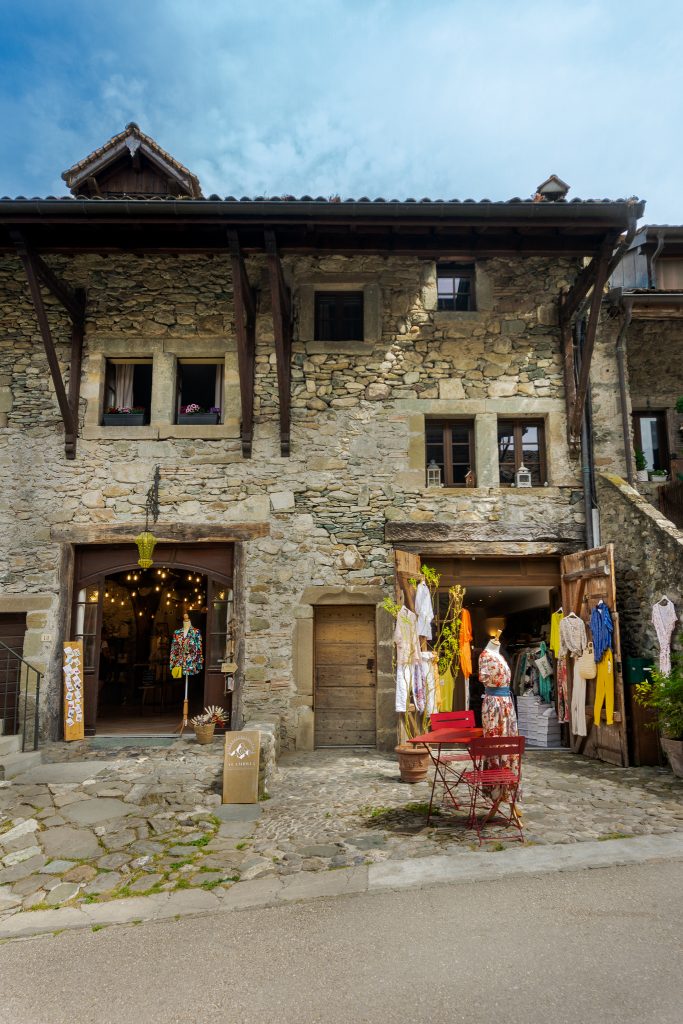
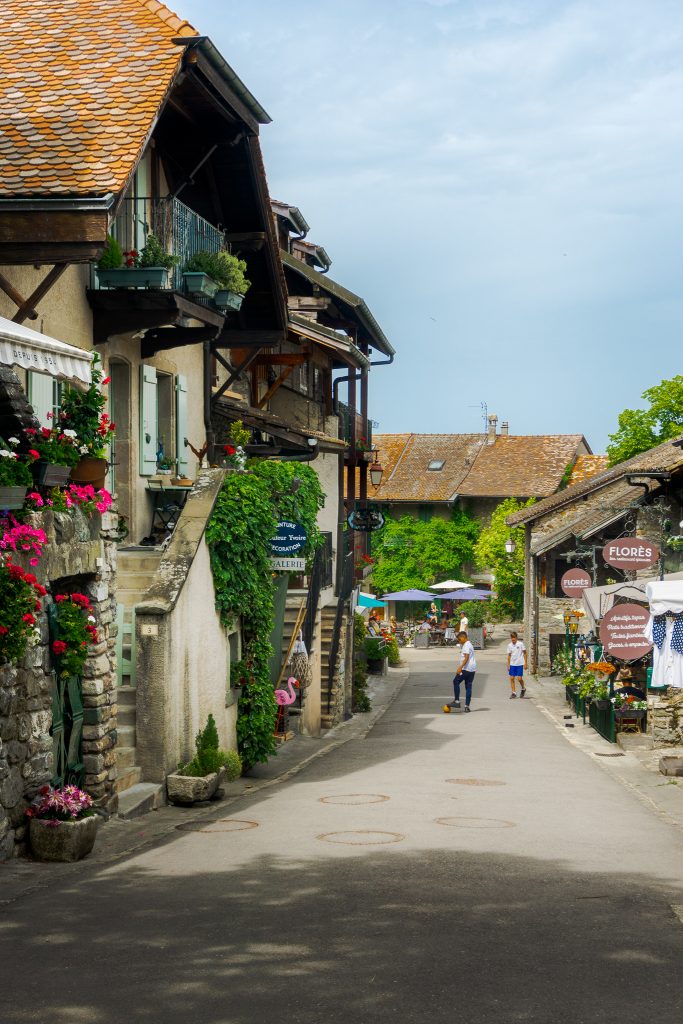
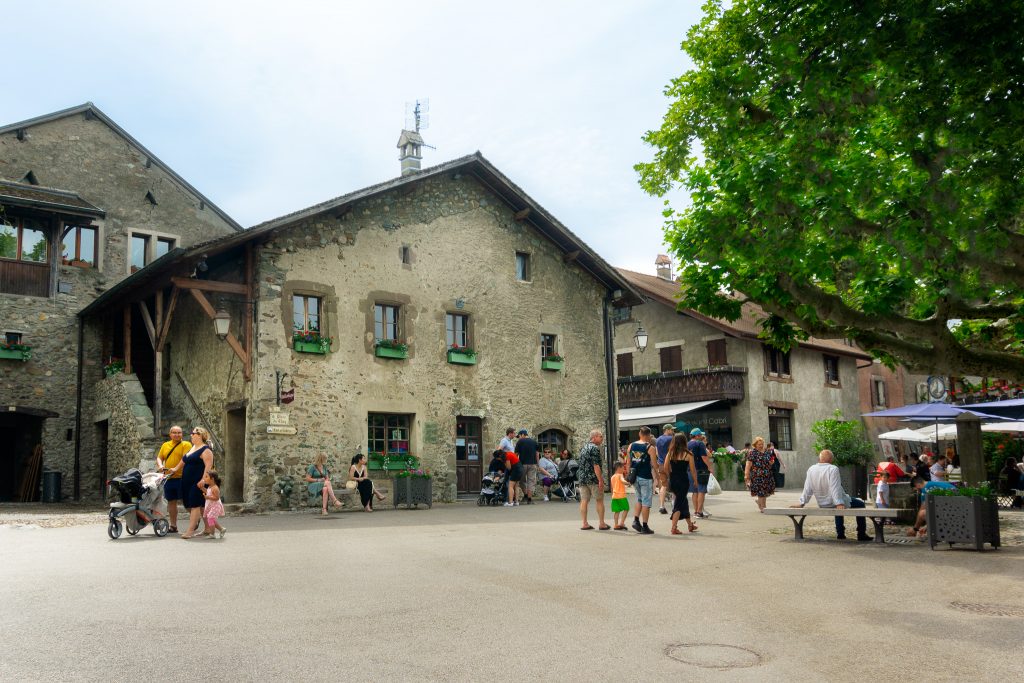
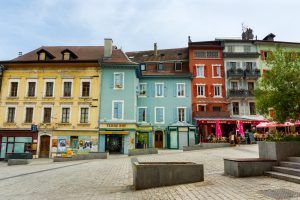
Welcome to the 1400s. Here, inside the traffic-free Yvoire walls, you’ll find picturesque cobbled streets full of stone houses with wooden balconies, all beautifully decorated with bright flowers. Along the streets, you’ll also find a (surprisingly high) number of various restaurants, cafes, boutique shops, art galleries, and souvenir shops.
Taking a pleasant stroll, breathing in the medieval vibes, and imagining what it would be like to live here hundreds of years ago is definitely one of the best things to do in Yvoire.
While strolling in the Yvoire streets, you’ll come across some important buildings and places. Let’s take a look.
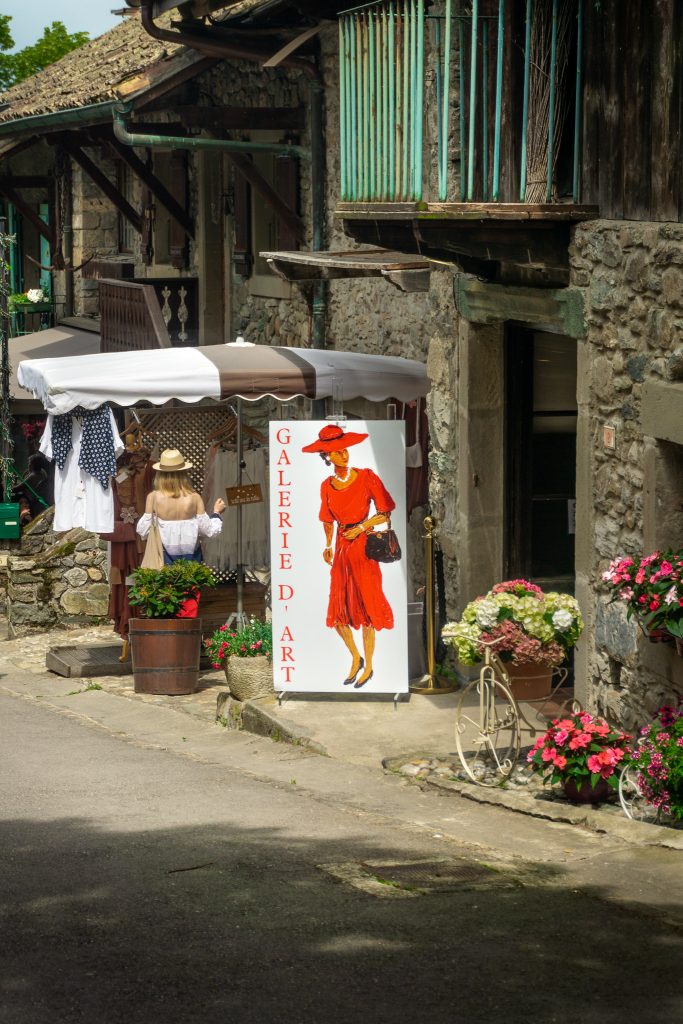
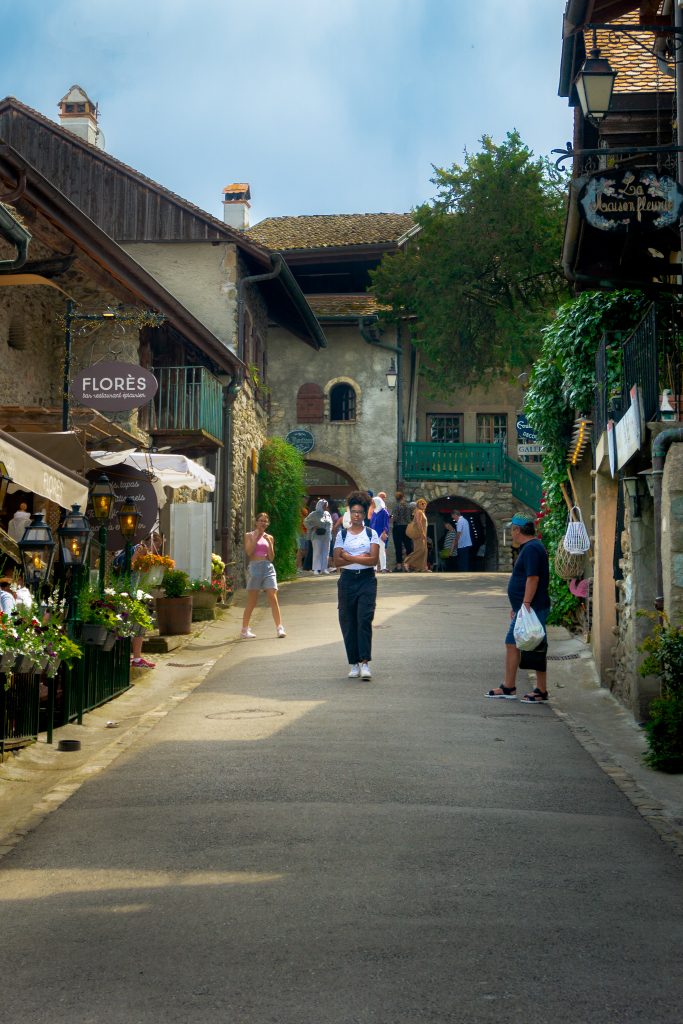
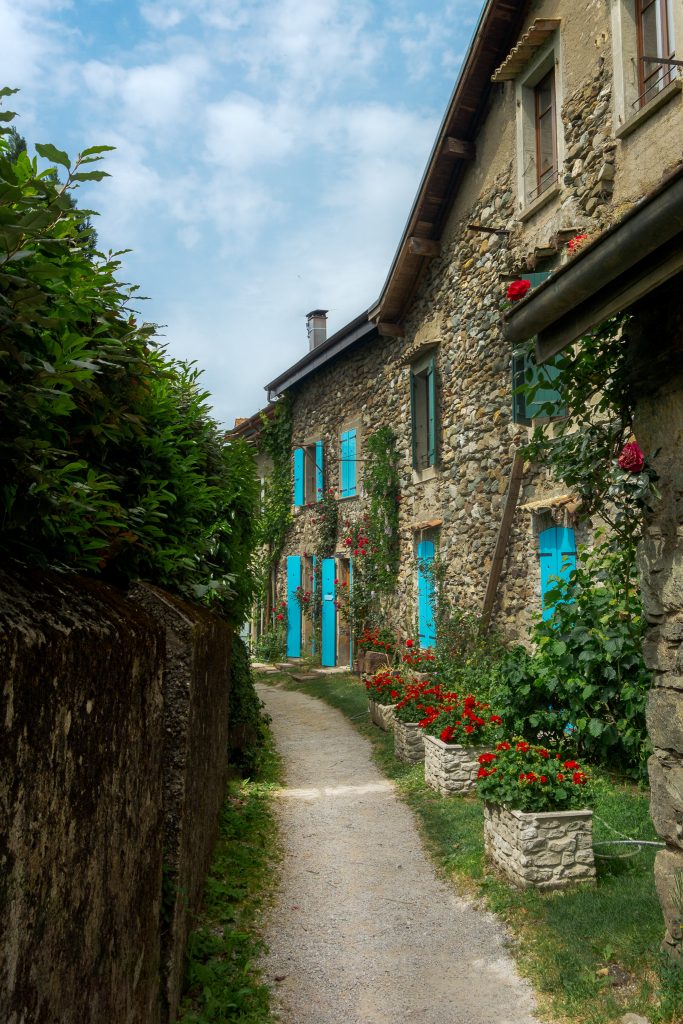
Place du Thay
In Yvoire, all streets, sooner or later lead to Place du Thay, the central square of the village. It’s a lovely place where you can rest for a minute or two in the shade of trees and observe the surroundings. Here you can also find a few restaurants, shops, and Saint Pancrace Church.
Saint Pancrace Church of Yvoire
Saint Pancrace Church of Yvoire is a Catholic church dating back to the 11th century. Since then, it has been rebuilt several times. Its most eye-catching element, the onion-shaped bell tower, was built between 1856 and 1858, in a style characterizing the 19th-century Savoyard religious architecture. In 1989, to fight the rust, stainless steel covered the bell tower, which gave it a distinct, shiny look. The church is classified as a Historical Monument.

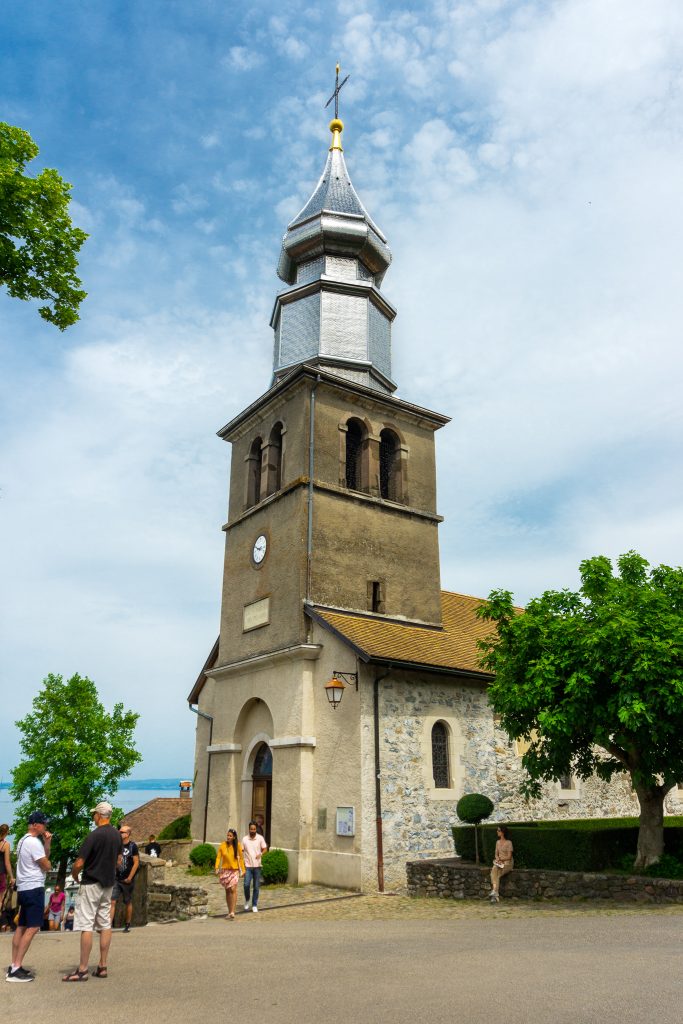
Yvoire Medieval Castle
Yvoire Castle (fr. Château d’Yvoire) is located on the shores of Lake Geneva and dominates the village. It was built in the 14th century in typical Savoy design. Thanks to its strategic location, between the “small lake” and the “big lake” (local names for different parts of Lake Geneva), the castle for many years played an important military role. During the Bernese occupation in the 16th century, it was burnt and remained roofless for 350 years! Yvoire Castle was finally restored in the early 19th century.
One of the best things to do in Yvoire would definitely be visiting the castle, but unfortunately it’s in private hands and not open to visitors. But don’t fret! You can admire it from different places. In our opinion, Port des Pecheurs is the best place to see it in its full glory.


Garden of Five Senses
Another of the best things to do in Yvoire is to visit the Garden of Five Senses. It used to be Yvoire Castle’s vegetable garden, and it’s a garden with 1500+ various plants, specially designed to awaken and tickle all five senses. Today, inside you’ll find 5 themed areas: garden of taste, garden of smell, garden of touch, garden of sight, and garden of hearing.
Garden of Five Senses is open from May to October. The entrance is paid – an adult ticket costs €15, and €8.5 for a child. (July 2026). To check out current prices and opening hours visit jardin5sens.net website.
Yvoire Ports
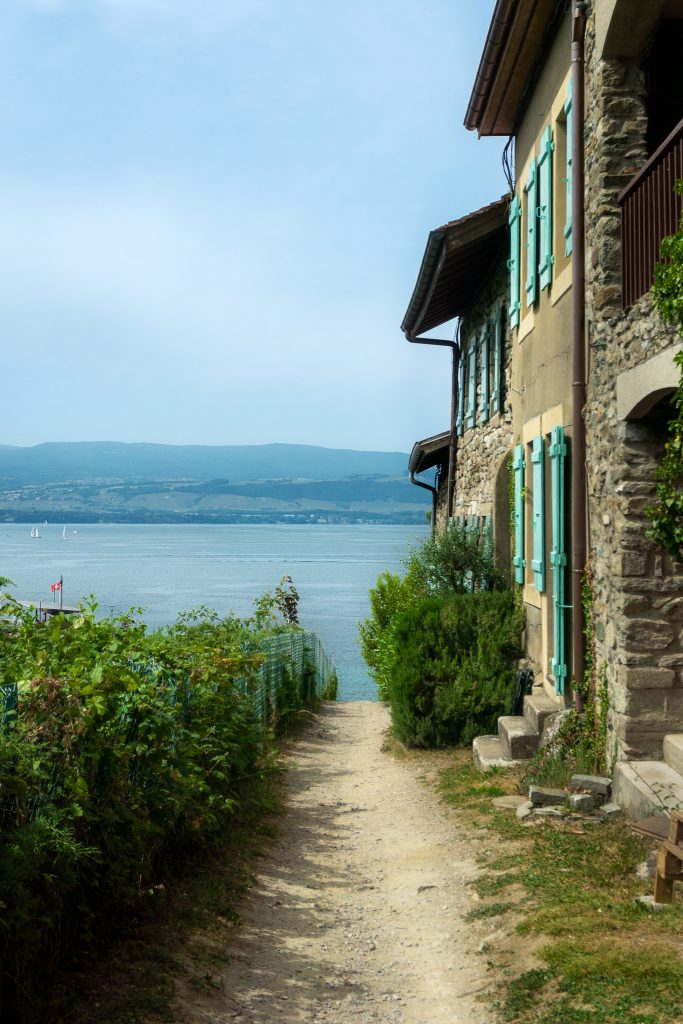
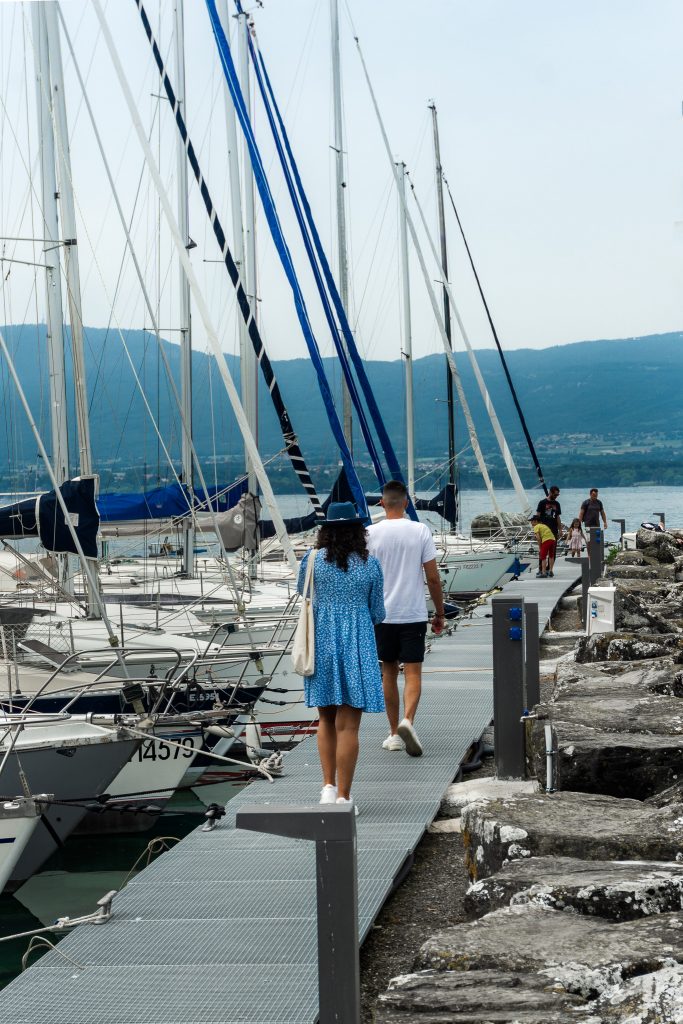
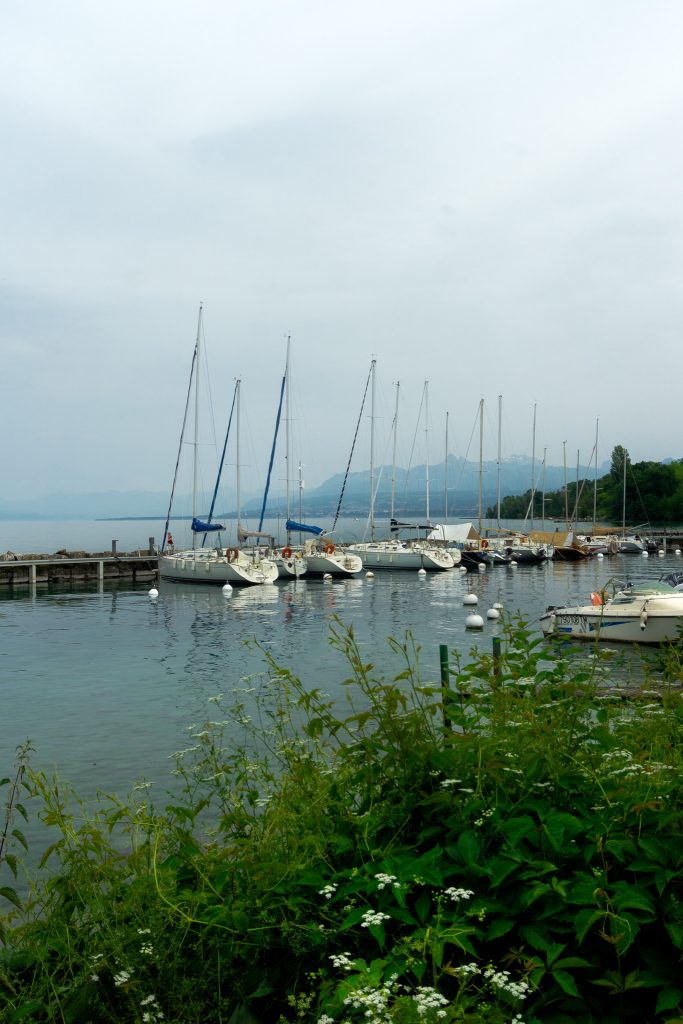
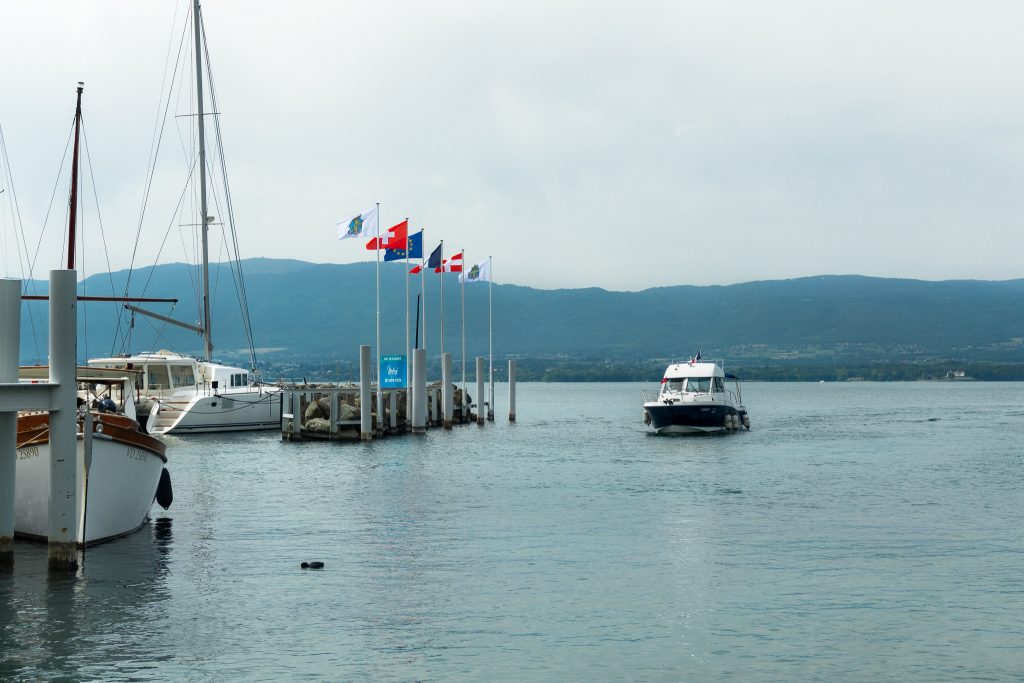
There are two ports in Yvoire: Port des Pêcheurs, which is a little fishing port, and Port d’Yvoire where ferries start and finish their journey. From both, you’ll be able to enjoy stunning views over the village, castle, Swiss coastline, and mountains.

Discover more amazing places on Lake Geneva shores 🌊⛵

How to get to Yvoire, France?
Yvoire is located about 15km from Thonon-les-Bains, 25km from Geneva or Evian-les-Bains, and 90km from Chamonix. The most convenient way to get to Yvoire is by car, either yours or a rental.
Where to park in Yvorie?
There are few parking lots in Yvoire. We left our car in Parking Medieval City and paid about €5 for 3 hours (parking is only paid from May to mid September).

To Yvoire by public transport
You can quite easily get to Yvoire by bus from nearby towns. For example, the trip from Thonon-les-Bains will take about 30 minutes, and 1.5 hours from Evian-les-Bains. To learn more about bus connections that interest you, visit the rome2rio.com website.
Unfortunately, there is no train station in Yvoire. The closest one is located in Thonon-les-Bains, about 15km away. From there you can take a bus or taxi to Yvoire.
To Yvoire by boat
If you are in Lake Geneva cities like Geneva, Nyon, or Lausanne, you can also choose to take a ferry to Yvoire. The trip from Geneva or from Lausanne takes about 1.5 hours, and only 20 minutes from Nyon. To learn more about bus connections that interest you, visit rome2rio.com website.
Things to do in Yvoire, medieval village in France – Summing up
Now you know what Yvoire medieval village is all about. It’s such a stunning place on Lake Geneva shores, isn’t it? No matter if you’ll visit only for a few hours or if you’re planning to stay longer – we’re sure that you’ll fall in love with this fairytale place! There are many amazing things to do in Yvoire and its surroundings, so don’t hesitate and put it on your France bucket list. Enjoy your time in Yvoire!
Our travel video from Yvoire
Our opinion about Yvoire
For us, a visit to Yvoire was a day trip from nearby Thonon-les-Bains where we lived for a few weeks. We visited the village in early June and during that time the village was already quite busy with other tourists around.
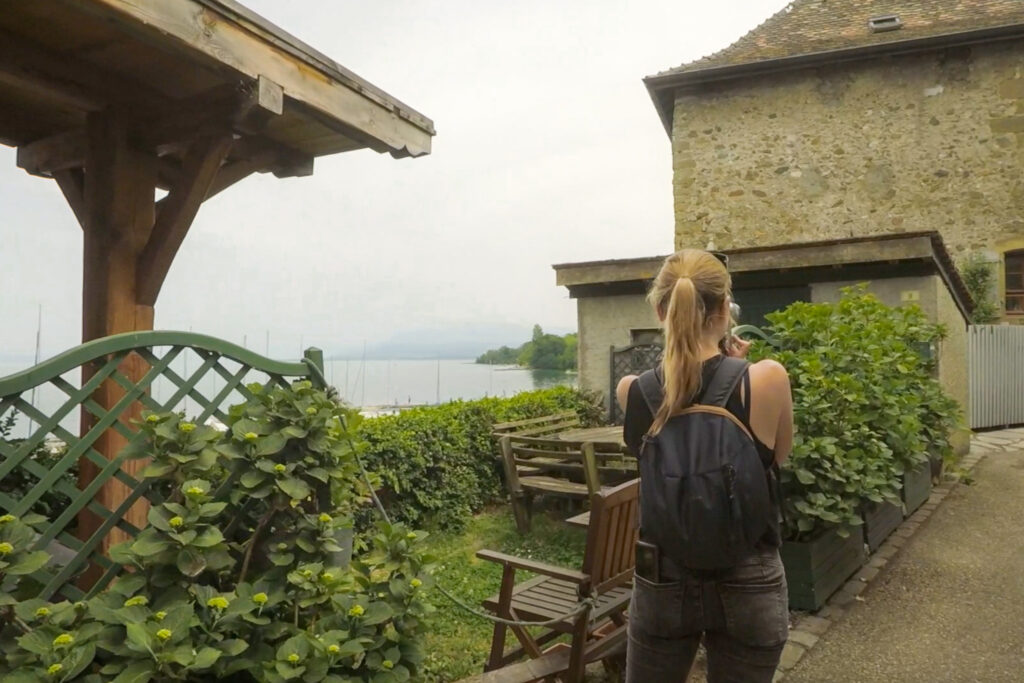
What can we say about it? We loved it! Right after crossing the village’s medieval walls, we felt like we stepped back in time hundreds of years, and it was an amazing feeling. Adding the amazing views of Lake Geneva, we got enchanted! To this day, Yvoire is one of our favorite places in France.
Restaurants, accommodations, and map
Check out various recommended places below.
Where to eat in Yvoire?
Here are your best, high-rated options in Yvoire:

Hello Traveler!
Sonia & Wojtek here.
We’re full-time digital nomads traveling in Europe.
Sunny coastal destinations are what we love most.
We share travel guides, tips, and know-how to make planning your next trip a piece of cake.
Real human experience and verified facts only!
Explore Travel Ideas By Country
Don’t know where to go next? Here are our favorites countries so far. Browse around and let yourself get inspired to travel there!
Look For Your Next Trip Inspiration
We’ve seen some amazing places that you can visit soon too! Take a look around and select something that looks interesting to you. We have plenty for everyone, whether you’re planning to travel slow, your next vacation, city break, or even a one-day trip to the city nearby.
Get Inspired To Travel Slow
Whether you’re just starting out or a seasoned traveler, we’ll provide you with the tools, resources, and travel inspiration you need to live, travel, and discover the world differently. Check what we’re doing and how we’re doing it. Everything inspired by the travel adventures that we continue to have. And the great thing is that it’s even easier than you think!
Let’s Talk About Money
Topic everyone is interested in – how much does digital nomad life cost? We compile plenty of information on how cheap or expensive living in different places can be. All crucial aspects of living are covered with real data only to get you properly informed.
Travelers Talks
Discover the world on your own terms inspired by travel tips and tricks from other travelers. Plenty of travel inspiration and advice for anyone who wants to make the most of their endeavors. Mix and match and unlock the full potential of your own travel style!
Most Popular Posts
Our readers are most interested in these ones! Take a look and discover the most sought places we covered on our blog.
Destinations
Spain
France
Poland
Portugal
Switzerland
United Kigdom
Travel
Travel Guides
Region's Best
Spots' Insights
Tips
Slow Travels
Travelers Talks
Money Talks
About
About us
Work with us
Contact us
Copyright © 2026 Happy Little Traveler
Terms and conditions | Privacy Policy | Disclaimer