In the small Polish town of Oświęcim lies one of the most significant and grim historical sites in the world. Auschwitz-Birkenau, a place where over 1.1 million people lost their lives during the Holocaust, stands today as a powerful memorial to human suffering and a reminder of one of the darkest chapters in modern history. Visiting Auschwitz-Birkenau is not about sightseeing – it’s about remembering, learning, and paying respect. This post is meant to help you prepare – historically, logistically, and emotionally for a visit that will stay in your memory long after you leave.


This website uses affiliate links thanks to which we may earn a commission for purchases you made at no additional cost to you. If you like the content, consider using those links to support us. Thank you!
Auschwitz-Birkenau, Poland FAQ
Auschwitz-Birkenau is located in southern Poland, in the town of Oświęcim, about 70km from Krakow. It consists of two main sites: Auschwitz I – the original concentration camp, and Auschwitz II-Birkenau – the larger extermination camp built shortly after the first one.
Without a doubt, yes. Visiting Auschwitz-Birkenau is a moving experience that provides crucial historical context about the Holocaust. While emotionally challenging, it offers important insights into one of humanity’s darkest periods and helps ensure that these events are never forgotten or repeated.
You’ll spend around 4 hours in Auschwitz-Birkenau, including transportation between the camps.
In our opinion, visiting Auschwitz-Birkenau with a guide is a better choice. The historical context and detailed explanations provided by knowledgeable guide significantly improve understanding of the site.
Definitely. Buying tickets in advance, like a few weeks earlier, is highly recommended – especially during peak season or if you have a specific day and time in mind. However, a limited number of additional tickets is also available every day at the museum ticket office.
Visiting Auschwitz-Birkenau: What to know before you go?
What does the visit to Auschwitz-Birkenau look like?
The visit typically includes both Auschwitz I and Auschwitz II-Birkenau camps. The standard guided tour will take you through both sites with a shuttle bus connecting them, and provides crucial historical context throughout.
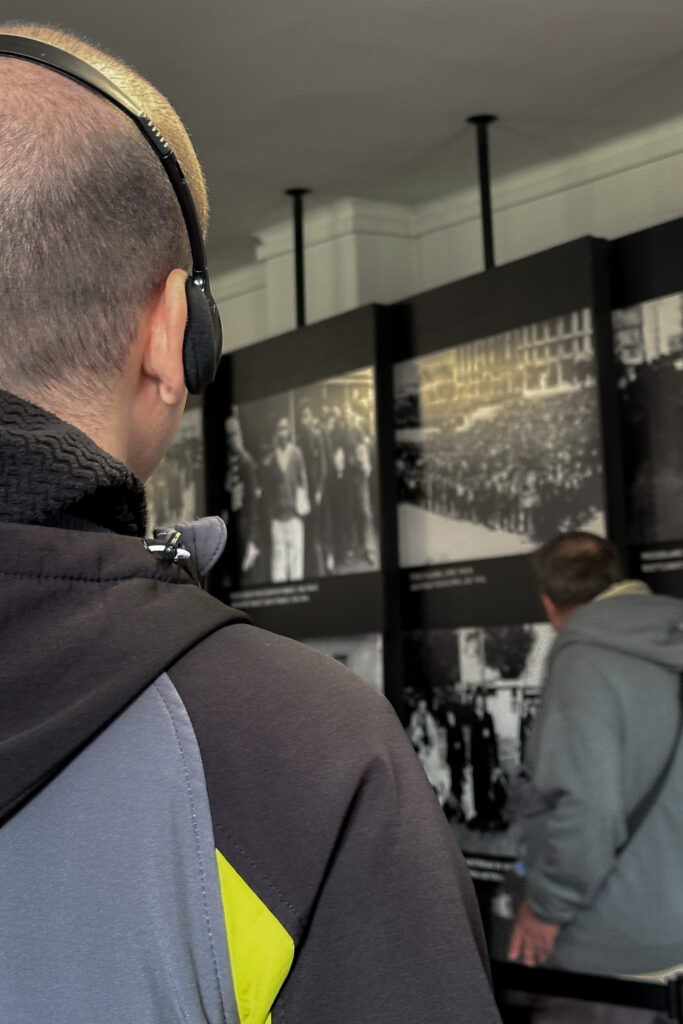
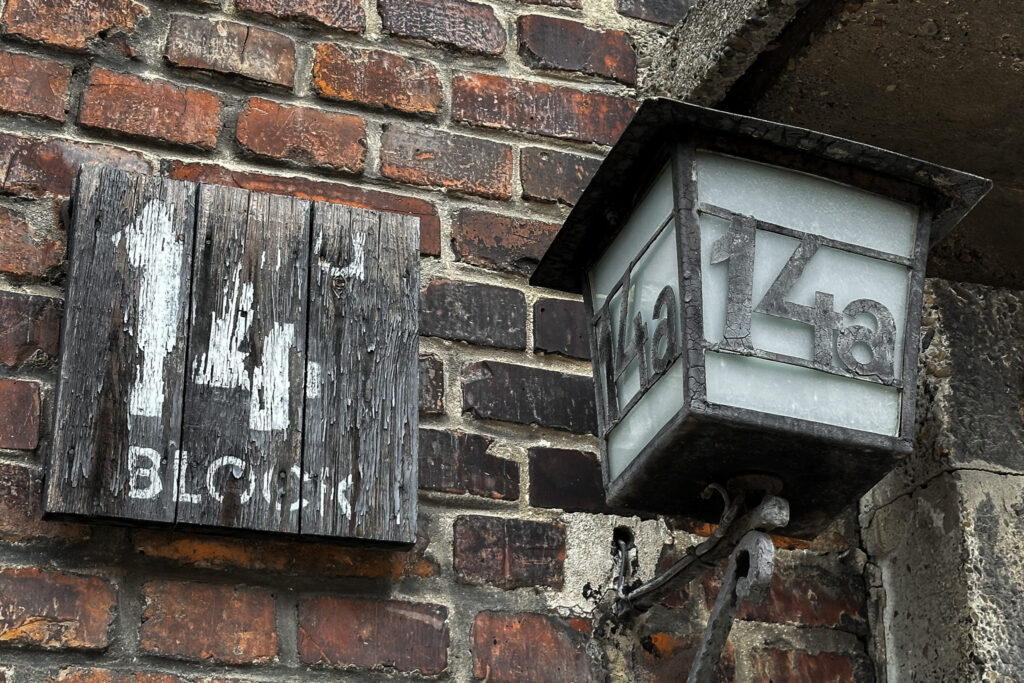
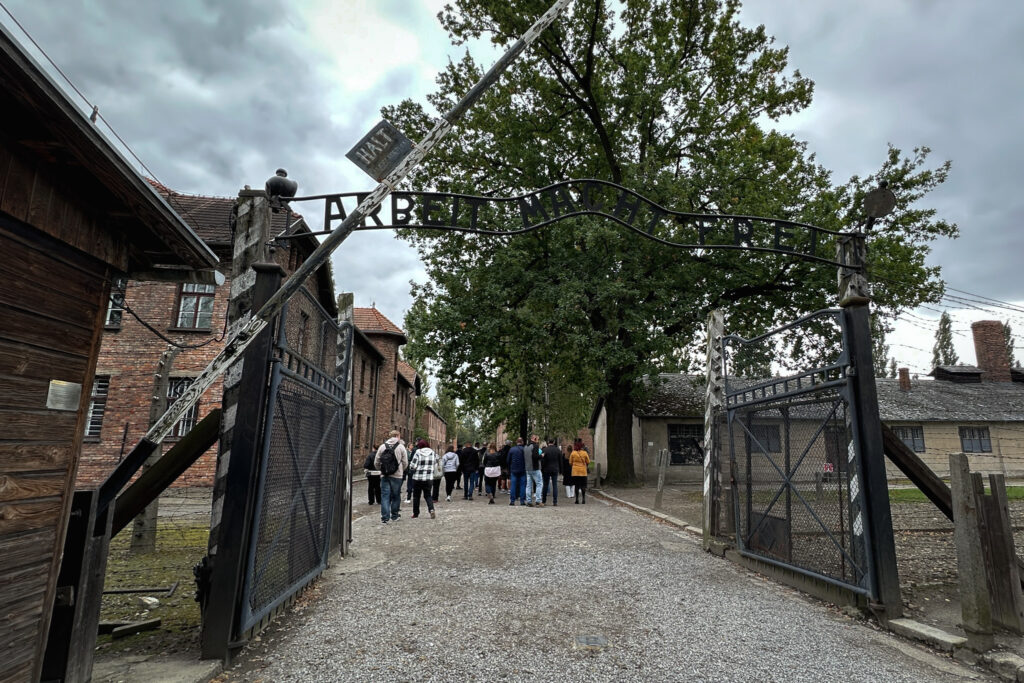
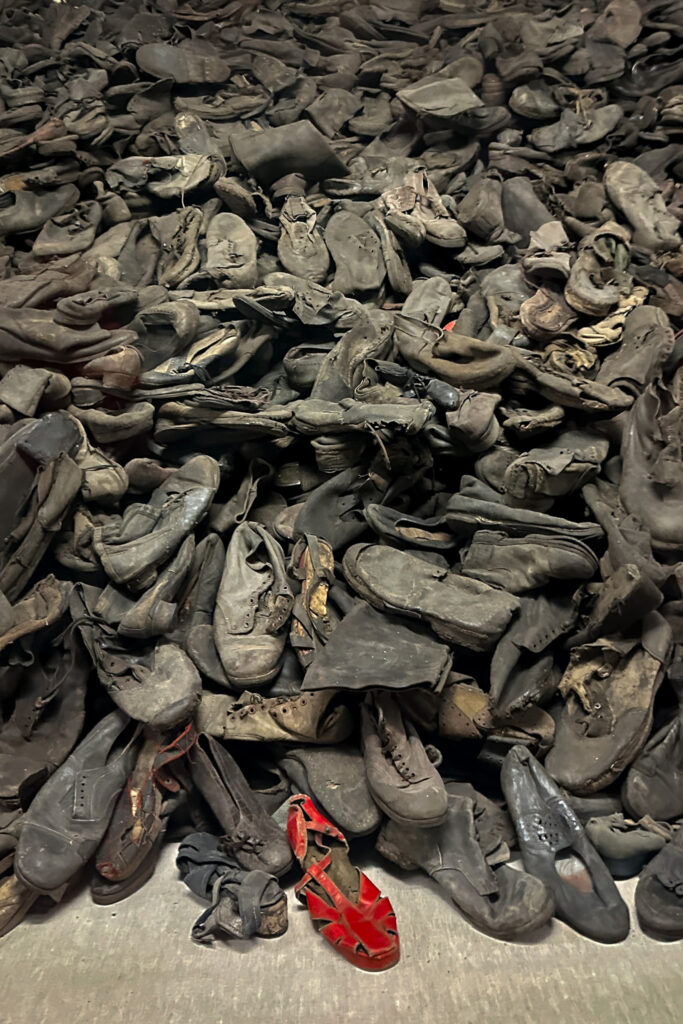
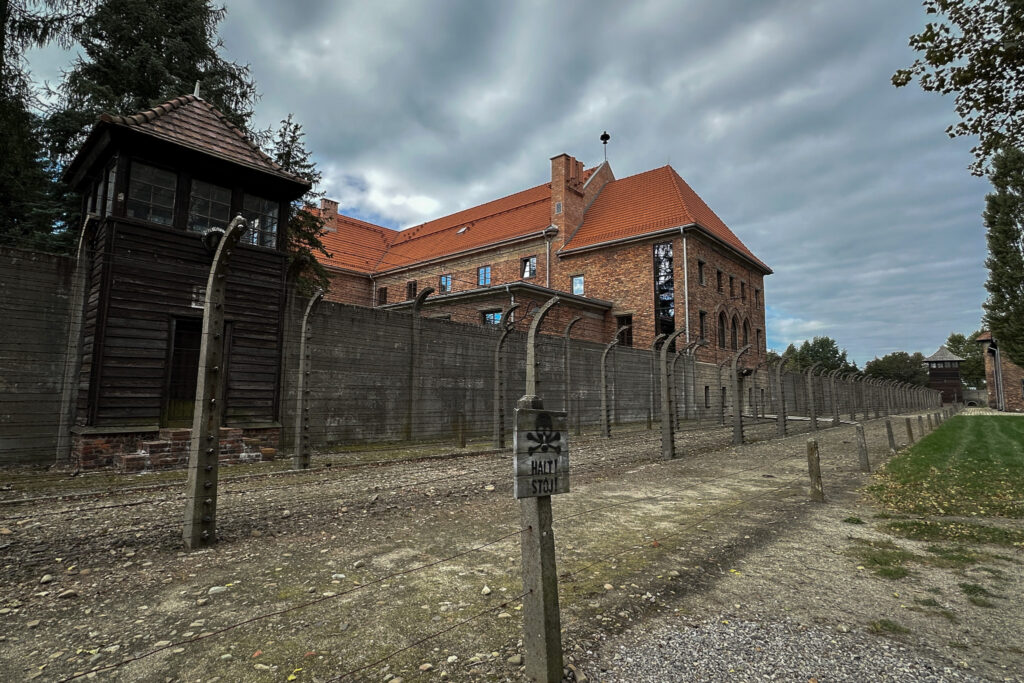
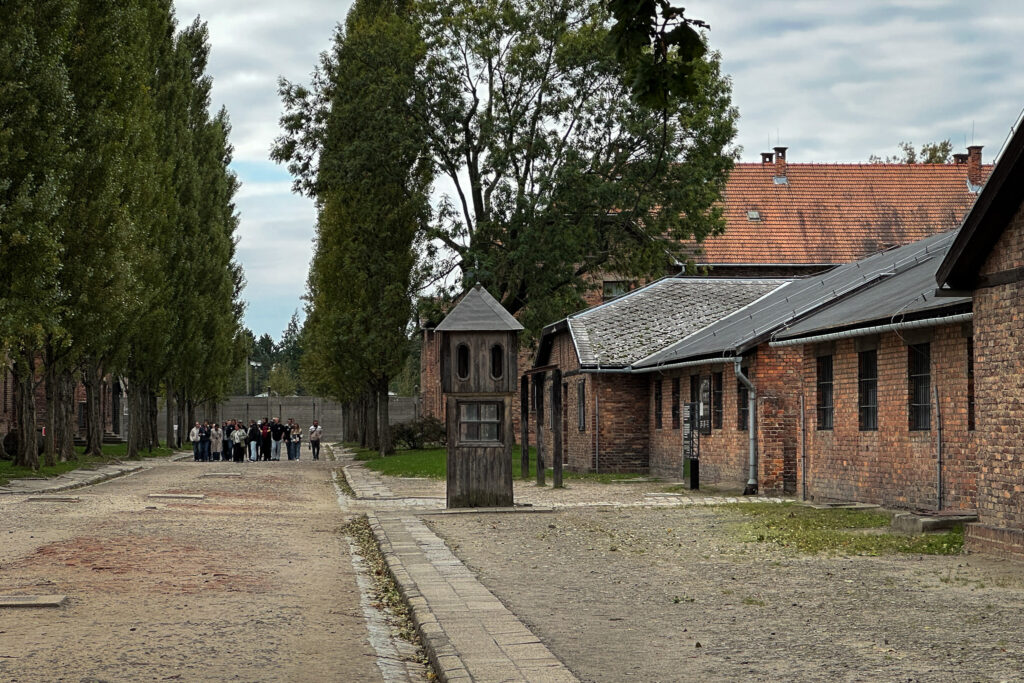
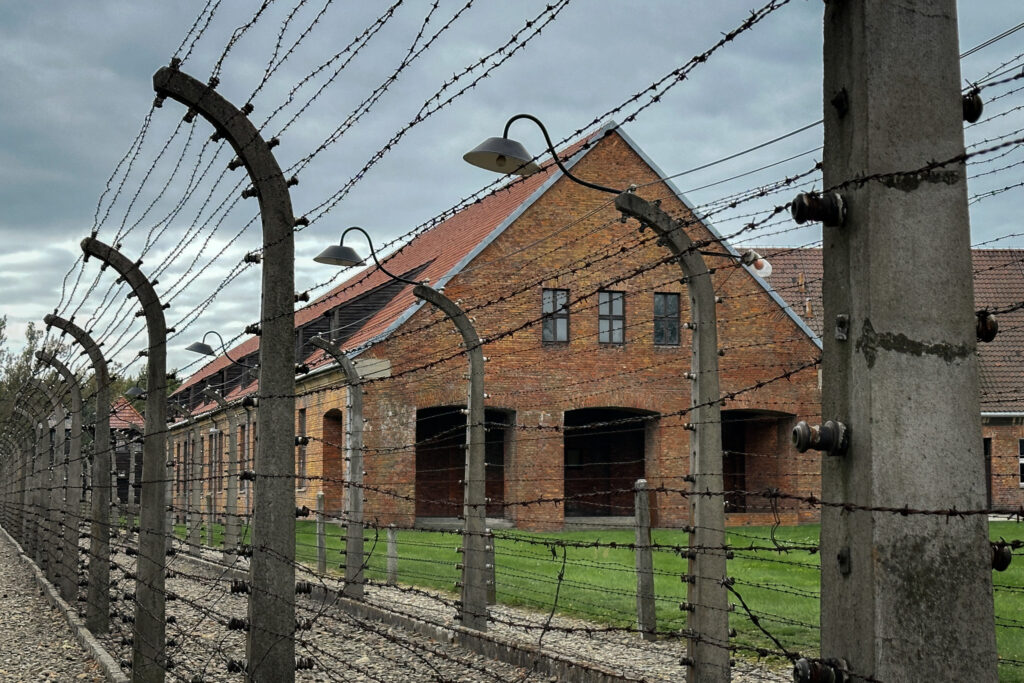
Auschwitz I is the original camp, featuring brick barracks arranged in neat rows. The visit here includes walking through various buildings that now serve as exhibition spaces. You’ll see the infamous “Arbeit Macht Frei” gate which marks the entrance, displays of prisoners’ personal belongings, photographs and documents, gas chambers, or the execution wall. This part gives you a glimpse of how the camp began and evolved to meet the needs of the Nazi ideology.
This part of the visit takes around 2.5 hours.

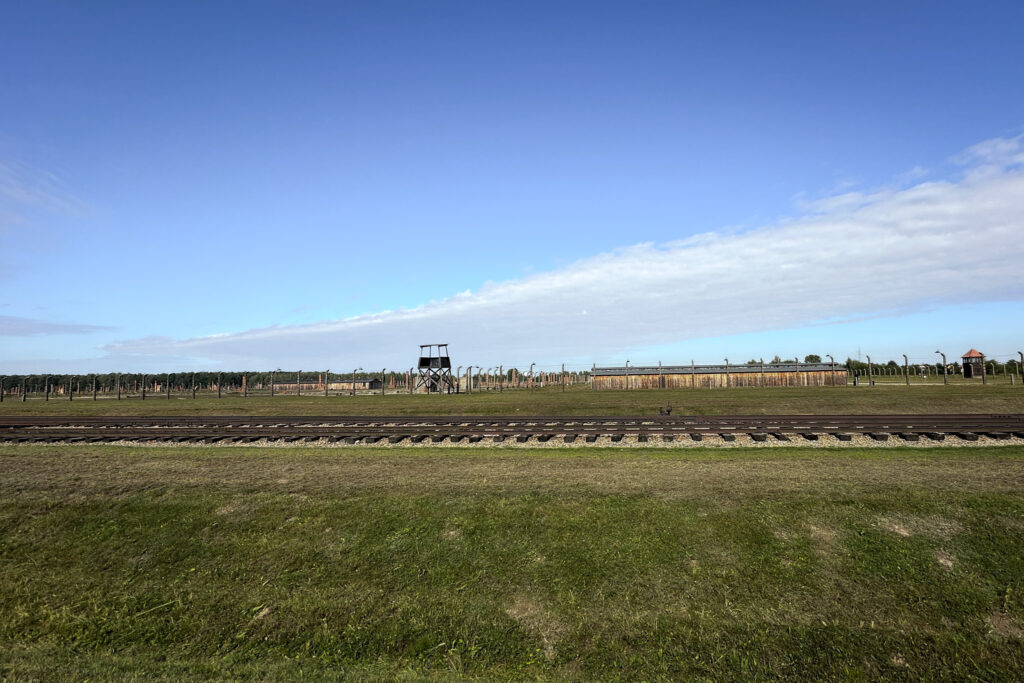
Auschwitz II-Birkenau is located 3km from Auschwitz I. It’s much larger and where most of the mass extermination took place. Here, the visit is primarily outdoors and covers a vast area.
You’ll see the iconic gatehouse with train tracks running through it, the remains of hundreds of barracks (many destroyed, with only chimneys remaining) where prisoners lived in horrific conditions, the unloading platform where selections took place and the ruins of gas chambers and crematoria that the Nazis attempted to destroy before liberation. The scale of Birkenau is overwhelming and truly brings home the industrial nature of the genocide.
This part of the visit takes around 1.5 hours.

How to get to Auschwitz-Birkenau?
Krakow is the most popular starting point for visits to Auschwitz-Birkenau. From there, you can travel with your own vehicle or rental car – the drive takes about 1 hour and there is paid parking available near Auschwitz Visitors Centre.
You can also choose one of many organized tours, like this popular Auschwitz-Birkenau Guided Tour With Hotel Pickup, and let others take care of all the details. If you are planning a visit at the last minute, joining a tour guarantees you an entrance to Auschwitz.
You can also choose public transport – bus or train. Buses depart regularly from Krakow’s main bus station and the trip takes about 1.5-2 hours. Trains run from Kraków Główny station to Oświęcim, and the trip takes between around 1 hour. To learn more about bus and train connections that might interest you, visit the rome2rio.com, Flixbus, or Rozkład PKP websites.
If you’re coming from destinations other than Krakow, you have several options depending on your starting point, but renting a car will still be the most convenient one. If public transport is your preferred option, you might find it easiest to first travel to Krakow and continue from there to Auschwitz-Birkenau.
Auschwitz-Birkenau ticket prices & opening hours
Entrance to Auschwitz-Birkenau requires a personalized entry pass. The number of visitors per day is limited; however, several additional tickets are also available every day at the ticket office (but you’ll have to wait in a long line, risk getting into a tour a few hours later, and risk not getting a ticket at all). The tours are available in several languages, like Polish, English, German, Spanish, French, Italian, Russian, and more.
The most popular visiting options include:
- Guided tour with an educator (3.5 hours) – 140zł for a normal ticket and 130zł for a reduced one.
- Study tour (6 hours) – 190zł for a normal ticket and 170zł for a reduced one.
- Self-guided tour without an educator – free of charge but only available during certain hours, generally late afternoons.
These prices are valid for August 2026. We recommend booking your tickets through the official website at least a few weeks in advance, especially if you’re planning to visit during the peak season.
For current prices and opening hours, visit the auschwitz.org website. To buy tickets, visit the visit.auschwitz.org website.
Tips for visiting Auschwitz-Birkenau
Here are some more tips you might find useful for visiting Auschwitz-Birkenau:
- Arrive at least 30 minutes before your entry time to pass through security checks.
- The main car park is located at 55 Więźniów Oświęcimia Street, right next to the entrance to the museum.
- This is a memorial site, like a cemetery without tombstones, where over a million people were murdered, so behave in an appropriate and respectful way.
- Wear weather-appropriate clothes and comfortable shoes that can get dirty.
- Eating and drinking is not permitted within the historical areas (but you can bring a small water bottle).
- Visit is not recommended for children under 14 years old.
- Photography is prohibited in certain exhibitions – they are marked with signs.
- Large bags are not allowed (you can leave them in paid luggage storage), and you can have a small backpack or handbag.


Explore local attractions
Visiting Auschwitz-Birkenau Poland – Summing up
Visiting Auschwitz-Birkenau is an emotionally difficult experience, yet we believe it’s something every person should do at least once in their lifetime. The visit isn’t about tourism – it’s about education, remembrance, and gaining a deeper understanding of humanity’s capacity for both cruelty and resilience.
Auschwitz stands today not only as a memorial to those who suffered and died there but also as an educational site that reminds us why such atrocities must never be repeated.
We hope this guide helps you prepare for your visit to Auschwitz-Birkenau. While challenging, it’s an experience that will likely stay with you forever.

For us, this was a second visit to Auschwitz-Birkenau. The first time we visited was in primary school, so about twenty years ago. We decided to visit again, as adults, to understand the place on a deeper level. Although the experience was still devastating, it felt slightly easier this time – because it turned out we still remember a lot.
What struck us most this time was the vast scale of Birkenau – the ruins of the barracks that stretch literally as far as the eye can see really showed the magnitude of the Nazi death factory. And they had plans for even more!
Downsides of the visit? We found the entrance quite chaotic, and the Auschwitz site too crowded in general. Thankfully, we had a great guide who took time with the explanations and we didn’t move around too fast. But the number of other groups (especially those ‘behind the back’ who were pushing ours forward) and traffic jams in some buildings felt overwhelming.
What saddened us most was realizing how history, in many ways, repeats itself. Despite the lessons Auschwitz teaches, wars and acts of cruelty continue to happen. It’s a painful reminder of why visiting places like this matters – so we can remember, learn, and do better.