Bonjour! Welcome to Pont du Gard, one of the most extraordinary landmarks in southern France. This ancient Roman aqueduct, gracefully spanning the Gardon River is a place where history and nature come together perfectly. It’s one of those places that instantly makes you slow down, look around, and appreciate the scale of what humans created centuries ago.
Whether you’re visiting on a road trip through Provence, planning a day trip from Avignon or Nimes, or simply chasing iconic sights in France, visiting Pont du Gard is an experience that leaves a lasting impression. Keep reading for essential tips for visiting Pont du Gard aqueduct, what to expect, and how to plan your visit to this UNESCO World Heritage Site.


This website uses affiliate links thanks to which we may earn a commission for purchases you made at no additional cost to you. If you like the content, consider using those links to support us. Thank you!
Pont du Gard, France FAQ
Pont du Gard is located in the Occitanie region in the Gard department in southern France near Vers-Pont-du-Gard village. It sits roughly halfway between Nimes, Avignon, and Uzes, making it an easy day trip from all three.
Pont du Gard is absolutely worth visiting! It’s a testament to Roman engineering and human ingenuity that continues to impress millions of visitors every year.
Pont du Gard is famous for being the tallest surviving Roman aqueduct bridge in the world and a UNESCO World Heritage Site. It once carried water over 50 km from Uzes to Nimes alongside stunning riverside setting. What makes it truly remarkable is that it was constructed without mortar, relying solely on precise cuts, engineering, and gravity to hold the structure together.
We recommend spending at least 2-3 hours at Pont du Gard to fully experience the site. This gives you enough time to walk around the aqueduct, visit the museum, watch the film in the cinema, and enjoy the natural surroundings. If you want to swim in the Gardon River or do kayaking, plan for 4-5 hours. For a quick visit focused only on admiring the aqueduct, one hour should be sufficient.
Visiting Pont du Gard Aqueduct
Pont du Gard Aqueduct
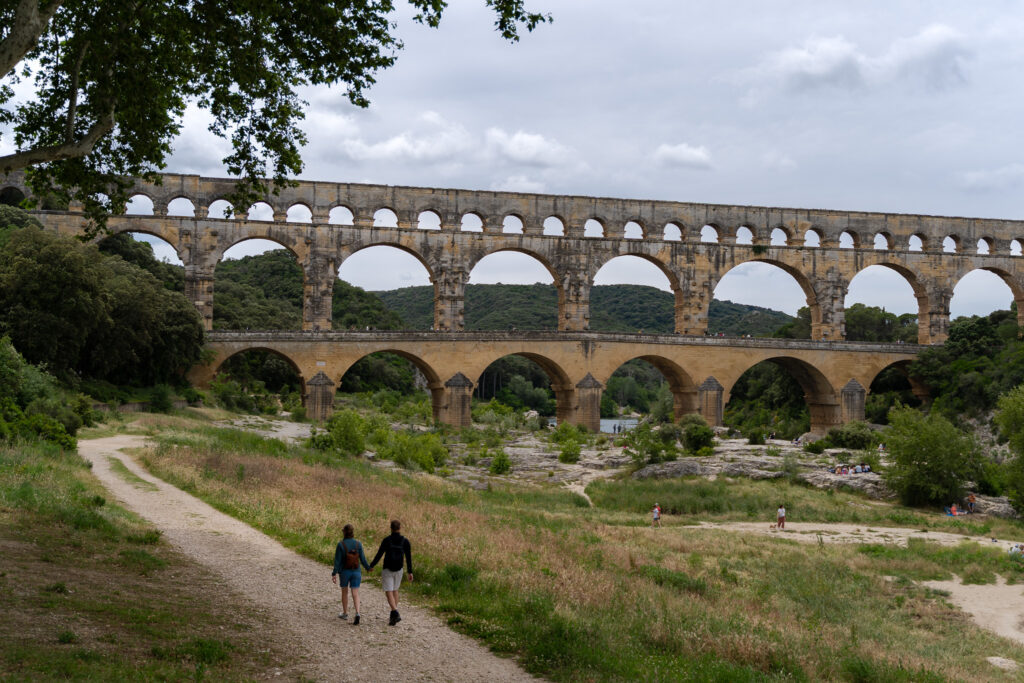
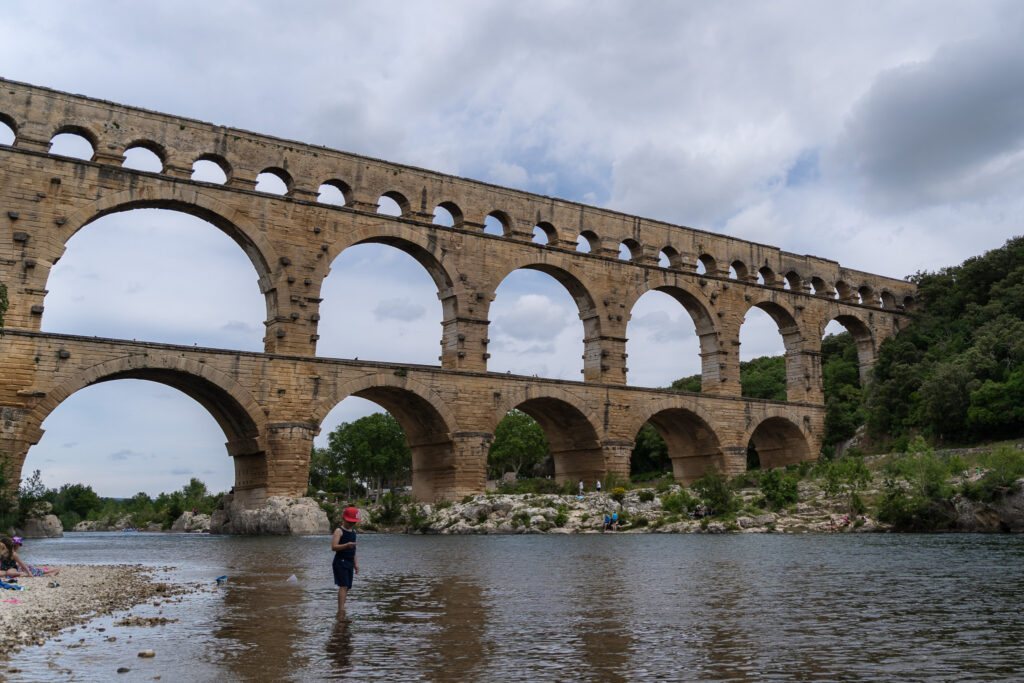
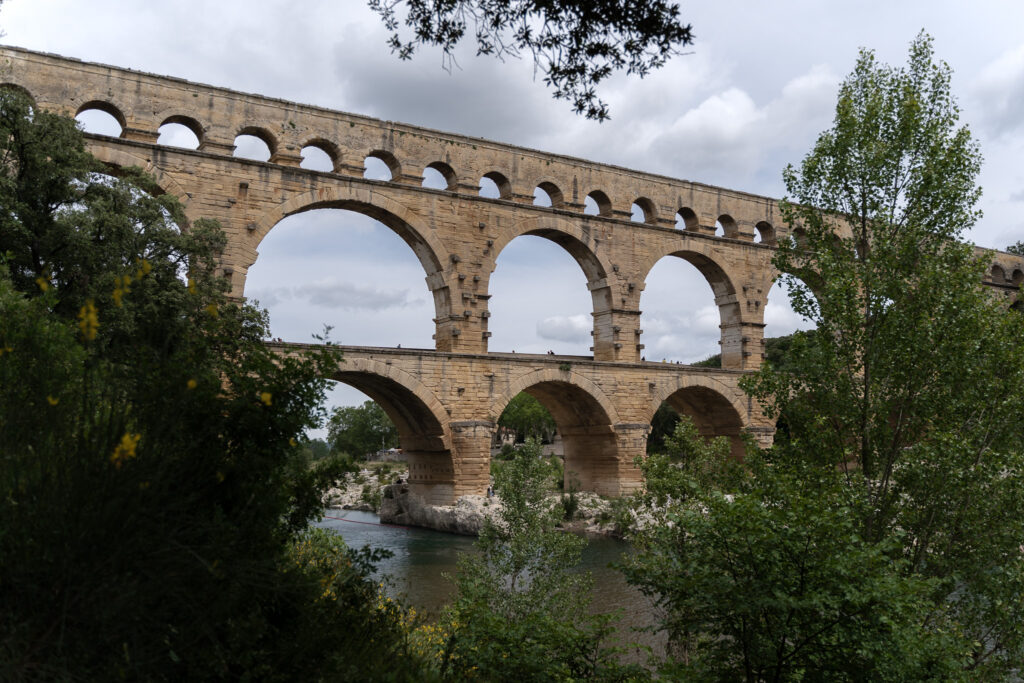
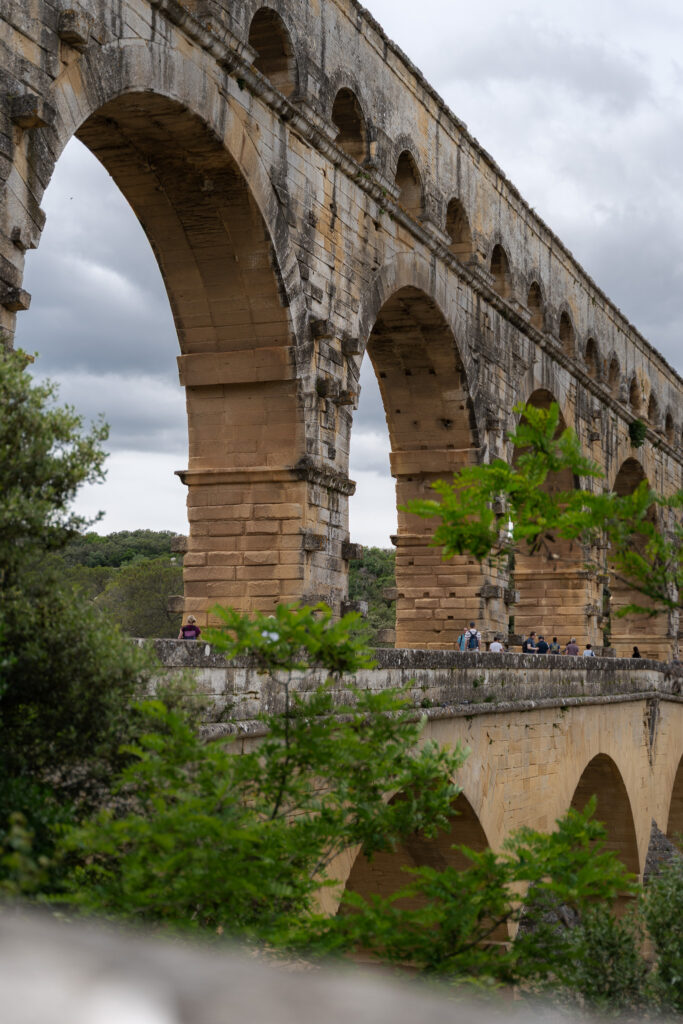
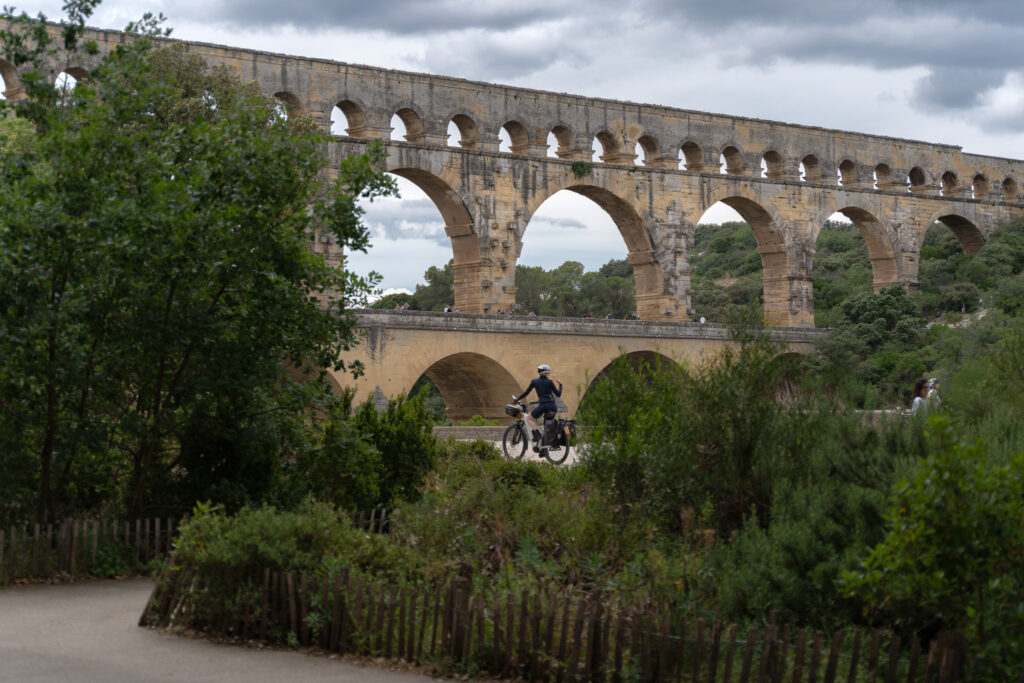
The star of the show is, of course, the Pont du Gard itself, built in the 1st century AD. It was part of a 50-kilometer aqueduct system that carried water from a spring in Uzes to the Roman colony of Nemausus (modern-day Nimes). The aqueduct supplied the city for about five centuries before eventually falling out of use. Today, Pont du Gard in France is the tallest surviving Roman aqueduct bridge in the world and has been listed as a UNESCO World Heritage Site since 1985.
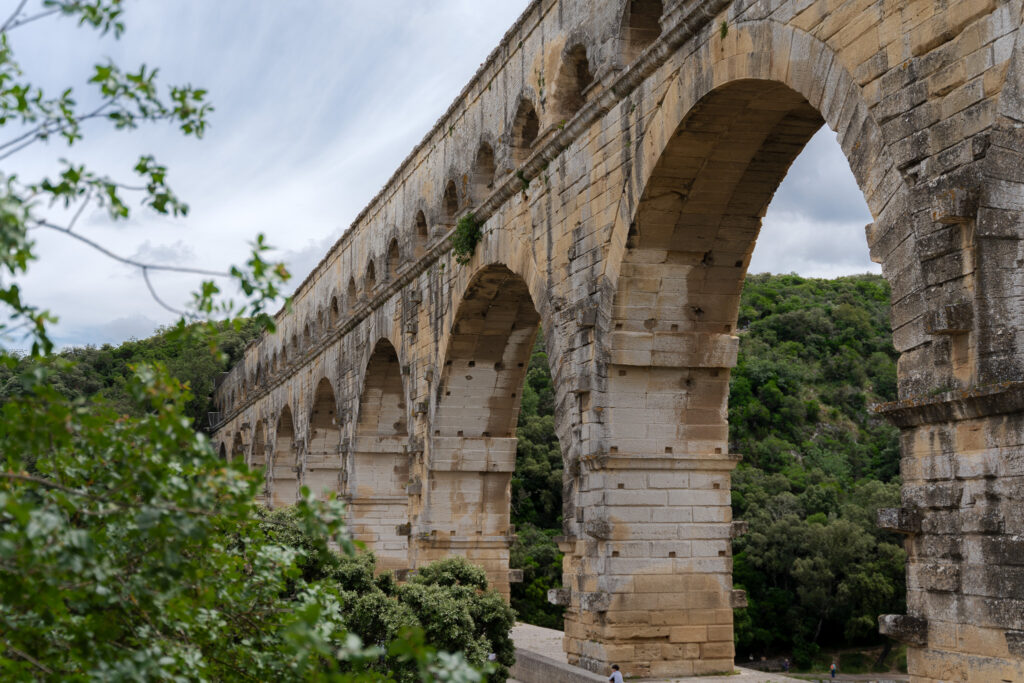
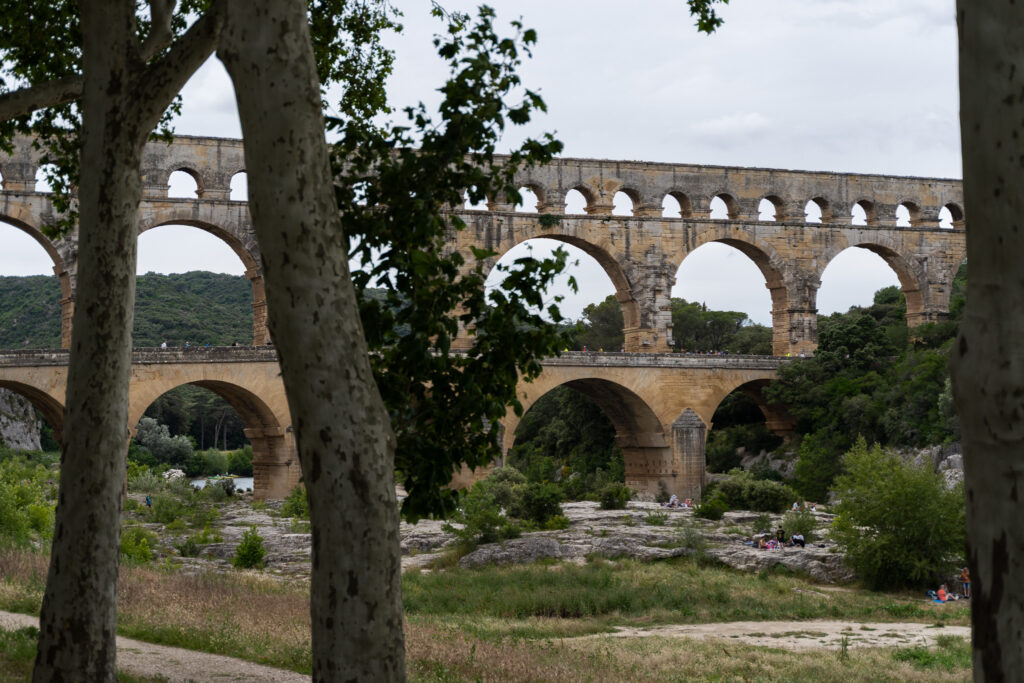
This magnificent three-leveled aqueduct is a real masterpiece of Roman engineering. Standing at 49 meters high and 275 meters long, it features 6 arches on the lowest level, 11 on the second, and 35 smaller arches on the top level where the water channel ran. But what’s absolutely mind-blowing is that this entire structure was built without mortar. The engineers cut limestone blocks so precisely that they fit together perfectly, held in place only by gravity!
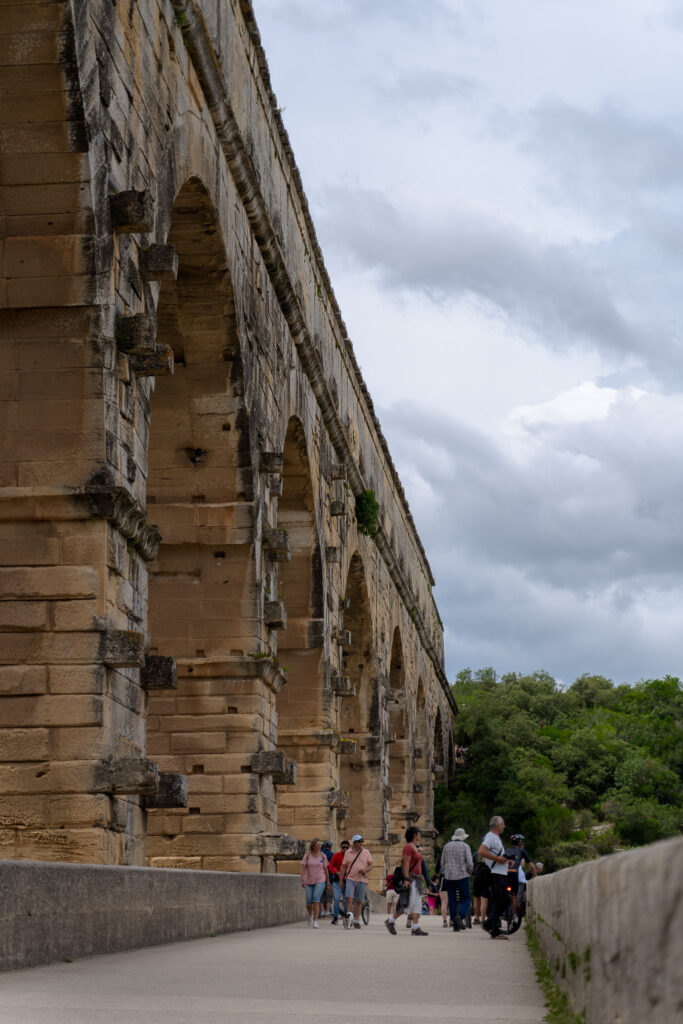
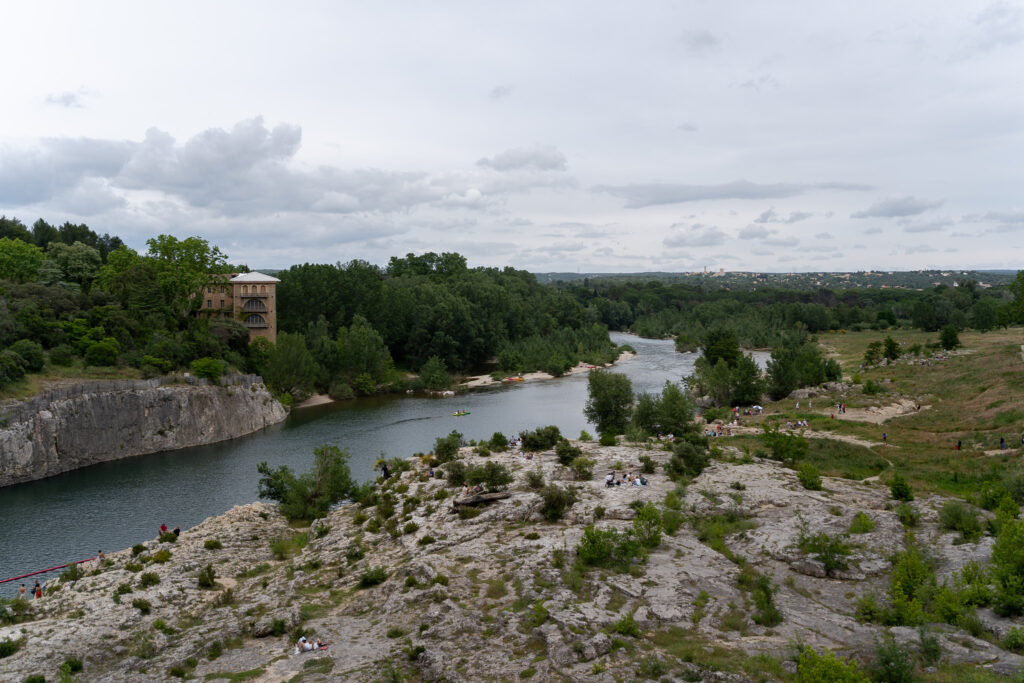
The best way to appreciate Pont du Gard aqueduct is to see it from multiple angles. Walk down to the riverbanks of the Gardon for stunning views from below, and cross the modern road bridge for eye-level perspectives. For an even deeper experience, you can also take part in a guided tour to walk across the top level where you can see the ancient water channel.
Pont du Gard Museum
The Museum of Pont du Gard is a modern and interactive space that traces the history of the aqueduct through a thematic journey enhanced by detailed models and full-scale reconstructions. Inside you’ll discover multimedia screens showing documentaries, an illuminated map, and various sound, visual, and theatrical installations that bring you right into the heart of antiquity.
The museum explains not only how Pont du Gard aqueduct was built but also why, showing how water infrastructure was vital to Roman civilization and urban life. You’ll see exhibits about the quarry where stones were extracted, learn about the tools and techniques Roman workers used, and understand the hydraulic engineering that made this marvel possible.
There’s also an on-site cinema that offers a 15-minute film that provides a nice introduction to the history and construction of Pont du Gard. It’s a great way to get oriented before visiting Pont du Gard itself and exploring the monument up close.
Entrance to Pont du Gard Museum costs €8 for a normal ticket, €6 for a reduced one, and is free for children under 18 (April 2026). For current prices, opening hours, and online tickets, visit the pontdugard.fr website. Cinema access is included with your museum ticket.
Pont du Gard Kayaking & Swimming
One of the best things to do when visiting Pont du Gard, especially during hot summer days, is to take a refreshing dip in the Gardon River. The riverbanks turn into natural beaches where you can relax and swim in the cool, clear water while admiring the spectacular aqueduct rising high above you.
If you’re looking for something more adventurous, consider renting a kayak from nearby villages like Collias and paddling down the river toward Pont du Gard. Gliding under the ancient arches from the water will give you an entirely different appreciation of the structure’s massive scale. It’s a wonderful experience! Several companies also offer kayak rentals and guided tours, making it easy to combine outdoor fun with history.

Practical Information For Visiting Pont du Gard Aqueduct
Here’s the most important information you should know before visiting Pont du Gard Aqueduct:
- The site is open every day of the year from 8:00 am to midnight. Parking on-site after midnight is strictly prohibited
- The entrance fee is €9 per vehicle (April 2026), regardless of the number of passengers.
- There’s an extra charge for access to the museum, temporary exhibitions, and the games area.
- Opening hours for the museum and other cultural spaces vary depending on the season.
- Access to the first level of the aqueduct is free. However, guided tours that allow you to visit the upper level cost an additional fee.
- To fully experience everything Pont du Gard has to offer, allow around 3–4 hours. If you’re short on time, a 1-hour visit is enough to see the monument itself.
- If possible, visit on a weekday and arrive early in the morning to avoid the largest crowds, especially during summer.
- Wear comfortable walking shoes suitable for uneven terrain.
- There are three restaurants on-site and one well-stocked souvenir shop.
- Illuminations of the monument take place from mid-June to mid-September.
For current prices, opening hours, online tickets, and detailed information about visiting Pont du Gard aqueduct, visit the pontdugard.fr website.
How to get to Pont du Gard, France?
Pont du Gard is located about 15km from Uzes, 25km from Avignon or Nimes, and 40km from Arles. The most convenient way to get to Pont du Gard is by car or by train with a connecting shuttle. For a faster and more comfortable journey, rent a car via rentalcars.com website.
Where to park in Pont du Gard?
In Pont du Gard, you need to leave your car in one of two paid parking lots near the aqueduct. One is located on the left bank of the river, and the other on the right bank. Parking costs €9 per car per day (April 2026), regardless of how long you stay.
To Pont du Gard by public transport
Unfortunately, there is no train station in Pont du Gard. The nearest ones are located in Nimes and Avignon, and from there you can take a direct bus to the monument. From Nimes, take bus line 121, and line 115 from Avignon. The trip from either city takes approximately one hour.
If you’re staying in Uzès, reaching Pont du Gard is even easier. You can take a local bus or a short taxi ride, and you’ll arrive in about 30 minutes. To learn more about connections that might interest you, visit rome2rio.com website.
Camping Pont du Gard
If you’re traveling by camper, places like Camping Vers Pont du Gard or Camping le Barralet might interest you. They are located close to Pont du Gard aqueduct.
To Pont du Gard with guided tour
If you don’t want to put too much effort into planning, you can always take advantage of the guided tours and let someone else take care of all the details of your visit to Pont du Gard.
If you’re staying in Avignon, we recommend taking part in this amazing Pont du Gard, Uzes & Nimes Small Group Full Day Tour. And from Marseille, this Provence Sightseeing Tour and Wine Tasting looks really good and tasty!
For a wide selection and well-reviewed tour options, visit GetYourGuide or Viator.

Explore local attractions
Visiting Pont du Gard Aqueduct in France – Summing up
Now you know why Pont du Gard is one of the most visited ancient monuments in France. Whether you’re admiring the arches from below, walking across the aqueduct, or relaxing by the river, this place has a timeless atmosphere that’s hard to beat. It offers a perfect blend of history, nature, and unforgettable scenery. Visiting Pont du Gard is one of those experiences that will stay with you long after you leave. Enjoy!
Our opinion about Pont du Gard
For us, a visit to Pont du Gard was a day trip from nearby Orgon, where we lived for a few weeks. We combined it with a visit to the nearby Uzes. We visited Pont du Gard in early June in the late afternoon, and at that time the site was moderately busy but not overcrowded. Exploring the monument and enjoying a short picnic on the riverbanks took us around two hours. Unfortunately, we didn’t have a chance to visit the museum.
What can we say? We were truly impressed. We had seen many photos of the Pont du Gard aqueduct before visiting, but nothing prepared us for its scale and beauty in real life. Yeah, the Romans for sure were engineering geniuses! We loved walking around the monument, admiring it from every angle, crossing the modern bridge, and relaxing by the river afterward. If you’re planning a trip to southern France, we highly recommend visiting Pont du Gard, it’s absolutely worth it.


Restaurants, accommodations, and map
Check out various recommended places below.
Where to eat in Pont du Gard?
Here are your best, high-rated options in Pont du Gard: