Bonjour! Welcome to Arles, one of the most beautiful towns in southern France, where ancient Roman wonders meet artistic heritage and timeless Provencal charm. This is a place where gladiators once fought in an impressive amphitheater and where Vincent van Gogh found his inspiration. With several UNESCO World Heritage sites, charming medieval streets, and numerous locations connected to Van Gogh’s paintings, Arles offers an unforgettable journey through history and art. Without further ado, here are the best things to do in Arles in one day.


This website uses affiliate links thanks to which we may earn a commission for purchases you made at no additional cost to you. If you like the content, consider using those links to support us. Thank you!
Arles, France FAQ
Arles is located in the Provence-Alpes-Côte d’Azur region in the Bouches-du-Rhône department in southern France. Arles is just a short drive from popular destinations like Avignon, Nimes, Montpellier, Marseille, and the Camargue region, making it a perfect stop on any trip through Provence.
In our opinion Arles is one of the most fascinating towns in Provence, definitely worth visiting. It’s filled with rich history, impressive UNESCO World Heritage sites, picturesque streets, and Vincent van Gogh heritage. Arles is charming, atmospheric, and perfect for travelers who enjoy history, photography, and slower-paced exploration.
Arles is best known for its well-preserved Roman sites, its UNESCO World Heritage-listed historic center, and its connection to Vincent van Gogh, who lived there from 1888 to 1889 and created some of his most iconic works.
You can visit most of the attractions in Arles in one day, as the town is compact and most highlights are easily reached on foot. However, if you want to visit all historic sites and museums, follow the Van Gogh trail, or simply soak up town’s charm without rushing, we recommend staying 2-3 days.
Things to do in Arles in one day
Arles Old Town
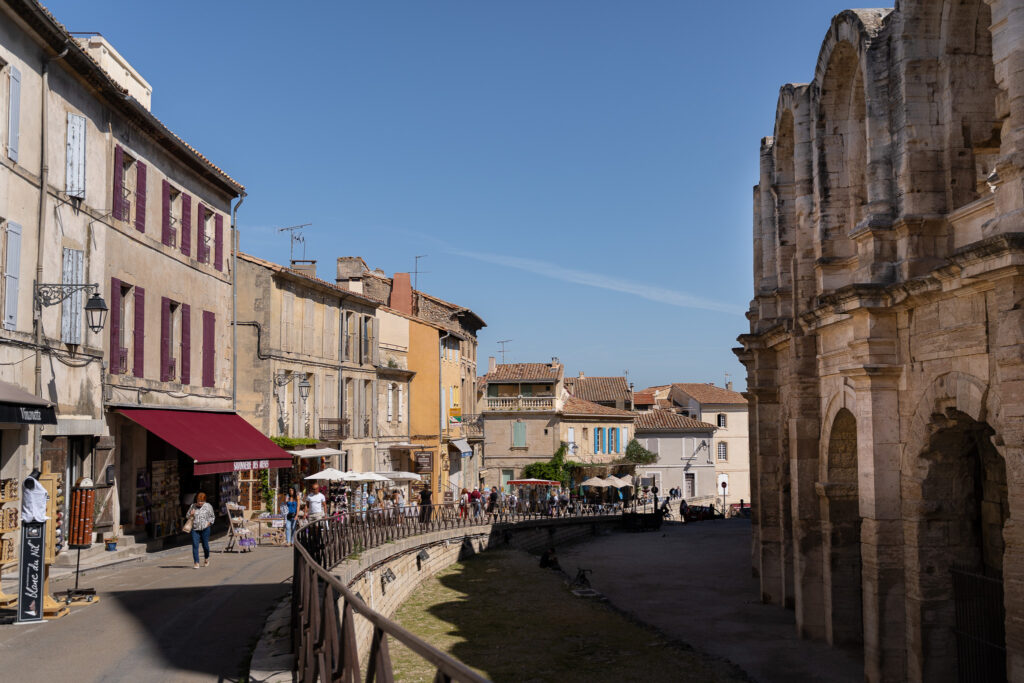
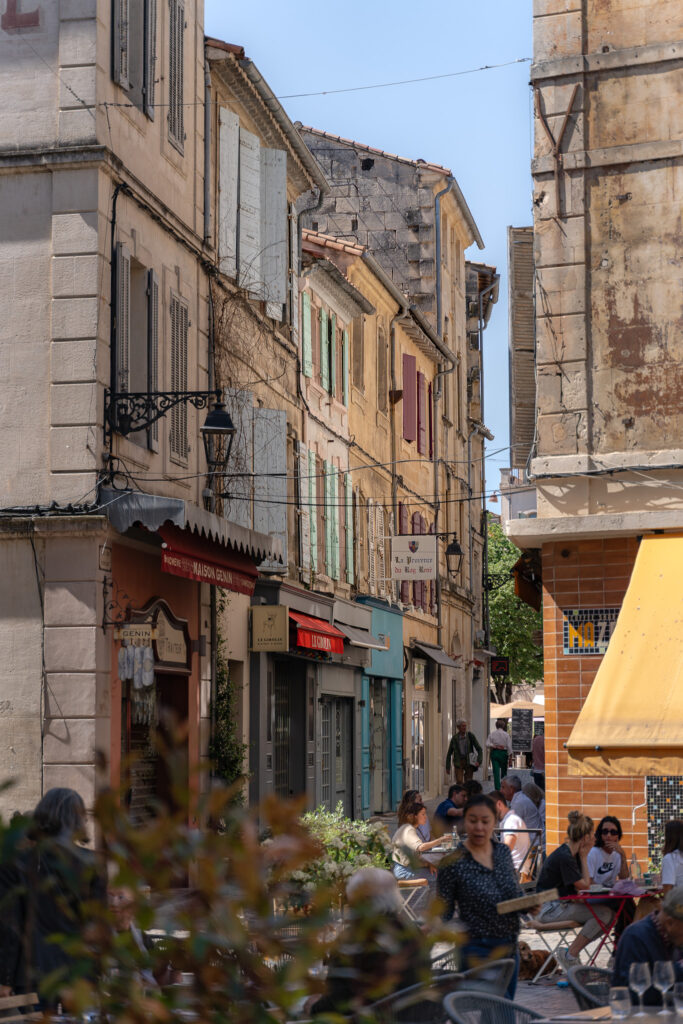
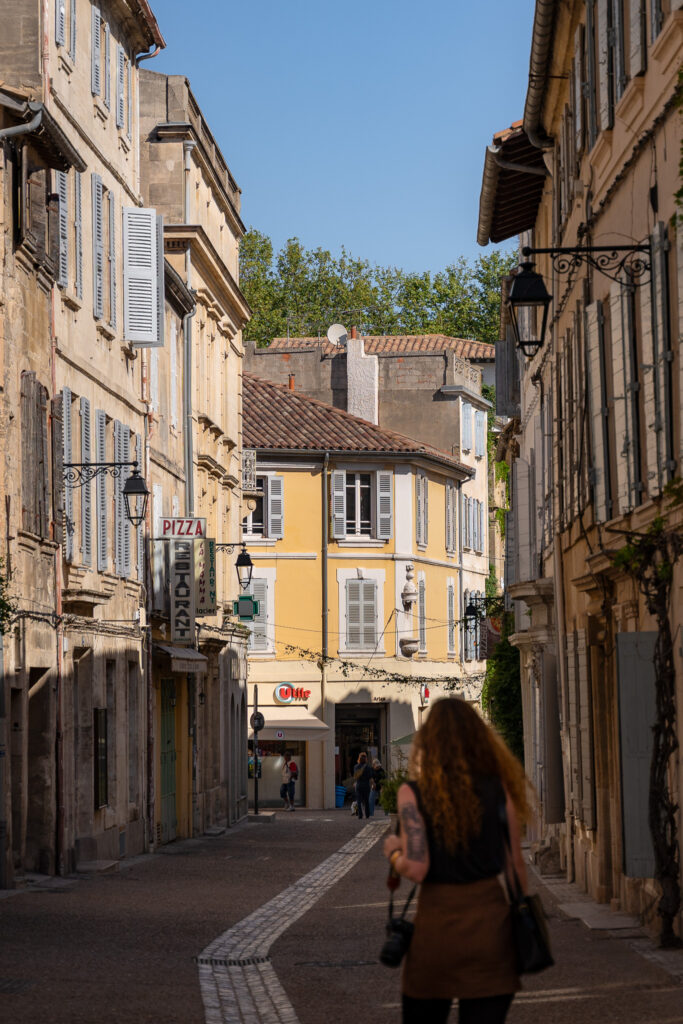
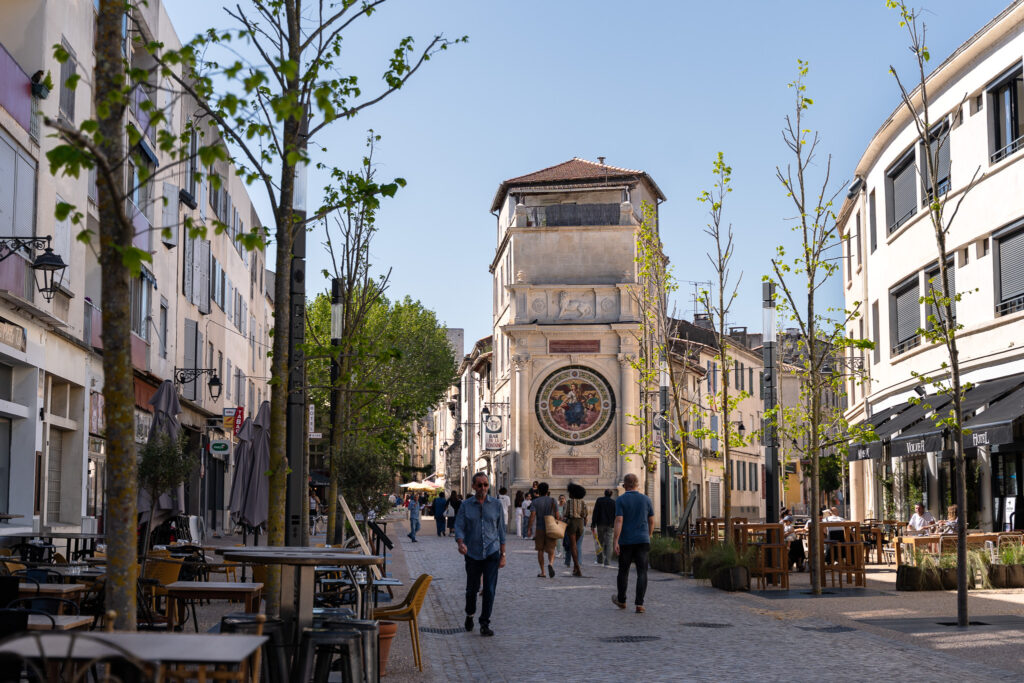
There’s no better way to discover Arles Old Town than by slowly wandering through its maze of streets, soaking up the atmosphere, and exploring every corner. This is also where you’ll find most of the city’s UNESCO sites. With so many impressive landmarks and picturesque spots, strolling through the historic centre is definitely one of the best things to do in Arles in one day.
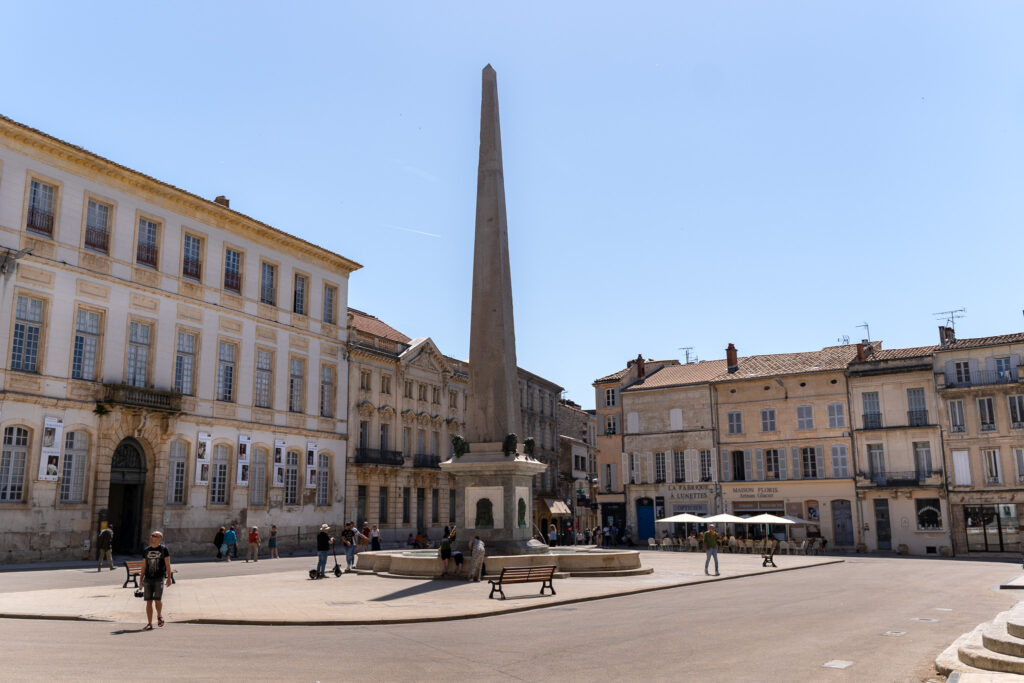
In Arles Old Town, you’ll find points of interest like: Roman Amphitheatre, Roman Theater, Place de la République with a striking obelisk fountain, 11th-century Saint-Trophime Cathedral with its cloister, Espace Van Gogh, Baths of Constantine, Cryptoportiques, Place du Forum, and Arles Market. We’ll take a closer look at all of them soon.
In addition to the main landmarks, Arles Old Town is filled with smaller museums, art galleries, cozy cafés, restaurants, and little shops. These are perfect places to pause, unwind, and enjoy the local vibe.
Arles Tourist Office is located on Boulevard des Lices, just a short walk from Place de la République. It’s a great place to pick up a map, buy a monument pass, and get information about Van Gogh, current events, or available guided tours.
Arles Amphitheater
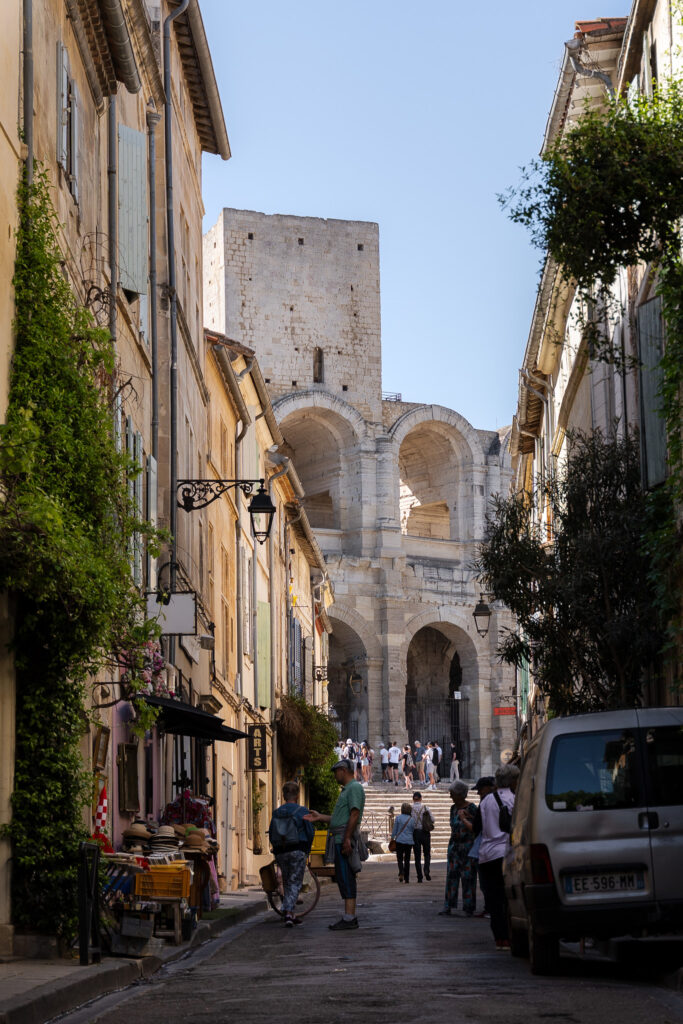
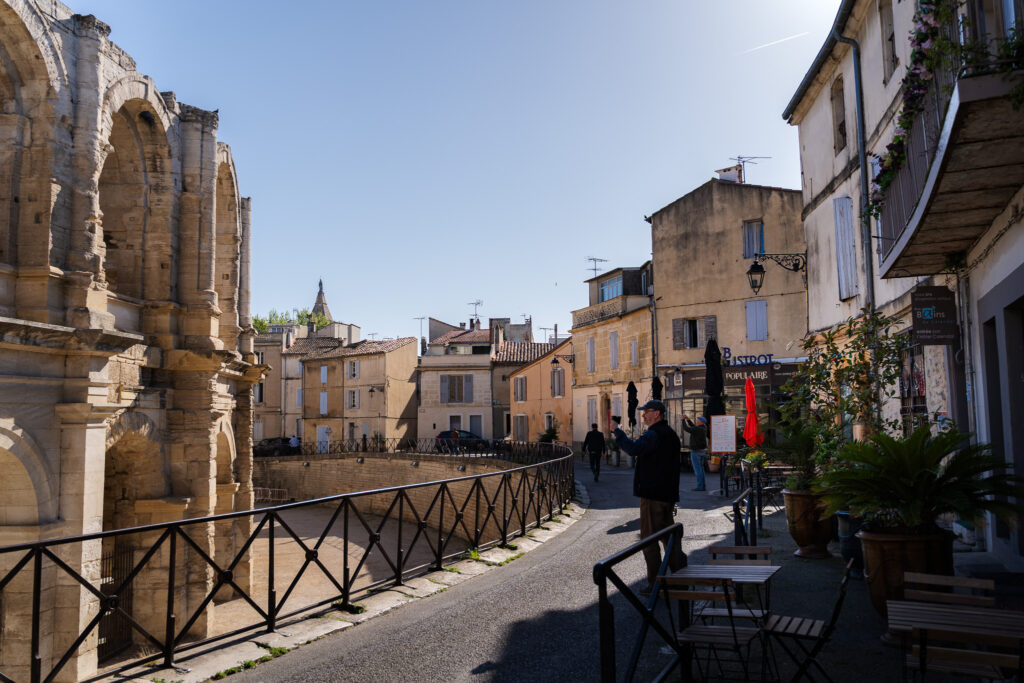
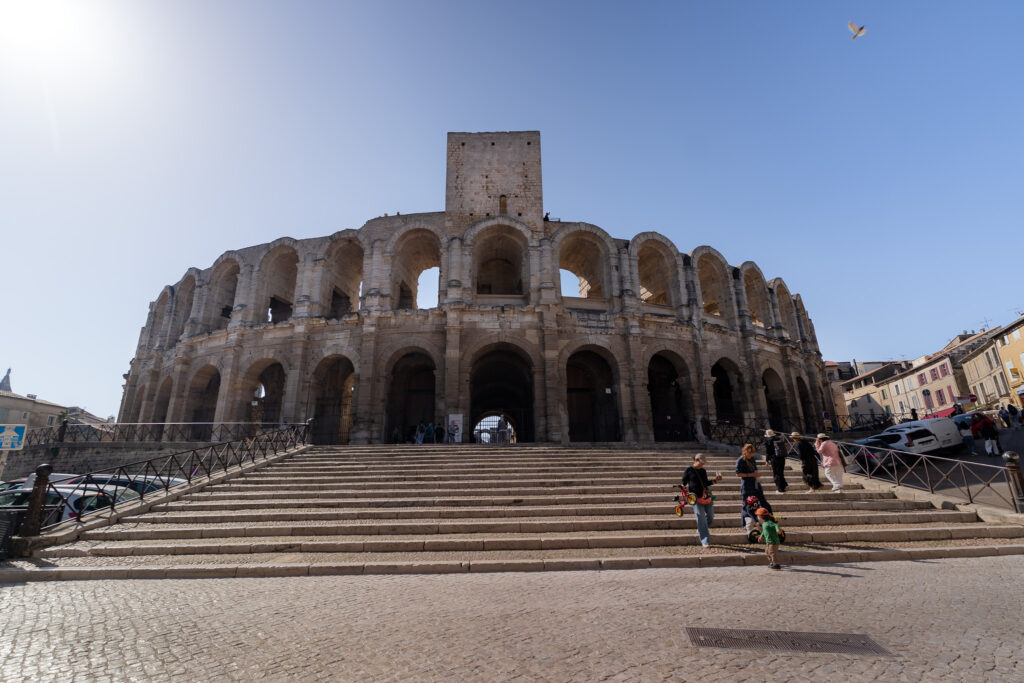
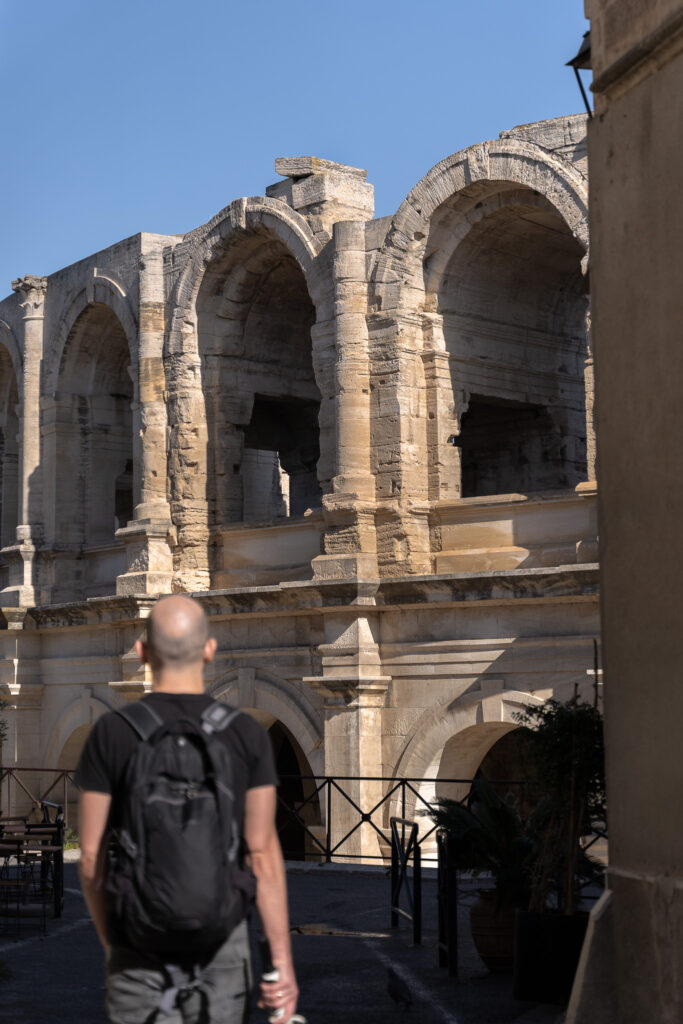
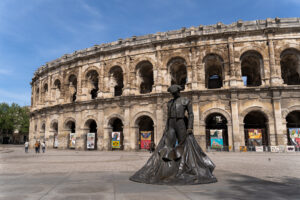
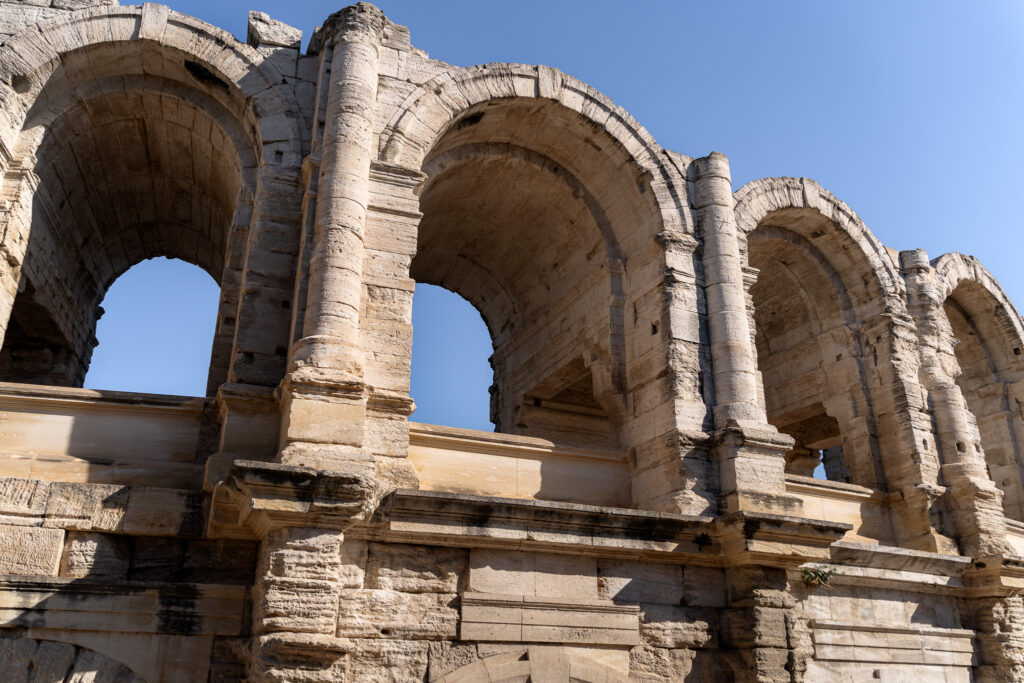
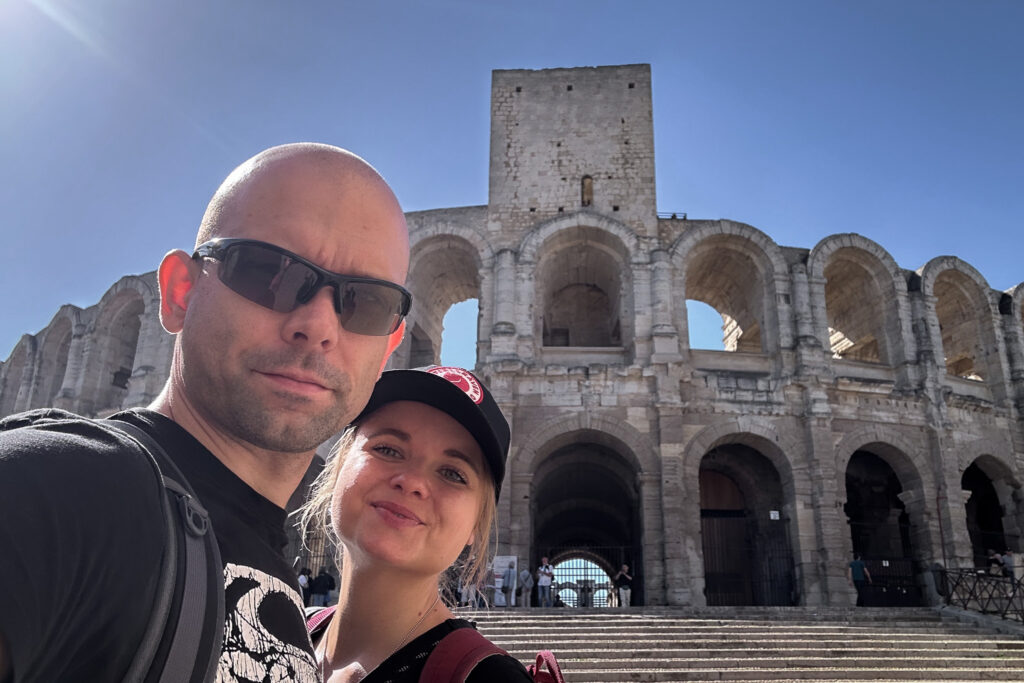
Arles Amphitheatre is the most significant Roman monument in the city. And it’s truly spectacular! The arena was built in 90 AD, and in its heyday could hold over 20k spectators who gathered to watch bloody gladiator fights, animal hunts, executions, and thrilling chariot races. It served an important purpose to entertain the population.
After the fall of the Roman Empire, the amphitheater became a refuge for the local population and was transformed into a small fortified village with over 200 houses and even a chapel built within it. Quite hard to imagine today! The Amphitheater remained this way until the early 19th-century, when the houses were removed and the monument was carefully restored.
Today, you can admire Arles Amphitheater from the outside, explore its interior walkways, and climb to the upper levels for nice views over the town. Visiting the amphitheatre is one of the most essential things to do in Arles in one day, not only for those interested in Roman history.
Entrance to the Arles Amphitheater (combined with the Roman Theater) costs €11 for a normal ticket, and €9 for a reduced one (September 2026). For current prices, opening hours, and online tickets, visit the arlestourisme.tickeasy.com website.
Roman Theatre
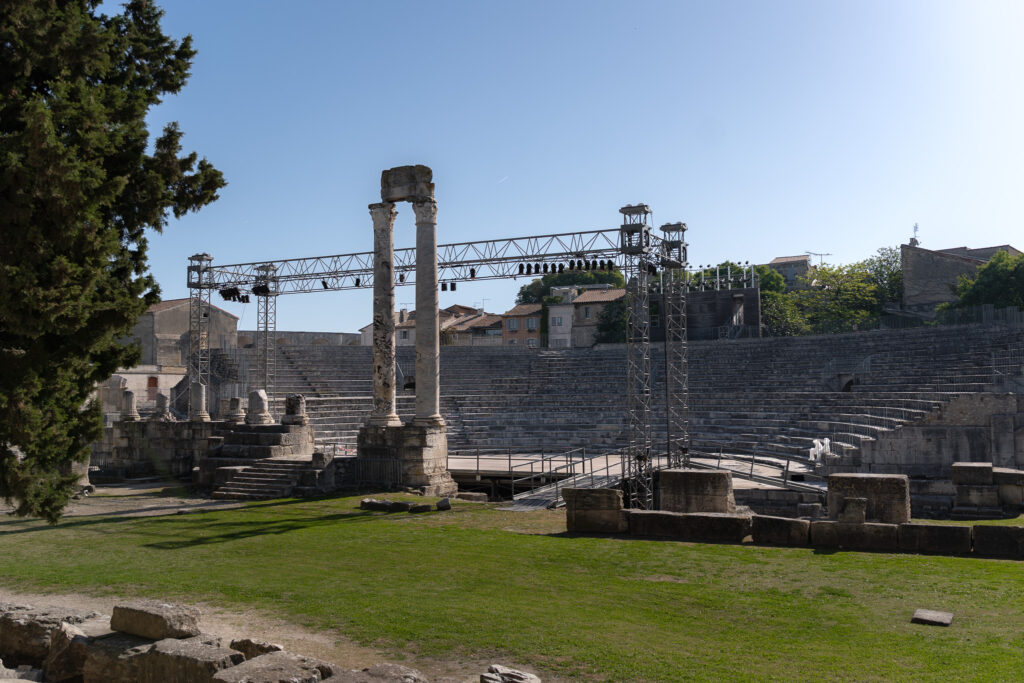
Just a few steps from the amphitheater, you’ll find the Roman Theater of Arles, built in the 1st century AD. It once featured 33 rows of seating and could accommodate 8000 people who came for theatrical productions, musical performances, or philosophical debates.
Today, some of the original structure remain, including parts of the seating, the orchestra area, and two columns that hint at the theater’s former grandeur. The site also continues its cultural mission and hosts concerts, performances, and various events throughout the year.
Entrance to the Roman Theater (combined with the Amphitheater) costs €11 for a normal ticket, and €9 for a reduced one (September 2026). For current prices, opening hours, and online tickets, visit the arlestourisme.tickeasy.com website.
Travel tip. If you don’t want to pay for the entrance, or you’re short on time, you can still get a good view over the theatre from behind the gates. You can also walk to Jardin d’Été, a small garden offering a lovely viewpoint over the theatre.

Van Gogh Artistic Legacy in Arles
Vincent van Gogh lived in Arles from February 1888 to May 1889, before being admitted to a psychiatric institution in Saint-Remy-de-Provence due to mental health problems. Although his time in Arles was short and turbulent (it’s here where he famously cut off his ear), it was also one of the most artistically productive periods of his life.
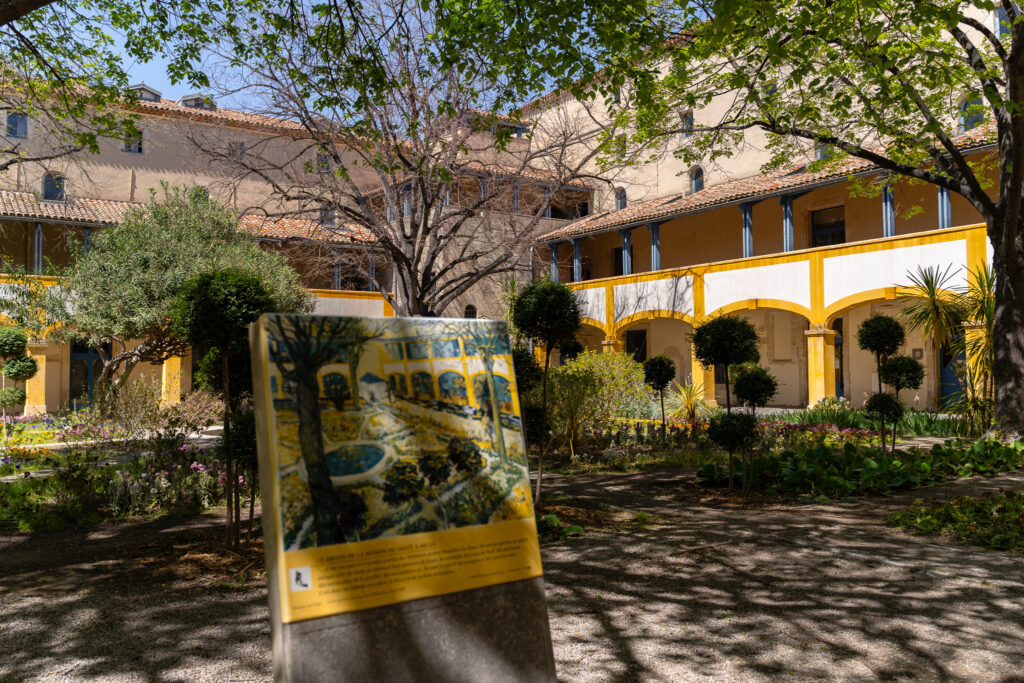
In total, Van Gogh spent about 2.5 years in Provence, creating around 350 works, including masterpieces like Starry Night, Café Terrace at Night, and Self-Portrait. And today, one of the best things to do in Arles is to follow in his footsteps, exploring places where he painted, lived, and was hospitalized. Throughout the city, easels mark the exact spots where he set up his canvas, allowing you to compare his paintings with the scenes that inspired them.
Most popular Vincent van Gogh sites in Arles
- Starry Night Over the Rhône – riverbank spot where he painted this iconic night scene.
- Café Terrace at Night – the café named Café Van Gogh on Place du Forum. Unfortunately, it has been closed since 2024, but the exterior remains visible, as of the end of 2026.
- Espace Van Gogh – the former hospital where he stayed for a few months after cutting off part of his left ear. During his stay, he painted the beautiful courtyard (Garden of the Hospital in Arles), capturing it from his room on the upper-floor. Entrance is free.
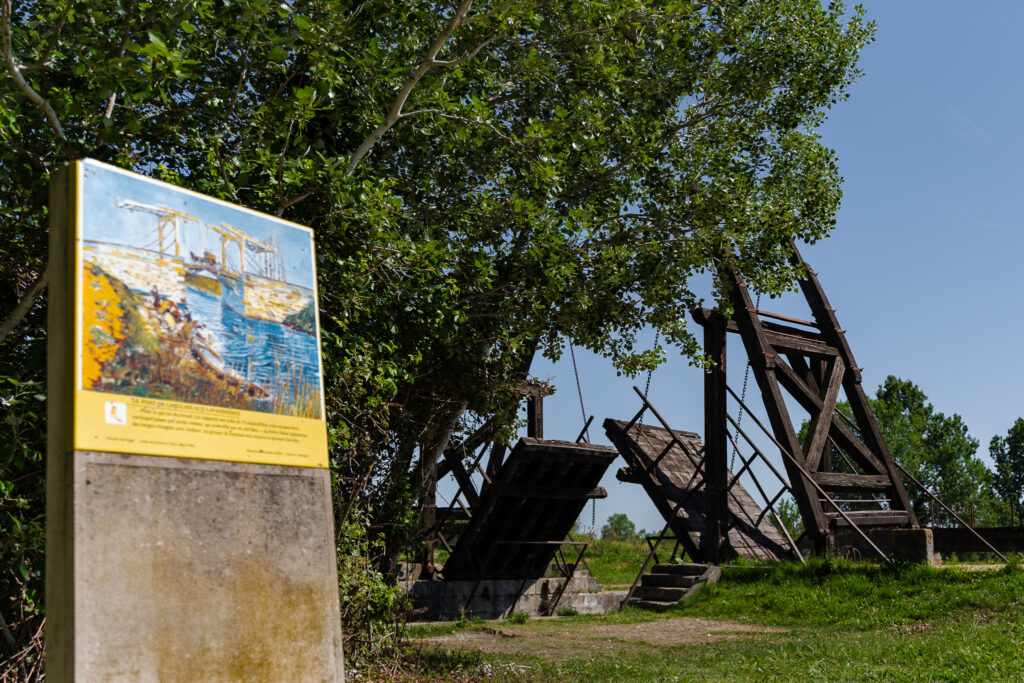
- Langlois Bridge – Van Gogh painted this bridge multiple times because it reminded him of his homeland in the Netherlands. The current bridge is located south of the Arles center, 40-minute walk or 10-minute drive.
Arles is also home to the Fondation Vincent van Gogh, although the name can be misleading. It doesn’t house permanent originals, but offers contemporary exhibitions inspired by Van Gogh’s legacy. To learn more about current exhibitions, prices, and opening hours, visit fondation-vincentvangogh-arles.org website.
Travel tip. You can pick up a Van Gogh walking tour map at the Arles Tourist Office, or use various online and interactive maps to guide your route, like this from vangoghroute.com website.
Cryptoportiques
The origins of the Cryptoportiques, the impressive underground galleries hidden beneath Arles’ city center, date back to the first Roman colony around 46 BC. These vaulted corridors once formed the foundations of the Roman forum above and stretched for hundreds of meters. They likely served as storage spaces or as a cool retreat during hot summer days.
The Cryptoportiques are listed as a UNESCO World Heritage Site. You’ll find the entrance to the Cryptoportiques via Arles Town Hall, located at Place de la République. Entrance costs €4 (September 2026). For current prices, opening hours, and online tickets, visit the arlestourisme.com website.
Discover more beautiful places in Provence 🌿🤩
Saint-Trophime Church & Cloister
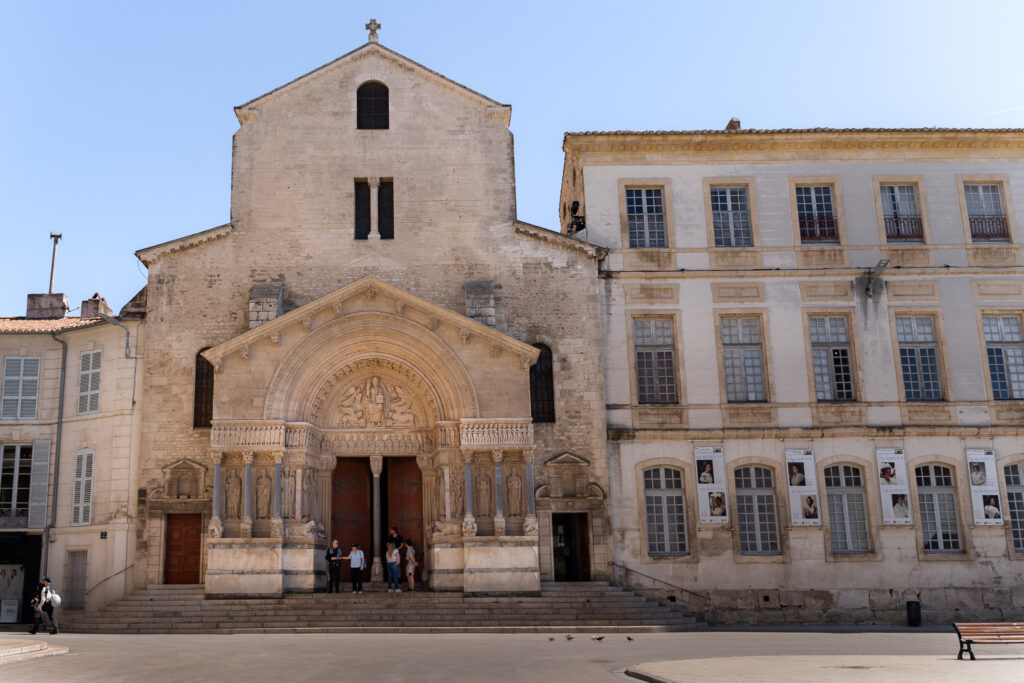
Saint-Trophime Church is a Romanesque church built between the 12th and 15th centuries. It’s located in Arles old town, on the Place de la République. Just take a look at its facade – it’s stunning! The intricately carved portal is considered one of the finest examples of Romanesque sculpture in France.
The adjacent 12th-14th centuries cloister is equally impressive. And it’s one of the best-preserved Romanesque cloisters in Provence! The carved columns tell biblical scenes, and the courtyard garden offers a tranquil escape from the busy streets, making it one of the most peaceful things to do in Arles.
Saint-Trophime Church and its cloister are listed as a UNESCO World Heritage Site.
Entrance to the church is free, but entrance to the cloister costs €6 for a normal ticket, and €5 for a reduced one (September 2026). For current prices, and opening hours, visit the arlestourisme.tickeasy.com website.
Baths of Constantine
The Baths of Constantine are one of the best-preserved Roman thermal complexes in southern France, dating back to the 4th century. Once they formed part of a grand riverside palace district, but today only a portion of the original structure remains. Baths were a place where locals once gathered to socialize, relax, and bathe. On site, you can still see brick arches, partially preserved walls, vaulted rooms, domes, and traces of the ancient heating system.
The Baths of Constantine are also listed as a UNESCO World Heritage Site. Entrance costs €5 for a normal ticket, and €4 for a reduced one (September 2026). For current prices, oand pening hours, visit the arlestourisme.tickeasy.com website.
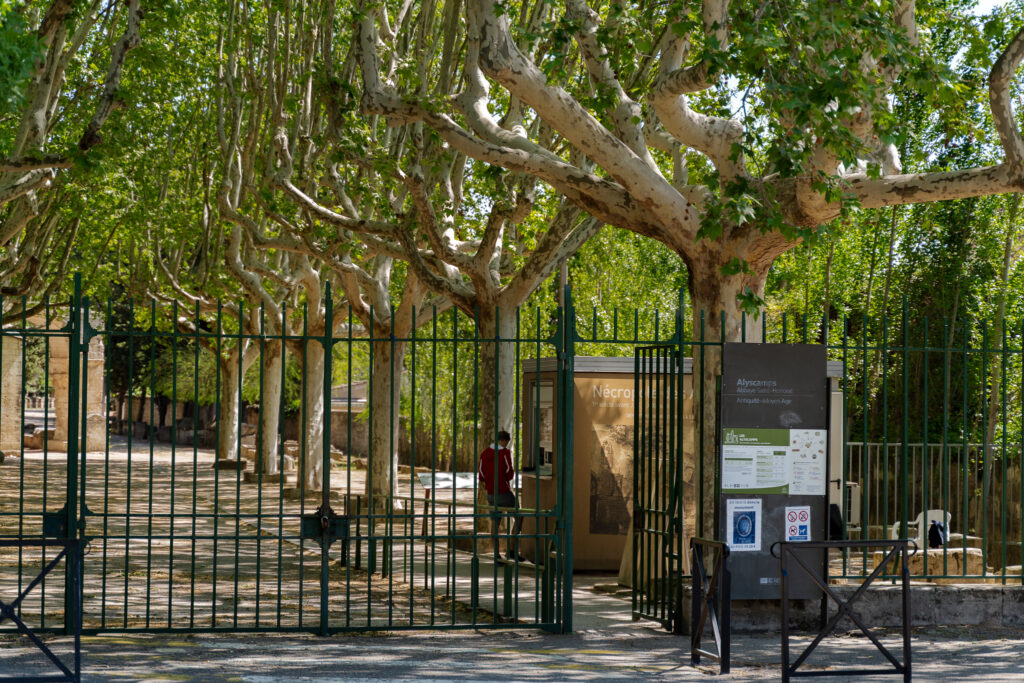
Alyscamps
The Alyscamps is an ancient necropolis which, in Roman times and throughout the medieval period, was one of the most prestigious burial grounds in Europe. People from across the region requested to be buried here!
Today, it’s a peaceful, slightly haunting walkway lined with stone sarcophagi, leading to the small Saint-Honorat Church at the end. No wonder that the site inspired Van Gogh! The Alycamps are listed as a UNESCO World Heritage Site.
The Alyscamps is located just outside Arles’ old town. Entrance costs €5 for a normal ticket, and €4 for a reduced one (September 2026). For current prices, and opening hours, visit the arlestourisme.tickeasy.com website.
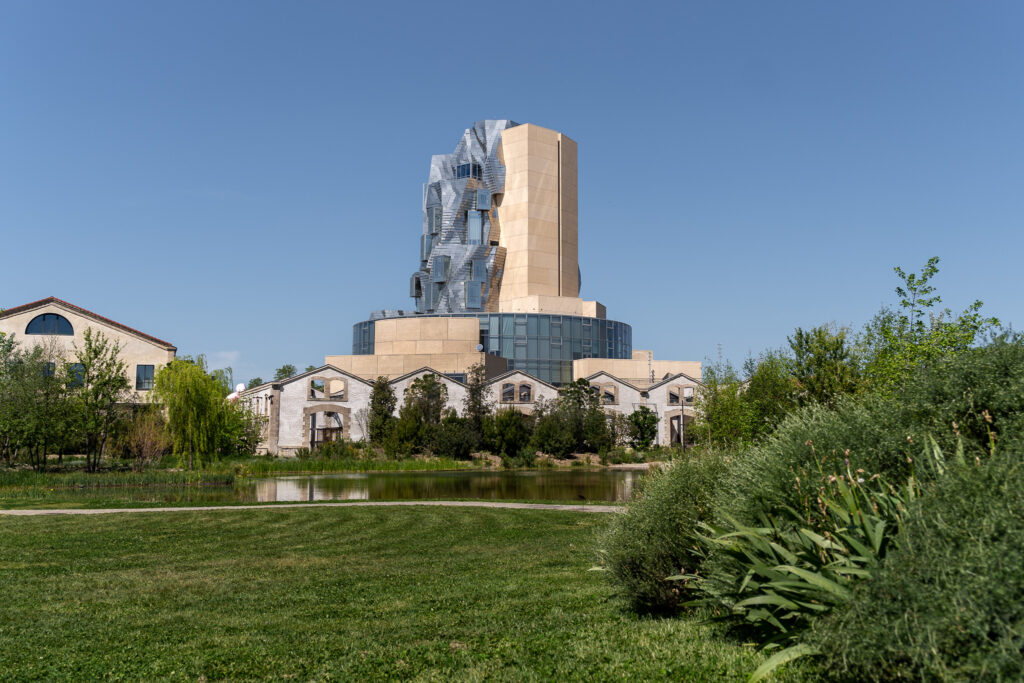
LUMA Arles
For contemporary art lovers, LUMA Arles is a must-visit. It’s an art center opened in 2021 in a former railway complex. The centerpiece is the stunning twisted aluminum tower that has become a new landmark on Arles’ skyline. Behind the main building, you’ll also find a lovely garden – a perfect spot to sit down and relax.
LUMA hosts rotating exhibitions of contemporary art, photography, and multimedia installations, often featuring innovative and thought-provoking works by international artists. Entrance prices vary depending on current exhibitions. For up-to-date information, ticket prices, and opening hours, visit the tickets.luma.org website.
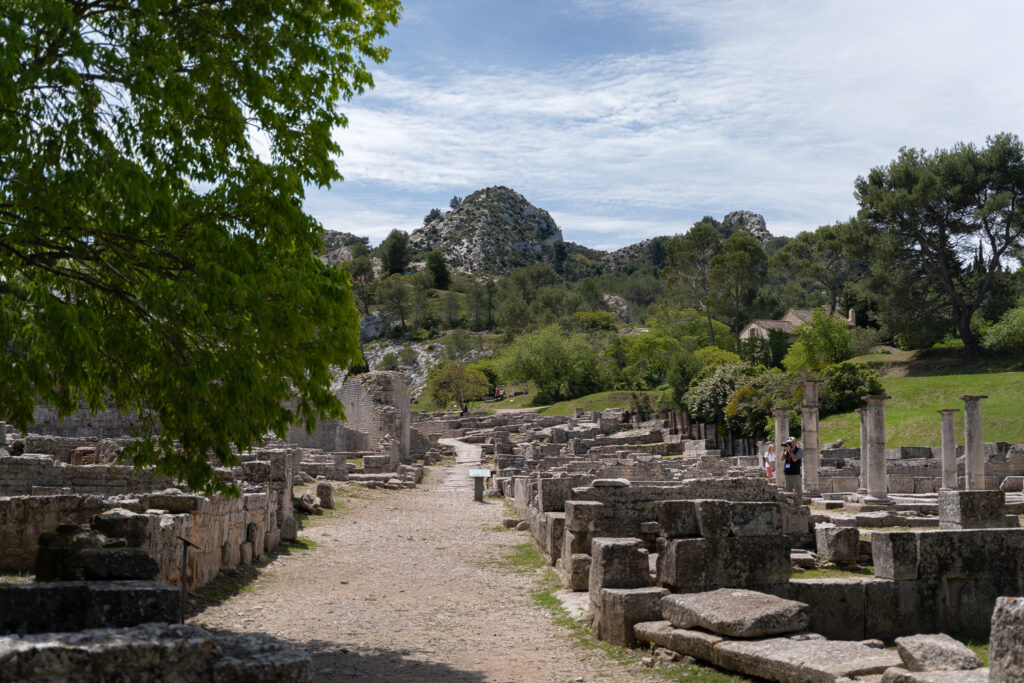
Surrounding area in Arles
Although there are plenty of things to do in Arles, the town also makes a fantastic base for exploring nearby gems. Whether you’re after history, nature, or a glass of fine wine, there are many amazing places to visit near Arles.
In Arles, you’re perfectly located to explore the Camargue – France’s largest wetland area and one of Europe’s most unique natural regions, known for its white horses, black bulls, and adorable pink flamingos.
Just a short drive or train ride away, you’ll also find vibrant cities like Avignon, Nimes, Montpellier, Aix-en-Provence, or Marseille. And if you’re craving classic Provençal charm, don’t miss nearby villages such as Les Baux, Saint-Rémy, or L’Isle-sur-la-Sorgue.

Arles Monument Passes
If you plan to visit several historic sites in Arles, it’s worth buying one of the city’s passes. They offer great value and can save you some money. You can choose between two options.
Liberty Pass: it lets you visit 4 Roman monuments of your choice. It also includes entry to the Réattu Museum and one additional museum of your choice. Price: €15 standard / €13 reduced.
Advantage Pass: the best option if you want to see everything. It includes all 6 Roman monuments and all museums in Arles. Price: €19 standard / €16 reduced.
You can buy passes at any monument, at the Arles Tourist Office or online. For details and current information, visit the arlestourisme.tickeasy.com website.

Explore local attractions
How to get to Arles, France?
Arles is located about 25km from Saint-Rémy-de-Provence, 30km from Nimes, 40km from Avignon, 80km from Aix-en-Provence or Montpellier, and 90km from Marseille. The most convenient way to get to Arles is by car, train, or bus.
Where to park in Arles?
In Arles we recommend leaving a car in one of the city’s paid parking lots, like this Parking du Centre, located just a few steps from Amphitheatre.
To Arles by bus
You can easily get to Arles by bus. For example, the trip from Nimes will take around 50 minutes, 1.5 hours from Avignon, and 2.5 hours from Aix-en-Provence. To learn more about bus connections that might interest you visit rome2rio.com or Flixbus website.
To Arles by train
You can also get to Arles by train, especially from other big cities. For example, a trip from Marseille or from Montpellier will take 1 hour, 30 minutes from Nimes, and 15 minutes from Avignon. To learn more about connections that might interest you visit sncf-connect.com or rome2rio.com website.
Camping Arles
If you’re traveling by camper, places like Camping Saint Gabriel or Camping Tartarin might interest you. They are located close to Arles.
To Arles with guided tour
If you don’t want to put too much effort into planning, you can always take advantage of the guided tours and let someone else take care of all the details of your one day trip to Arles.
If you’re staying in Aix-en-Provence, we recommend taking part in this popular Arles, Les Baux, & Saint-Rémy Full-Day Trip. And from Avignon, you can choose this interesting In the Footsteps of Van Gogh Tour – perfect for art lovers!
One day in Arles, France – Summing up
And that’s Arles, a charming gem full of history, art, and warm southern vibes. From the spectacular amphitheater where gladiators once battled to the atmospheric streets that inspired Van Gogh’s masterpieces, Arles offers an incredible journey through history and art.
Whether you come for its Roman wonders, its artistic legacy, or the simple joy of wandering its streets, Arles will quickly steal your heart. We hope our guide to the best things to do in Arles in one day helps you make the most of your visit. Enjoy your trip & bon voyage!
Our opinion about Arles
For us, a visit to Arles was a day trip from nearby La Grande-Motte where we lived for a few weeks. We visited in mid April, and during that time the town was pleasantly calm and free from large tourist crowds. Exploring everything we wanted in Arles took us about 7 hours.
Arles quickly impressed us with its concentration of Roman monuments in such a compact area, the beautiful spots where Van Gogh painted some of his masterpieces, and its relaxed southern French vibe. We’ve visited many Roman sites across Europe, but in our opinion Arles truly stands out. We even liked it much more than nearby Nimes!
Restaurants, accommodations, and map
Check out various recommended places below.
Where to eat in Arles?
Here are your best, high-rated options in Arles: