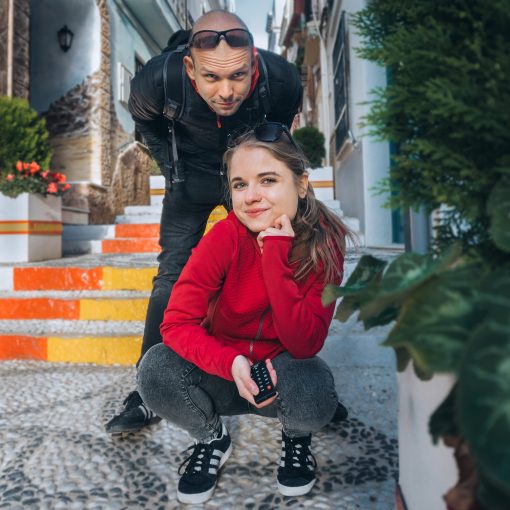
Hola! Welcome to Valencia, a vibrant coastal city on Spain’s coast where tradition meets innovation. Known for its futuristic architecture, beautiful historic centre, and as the birthplace of paella, Valencia has something for every traveler. Whether you’re wandering the cobbled streets, marveling at cutting-edge design, relaxing in green gardens, or sunbathing on the beach, Valencia for sure will charm you. We recently spent few days in this city and it stole our hearts in the blink of an eye, and we hope it’ll steal yours too! Here are our favorite things to do in Valencia. Vamos!


This website uses affiliate links thanks to which we may earn a commission for purchases you made at no additional cost to you. If you like the content, consider using those links to support us. Thank you!
Valencia, Spain FAQ
Valencia is a vibrant Spanish city located in the Province of Valencia (it’s its capital city) on the Mediterranean coast known as Costa de Valencia. Thanks to its central location, Valencia makes a great base for exploring nearby gems like Xativa, Port Saplaya, or Peniscola.
Absolutely! Valencia is a must-visit destination in Spain. It offers a delightful mix of old town historic charm with cutting-edge design of the City of Arts and Sciences, relaxing beaches, and a vibrant food scene. What makes Valencia special is how it manages to feel both cosmopolitan and authentic, modern and historic, all at the same time.
Valencia is best known for being the birthplace of paella, a futuristic City of Arts and Sciences, Europe’s largest aquarium, vibrant Las Fallas festival, long stretches of sandy beaches, and one of Europe’s largest urban green spaces – the lush Turia Garden. Valencia’s Cathedral is also home to what many believe to be the Holy Grail.
You need at least 2 full days to explore Valencia’s main highlights in the old town and the City of Arts and Sciences. With more days, you can also relax at the beach, enjoy the local food scene, and go on a day trip – all without rushing.

Things to do in Valencia Old Town
Valencia Old Town
Valencia old town is compact and walkable, with all the main landmarks located within a short walking distance from each other. And there’s no better way to discover it than just getting lost in a maze of its charming streets, taking time to soak up the vibe, and slowly exploring every corner. Impressive squares, historical landmarks, religious buildings, green spaces… There are many interesting places around which makes exploring the old town one of the best things to do in Valencia.
In Valencia Old Town, you’ll find points of interest like: Plaça de la Reina with Valencia Cathedral, Plaça de la Mare de Déu with Basilica of the Virgen de los Desamparados and Turia Fountain, Plaça de l’Ajuntament with City Hall and Palace of Communications, Plaça del Mercat with Central Market, La Lonja de la Seda (Silk Exchange), Church of Santa Catalina, El Carmen neighborhood, Church of San Nicolás de Bari and San Pedro Mártir, Serranos Towers, Turia Gardens, and Jardines del Real.


Other squares worth exploring in Valencia Old Town include Plaça Redonda circular square surrounded by buildings, Plaça del Colegio del Patriarca lined with Valencia’s orange trees and with beautiful building of University Historical Library, small and peaceful Plaça del Negret, and lively Plaça del Doctor Collado.
There are also a few museums and of course a lot of restaurants, cafes, tapas bars, horchaterías, and small shops around. Shortly, we’ll take a closer look at the most important Valencia attractions.
If you’re into quirky finds, don’t miss Europe’s narrowest building on Plaça de Lope de Vega, just 107 cm wide (unbelievable that someone once lived there!), and the adorable House of Cats in the El Carmen neighborhood which became a popular Instagram photo spot.
In Valencia you’ll find a few Tourist Offices, out of which few are located in the old town area. To learn more about their locations, visit the visitvalencia.com website.


Valencia Cathedral & Plaça de la Reina
Valencia Cathedral is a stunning Gothic-style building located on Plaça de la Reina, one of the most beautiful squares in the old town. Construction began in the 13th century and the church was built over an ancient Roman temple that was later a mosque.
The Valencia Cathedral is famous for housing what many believe to be the Holy Grail – the chalice used by Jesus at the Last Supper. You can see it in the Chapel of the Holy Chalice. Whether you’re religious or not, seeing this legendary artifact is a fascinating thing to do in Valencia!
Entrance to the Cathedral costs €10 for a normal ticket and €6 for a reduced one (May 2026). For current prices and opening hours visit the catedraldevalencia.es website.

Also, don’t miss climbing the Miguelete Tower (El Micalet), the cathedral’s iconic octagonal bell tower. After climbing 207 steps, you’ll be rewarded with spectacular panoramic views over Valencia’s old town and its surrounding areas. The view is absolutely worth the effort!
Entrance to Miguelete Tower costs additional €3 for a normal ticket and €2 (July 2025) for a reduced one. You can do this as an addition to visiting a cathedral or solo. For current prices and opening hours visit the catedraldevalencia.es website.
Behind the cathedral, you’ll also find two peaceful and lesser-known squares – Plaça de l’Arquebisbe and Plaza de Décimo Junio Bruto. Both perfect for snapping beautiful photos and enjoying a moment of rest.


Plaça de la Mare de Déu
Plaça de la Mare de Déu, also known as Plaza de la Virgen, is one more picturesque square in Valencia historic centre. Here you’ll find a beautiful Baroque-style Basilica de la Virgen de los Desamparados – simple on the outside, but richly decorated inside (and free to visit). The square is also home to the historic Turia Fountain and a nice view of the cathedral from a different angle.
Spending time on Plaza de la Virgen is one of the main attractions in Valencia, it’s just a perfect place to pause for a coffee, enjoy dinner, or simply relax and do a bit of people-watching.

Plaça de l’Ajuntament
Plaça de l’Ajuntament is the largest square in Valencia and one of the city’s main hubs. It’s dominated by two beautiful examples of early 20th-century architecture: the elegant City Hall with its distinctive clock tower, and the grand Palacio de las Comunicaciones which was home to the local post and telegraph office for many years. The square often hosts major city events (including key celebrations during the famous Las Fallas festival), and is beautifully illuminated at night.


National Museum of Ceramics
The National Museum of Ceramics is housed in the Palacio del Marqués de Dos Aguas, a stunning 18th-century palace considered one of the best examples of Baroque architecture in Spain. Take one look at its incredible façade, and you’ll see why – it’s a real masterpiece!
Inside, you’ll find the largest national collection of ceramics, dating from prehistory to the modern period, including a few pieces by Picasso. Beyond ceramics, you can also explore rooms like the Ballroom, Red Room, and Porcelain Sitting Room featuring original 19th-century furnishings, frescoes, marquetry, and period decor. Visiting this museum is definitely one of the most fascinating things to do in Valencia, one that everyone will enjoy.
Entrance to the National Museum of Ceramics costs €3 for a normal ticket, €1.5 for a reduced one, and is free on Saturday afternoons and Sundays (May 2026). For current prices and opening hours, visit cultura.gob.es website.

Serranos Towers
Serranos Towers are one of only two still standing medieval gates that were once part of Valencia’s ancient city walls. These massive Gothic-style towers were built in the late 14th century and guarded the northern entrance into the city. They also served as a ceremonial gateway and, later as a prison.
Today, you can climb to the top for lovely views over the Valencia old town and the Turia Gardens. The towers are considered one of the finest examples of late Gothic military architecture in Europe and are one of the most iconic landmarks in Valencia. Exploring Serranos Towers is one of the best attraction in Valencia, especially if you enjoy history or simply a good view.
Entrance to Serranos Towers costs €2 for a normal ticket, €1 for a reduced one, and is free on Sundays and holidays (May 2026). For current prices and opening hours, visit the visitvalencia.com website.

Quart Towers
Just a short walk from the Serranos Towers, you’ll find the second of Valencia’s surviving medieval gates – Quart Towers. They are another impressive remnant of Valencia’s ancient city wall, built in the 15th-century to guard western entrance to the city. And their facade is still marked with cannonball hits from the Napoleonic Wars in 1808! They were also used as a prison and are another great example of Valencia’s Gothic military architecture.
You can climb to the top of the towers for nice views of the surrounding streets and rooftops – not as far-reaching as from Serranos, but still rewarding. Visiting Quart Towers is one of the lesser-known things to do in Valencia, perfect if you’re looking to explore beyond the main tourist trail.
Entrance to Torres de Quart costs €2 for a normal ticket, €1 for a reduced one, and is free on Sundays and holidays (May 2026). For current prices and opening hours, visit the visitvalencia.com website.



Explore local attractions
El Carmen neighborhood
El Carmen is one of the most vibrant and popular neighborhoods in Valencia, located at the northwest corner of the historic center. Named after the nearby church and convent of Carmen Calzado, today it’s a lively area loved for its Mediterranean cuisine. But food is just the beginning – El Carmen is also full of art, history, and quirky hidden gems, making exploring it one of the most exciting things to do in Valencia!
Among the neighborhood highlights are the Portal de la Valldigna, a 14th-century archway that once marked the entrance to the Moorish quarter after the reconquest by Jaume I in 1238, and the Church of San Nicolás de Bari and San Pedro Mártir – often called the “Sistine Chapel of Valencia” thanks to its breathtaking baroque frescoes. You’ll also find already mentioned Serranos and Quart Towers within this neighborhood.
Need more reasons to love El Carmen? Street art! This neighborhood is famous for its colorful murals and graffiti that add a modern touch to the historic setting. Be sure to wander down Calle de Moret and nearby alleys, and don’t miss the quirky House of Cats.


La Lonja de la Seda
La Lonja de la Seda (Silk Exchange) is one of the most beautiful buildings in Valencia. It’s a unique example of Gothic civic style, named a UNESCO World Heritage Site. It was built in the 15th century when Valencia was one of Europe’s most important trading centers for silk and other goods.
The highlight of La Lonja de la Seda is the Hall of Columns, where helical, palm tree-like columns stretch toward the vaulted ceiling. The beautifully carved stonework and soft light filtering through the windows create a magical, almost cathedral-like atmosphere. Beyond the main hall, you’ll find a few smaller rooms to explore, a peaceful courtyard, and a short video that explains the building’s fascinating past.
Entrance to La Lonja de la Seda costs €2 for a normal ticket, €1 for a reduced one, and is free on Sundays and holidays (May 2026). For current prices and opening hours, visit the visitvalencia.com website.

Central Market
If you’re a food lover, here’s one of the most delicious things to do in Valencia – visiting Central Market, Europe’s largest fresh produce market. It’s located in modernist building from 1928 (which you definitely should admire for a moment), but the real magic happens inside among the 250+ stalls.
Inside, you’ll find everything from fresh seafood, seasonal fruits and vegetables, ham, local cheeses, spices, and all the ingredients that make Valencian cuisine so special. Central Market is the perfect place to sample local specialties, shopping for tasty souvenirs, or simply soak up the lively atmosphere.
Valencia Central Market is open from Monday to Saturday, from 7:30 am to 3:00 pm. For current opening hours visit mercadocentralvalencia.es website.

Museums of Valencia
If you like visiting museums or are just in the mood for a dose of culture, Valencia has something for you too. Besides the ones already mentioned in the post, you can also visit the following ones.
Museum of Fine Arts of Valencia is Spain’s second largest art gallery housed in a magnificent 17th-century building on the edge of Turia Gardens. Inside you’ll find 2000+ artworks from the 15th to the 19th centuries, including pieces by renowned Spanish masters like El Greco, Goya, and Velázquez.
The Fallas Museum is dedicated to Valencia’s most iconic festival – Las Fallas. Inside you’ll find exhibits with the ninots (figurines) that were saved from the festival’s flames from 1934 onward. You’ll also learn about the process of how these giant sculptures are created and the history behind this unique festival.
For history lovers, La Almoina Archaeological Museum is a must. Inside, there’s an impressive collection of archaeological remains dating back from city founding by the Romans in the 2nd century BC to the Middle Ages.

Turia Gardens
Another one of the best things to do in Valencia is exploring the Turia Gardens, one of the largest urban parks in Spain. It’s a 9 kilometre-long green space which partially encircles the old town and City of Arts and Sciences. It was created in the former bed of the Turia River, whose course was changed in the 1960s to prevent flooding.
Turia Gardens connect many of Valencia’s major attractions, and are perfect for walking, cycling, or jogging. Along the way, you’ll pass through 18 different sections – from botanical gardens and quirky Gulliver Park playground (a must-visit if you’re traveling with kids) to sports areas and art installations. Best of all? It’s completely free to visit!

Explore City of Arts and Sciences
Visiting City of Arts and Sciences (es. Ciudad de las Artes y las Ciencias) is one of the most spectacular things to do in Valencia. It’s the crème de la crème of the city! It’s a futuristic scientific and cultural complex, designed by Valencia-born Santiago Calatrava, that has become Valencia’s most iconic landmark.
City of Arts and Sciences stretches along the former Turia riverbed and is home to several world-class attractions, ideal for visitors of all ages and interests. From interactive science exhibits to a huge oceanarium and an IMAX cinema, there’s something to wow everyone.

Palace of Arts
Palace of Arts is the newest and the most spectacular of the buildings of the City of Arts and Sciences, at least in our opinion. Depending on which side you look at it from, it looks like a futuristic fish… or Darth Vader’s helmet! Either way, it’s a true architectural masterpiece that never fails to impress.

Science Museum
Science Museum was designed to resemble a whale’s skeleton, which looks very impressive on the outside. It’s home to wide-range of interactive exhibitions focused on science, technology, and the human body. And it follows a philosophy of “not touching is prohibited” so be ready to get hands-on and learn by doing. Perfect place for curious minds of all ages!

Oceanografic
The star of the City of Arts and Sciences complex is Oceanografic – Europe’s largest aquarium. It showcases 7 different marine environments and is home to over 45,000 marine animals representing more than 500 species from across the globe.
From belugas and dolphins to sharks, penguins, seals, jellyfish, and colorful tropical fish, in Oceanographic you’ll get an unforgettable look at the wonders of the underwater world. Oh, and don’t miss the underwater tunnels! Visiting Oceanografic is without a doubt one of the most fascinating attractions in Valencia, for big and small travelers.


Hemisferic
Hemisferic was built to resemble an eye. It houses an IMAX cinema and planetarium. It opened in 1998 and it was the first building in the complex – and it’s still one of the most eye-catching!! Inside, you’ll find a large sphere that houses the projection room.
There are several shows daily, mainly science and nature related documentaries, usually around 45 minutes long. Be sure to check the schedule in advance and book the show that interests you most.

Umbracle
Umbracle is a beautiful open-air walkway and botanical garden. It’s a great place for a peaceful stroll among native Mediterranean plants and contemporary sculptures. It’s also a fantastic photo spot. Umbracle architectural design itself is stunning, with elegant arches casting artistic shadows, making it a fantastic photo spot.

Agora
Agora is home of CaixaForum Valencia, a multipurpose space that hosts temporary and permanent exhibits, live music shows, projections, and conferences.

Tickets to City of Arts and Sciences
You’ll need tickets to enter the Hemisferic, Science Museum, and Oceanografic. You can buy them separately or choose one of the combined ticket options that offer better value. We highly recommend buying tickets in advance online – you’ll save time and avoid long lines, especially during weekends and holidays. Also, plan to spend at least a few hours at both the Science Museum and Oceanografic to truly enjoy everything they offer.
To check out all the ticket prices and available combinations visit tickets.cac.es website.

Explore local attractions
Beaches in Valencia
It’s no secret that Costa de Valencia is a summer beach paradise. Along Valencia’s 20-kilometre coastline, you’ll find a variety of beaches perfect for soaking up the sun and swimming in the Mediterranean Sea. The choice of sandy spots is wide – whether you prefer family-friendly shores within the urban area or quieter and more secluded spots right in the l’Albufera Nature Park, there’s something for everyone among beaches in Valencia.
Playa de la Malvarosa is Valencia’s most popular beach, located just about 20 minutes from the city center by metro, tram, or car. This wide, golden-sand beach stretches for over 1km and offers all the amenities you might need – showers, lifeguards, beach bars, and sunbed and umbrella rentals.
Playa de las Arenas and Playa del Cabanyal are also excellent options, located on the same long stretch as Malvarosa. All of them have been awarded Blue Flag status for their cleanliness and environmental standards.

Behind the beaches you’ll also find a scenic promenade lined with palm trees and dotted with beach bars. It’s perfect for walking or cycling, and serves as a great spot for sunset watching too! While there, don’t hesitate to explore the El Cabanyal neighborhood, known for its colorful tiled houses and historic charm.
If you’re looking for a quieter escape, head south to the beaches within l’Albufera Natural Park. There, you’ll find unspoiled stretches of beaches like Playa de El Saler, Playa de la Garrofera, or Playa de la Devesa. Surrounded by dunes and pine forests, these beaches offer a more peaceful experience perfect for those who want to relax away from the crowds and enjoy Valencia’s wilder side.
That said, we want to be honest about our experience. While the urban beaches themselves are wonderful, parking areas were a huge downside. Even in the low season, we encountered many self-appointed “parking attendants” in the free lots who tried to direct us into available spaces and then demanded money. We didn’t pay them and were quite worried about the safety of our car. An unpleasant surprise!

Food in Valencia
Valencia is a paradise for food lovers. From traditional local Valencian dishes to a wide choice of international cuisine, here you’ll find whatever your taste buds crave! There are many great restaurants across the city, but don’t forget to check out reviews to avoid falling into a tourist trap with bad food – after all, food is one of the most delicious things to do in Valencia!
No visit to Valencia is complete without trying authentic paella in its birthplace, best paired with a glass of local wine. For a dessert be sure to try horchata, the city’s signature drink made from tiger nuts (chufa). We recommend heading to Horchatería Santa Catalina or Orxateria Daniel (if you prefer a less sweet option) to try this refreshing beverage paired with some fartons or churros.


Day trips from Valencia
Valencia is also a fantastic base for discovering the Region of Valencia. Whether you’re into nature, impressive castles, charming coastal towns, or striking views, there’s something nearby for you. Here are some of our favorite day trips from Valencia:
- Day trip to Xativa to explore on of the most impressive castles in Spain
- Day trip to Port Saplaya to wander among very colorful seaside neighborhood often called “Valencia’s Little Venice”
- Day trip to Albufera Natural Park to relax on pristine beaches
- Day trip to Peniscola, a beautiful coastal town with a picturesque castle overlooking the sea
- Day trip to Alicante to explore impressive old town and enjoy vibrant Mediterranean vibes
- Day trip to Altea and Calpe to discover whitewashed streets, beautiful beaches, and the iconic Peñón de Ifach rock
Want more ideas? Don’t miss our full post on the best day trips from Valencia:



How to get to Valencia, Spain?
Valencia is located about 170km from Alicante, 140km from Benidorm or Peniscola, 60km from Xativa, 45km from Cullera, and 10km from Port Saplaya. The most convenient way to get to Valencia is by car, train or bus, depending on your starting point.
Where to park in Valencia?
If you’re traveling by car, you can choose from the many paid car parks in Valencia old town. We left our car for a whole day in Pàrquing Av. de l’Oest, located very close to Plaza del Ayuntamiento.
Near Valencia urban beaches we recommend avoiding free parking lots with self-appointed parking attendants asking for money, and try to find a safe spot in a parking garage, like this Parking CLUBÖ Paseo de Neptuno.

To Valencia by train
You can quickly get to Valencia by train from cities like Alicante, Gandia, Xativa, Castellon de la Plana, and even Barcelona or Madrid. For example, a trip from Alicante will take 2 hours, 1h15 minutes from Gandia, and 3 hours from Barcelona.
To check out a map of available connections, visit acprail.com, and to learn more about routes that might interest you, visit the rome2rio.com website.
Valencia’s main train station (Station North) is located just a few steps from Plaza del Ayuntamiento, so you can easily get to Valencia old town on foot.
To Valencia by bus
From many places you can also reach Valencia by bus, although the trip will be longer than by train. For example, a trip from Alicante will take about 2 hours, 4h 15 minutes from Barcelona, and 30 minutes from Port Saplaya. To learn more about connections that might interest you, visit the rome2rio.com website.
Camping Valencia
If you’re traveling by camper, places like Coll Verd Càmping or Nomadic Experience – Motorhome Park might interest you. They are located close to Valencia.

Visit Valencia with a guided tour
If you don’t want to put too much effort into planning, you can always take advantage of the guided tours and let someone else take care of all the details.
If you want to explore Valencia with a guide, we recommend taking part in this very interesting Top 25 Highlights Guided Bike Tour. Do you want to give your legs a break? Then this Valencia Complete Tour by Tuk Tuk will be perfect for you!
Looking for a unique local experience? Take a look at this delicious Tapas and Drinks Evening Tour or this Valencian Paella Cooking Class. And later, with a full tummy, you can take part in the Authentic Live Flamenco Show and immerse yourself in the traditional Spanish atmosphere.

Things do in Valencia, Spain – Summing up
As you can see now, Valencia is a true gem that effortlessly balances over 2000 years of history with cutting-edge modernity. Whether you’re admiring the futuristic City of Arts and Sciences, wandering through medieval streets, relaxing on sandy beaches, or tasting authentic Valencian cuisine, Valencia offers an incredible variety of experiences. We hope our guide to the best things to do in Valencia will help you plan a perfect trip and you’ll leave with great memories! Enjoy!
Our opinion about Valencia
For us, a visit to Valencia was a pair of day trips from nearby Cullera, where we lived for a few weeks. We visited the city in mid-March, and during that time it was already quite busy with tourists (probably due to the upcoming Las Fallas celebrations). On our first visit, we spent around 8 hours exploring the old town, and on the second day, we spent around 6 hours in the City of Arts and Sciences.
Overall, we think Valencia is a nice and pleasant city to explore, and we can understand why so many travelers fall in love with it. It’s definitely one of the must-see destinations in Region of Valencia. We think that the old town is very pleasant to discover, and we especially enjoyed the Cathedral and Plaza del Ayuntamiento surroundings. And since we love horchata, trying it in its birthplace was a real treat too!

And the City of Arts and Sciences… just wow! Architectural gem and a photographer’s dream definitely worth the hype. While we usually avoid places that keep animals in captivity, we decided to visit Oceanografic. And we weren’t disappointed – seeing so many marine species that otherwise we’d never see was a truly fascinating experience. And the underworld tunnels were just as wonderful as everyone says.
But not everything impressed us. As we mentioned earlier in the post, we found the parking lots near the beaches very unpleasant and La Mascletà was a bit too intense for our taste too. We also hoped to visit the Fallas Museum, but unfortunately, it was closed due to the ongoing festivities.
Still, apart from some minor letdowns, there’s nothing really to complain about. Valencia is a nice city worth exploring while in the region of Valencia, and a place we would happily return to one day.


Restaurants, accommodations, and map
Check out various recommended places below.
Where to eat in Valencia?
Here are your best, high-rated options in Valencia: