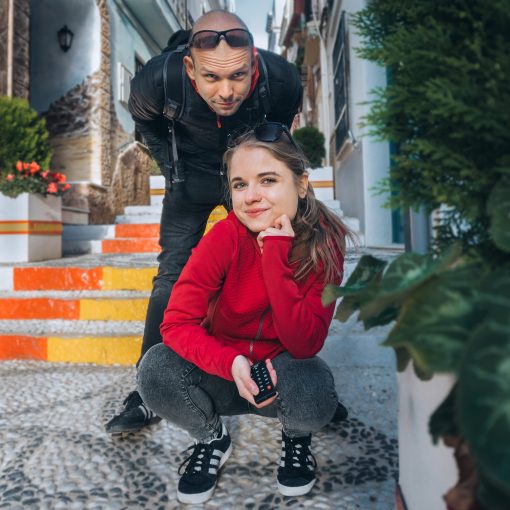
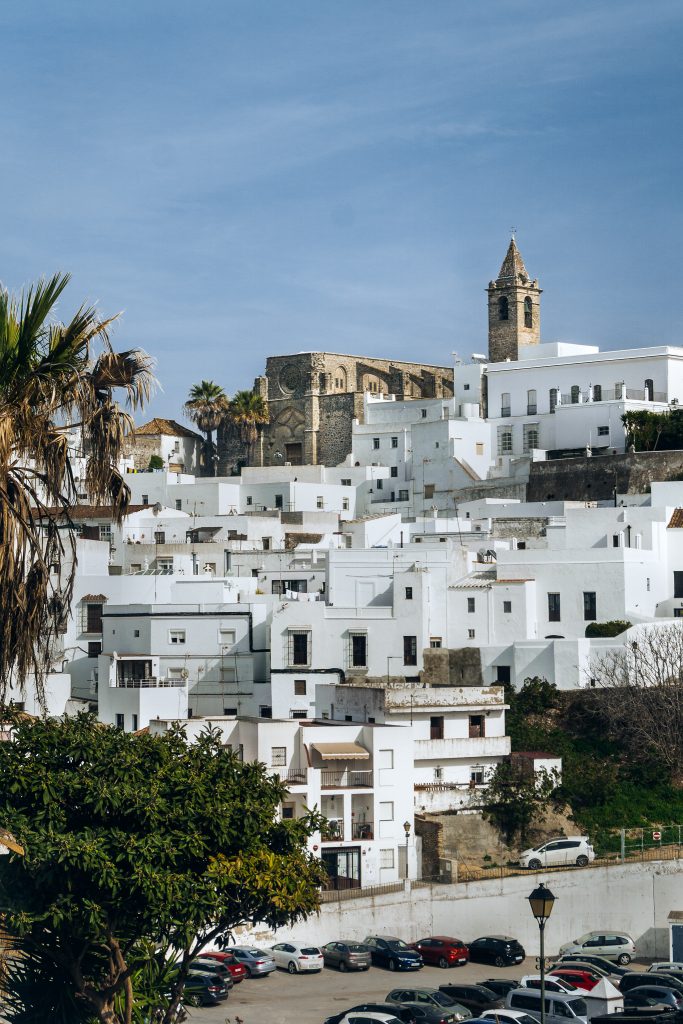
Hola! Welcome to Vejer de la Frontera, one of the most charming and best-preserved white villages in Andalusia. According to the association of Los Pueblos Más Bonitos de España, it’s even one of the most beautiful villages in the whole of Spain! We visited, we saw it with our own eyes, and we can confirm that it’s indeed true! So if you’re planning your next southern Spain trip somewhere near Cadiz, Tarifa, or Gibraltar, be sure to allocate some time for Vejer. An amazing day guaranteed! Keep reading and discover the best things to do in Vejer de la Frontera, Spain. Vamos!

This website uses affiliate links thanks to which we may earn a commission for purchases you made at no additional cost to you. If you like the content, consider using those links to support us. Thank you!
Vejer de la Frontera, Spain FAQ
Vejer de la Frontera is a Spanish village located in Andalusia in the Province of Cadiz. It’s just a few kilometers away from the beautiful beaches on the Costa de la Luz and popular towns like Cadiz or Tarifa.
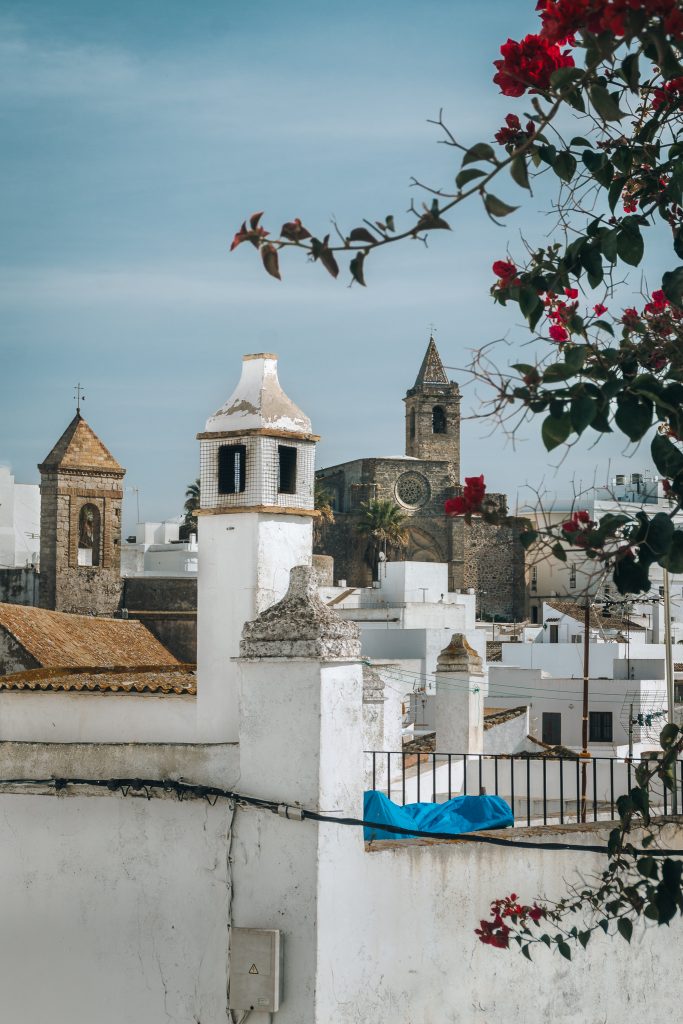
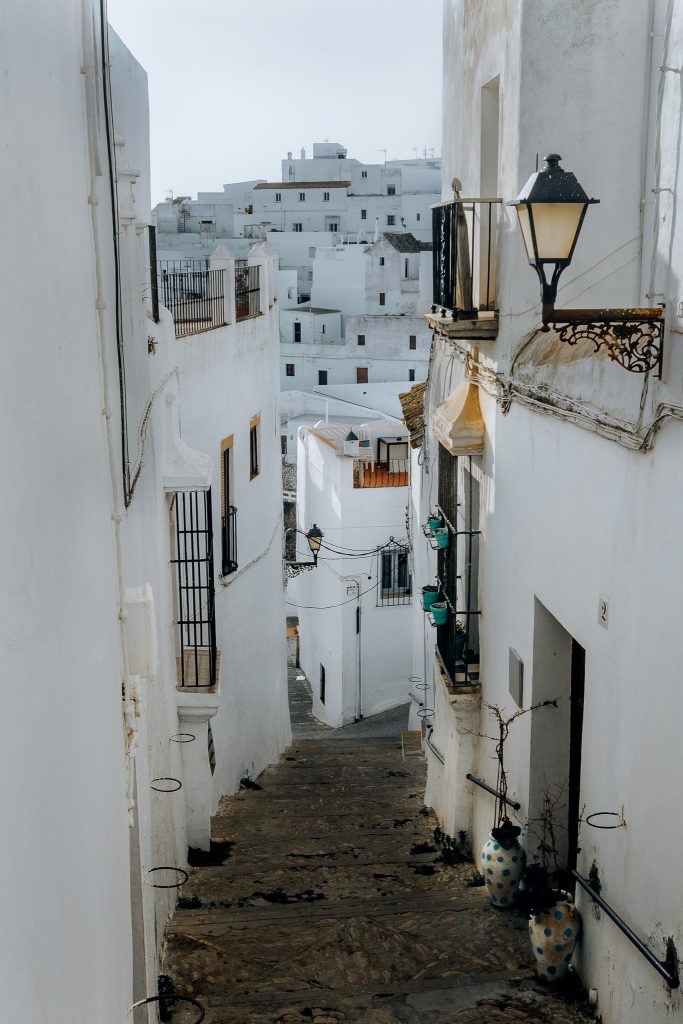
Vejer de la Frontera is one of the finest examples of white villages in Andalusia, definitely worth visiting. It’s full of charming streets, whitewashed houses decorated with colorful flowers, and spectacular views over the surrounding countryside. Vejer is a place easy to fall in love with from the first steps.
Vejer de la Frontera sits on a small hill, at an altitude of 200m, thanks to which it offers amazing views over the surroundings. What’s more, on a clear day you can even see the coast of Morocco!
Things to do in Vejer de la Frontera, Spain
Vejer de la Frontera Old Town streets
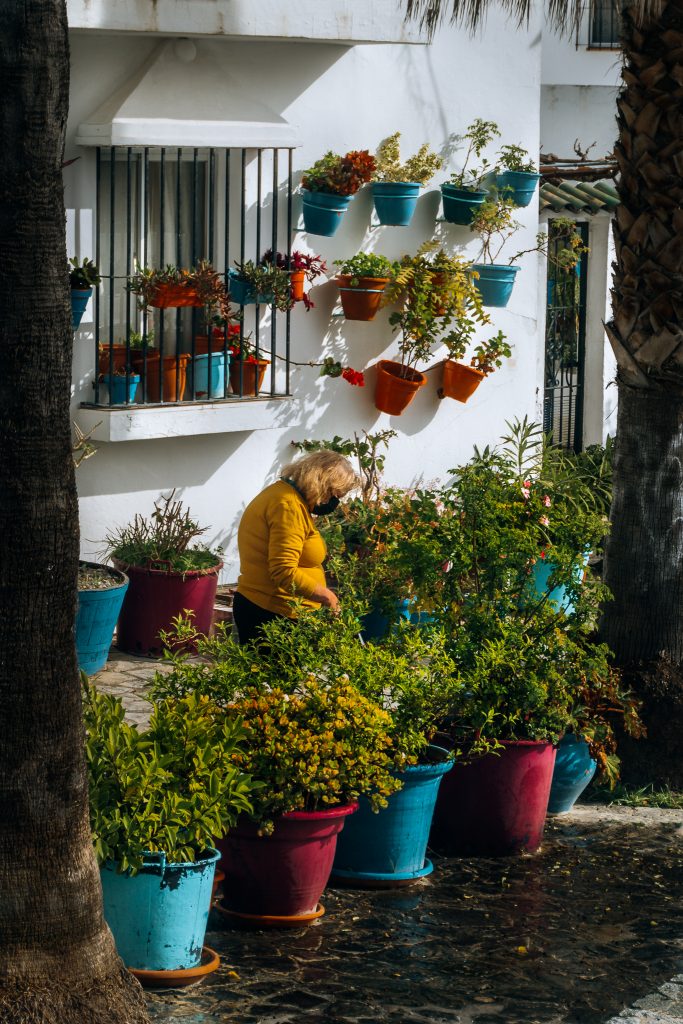
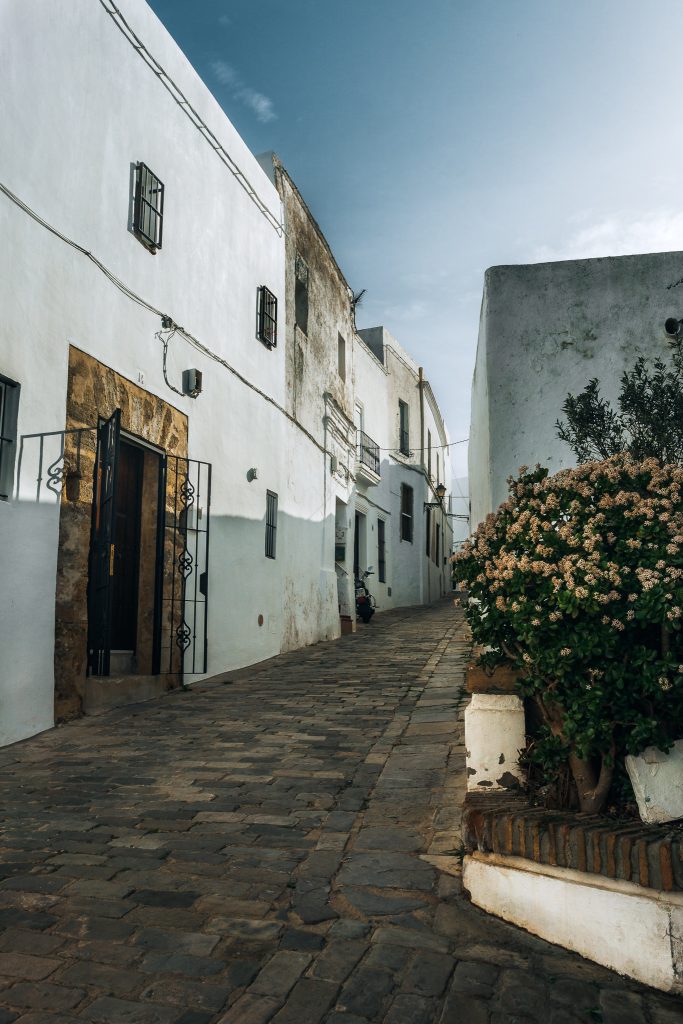
One of the best things to do in Vejer de la Frontera is to take some time to explore its charming old town streets. Stroll and simply enjoy the mesmerizing labyrinth of streets, old buildings, hidden patios full of flowers, passageways, and incredible views over the surroundings from many viewpoints.
In Vejer old town, you’ll find points of interest like the Castle, Plaza de España with a characteristic fountain, Puerta de la Segur, Arco de la Puerta Cerrada, Casa del Mayorazgo, and Antiguo Iglesia. Let’s explore them in detail.
Vejer Tourist Office is located right next to the Park of Los Remedios and a village’s free parking lot. It’s a great place to pick up maps and get helpful sightseeing tips.

Plaza de Espana
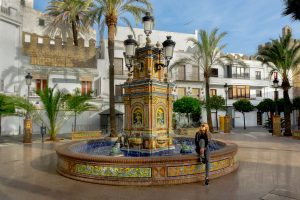
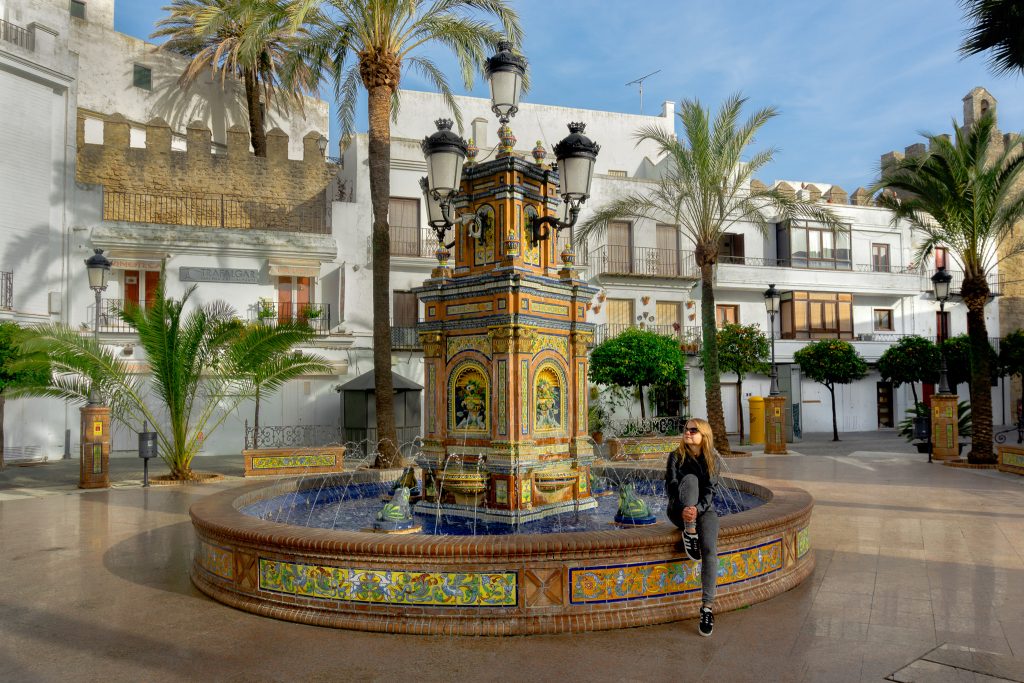
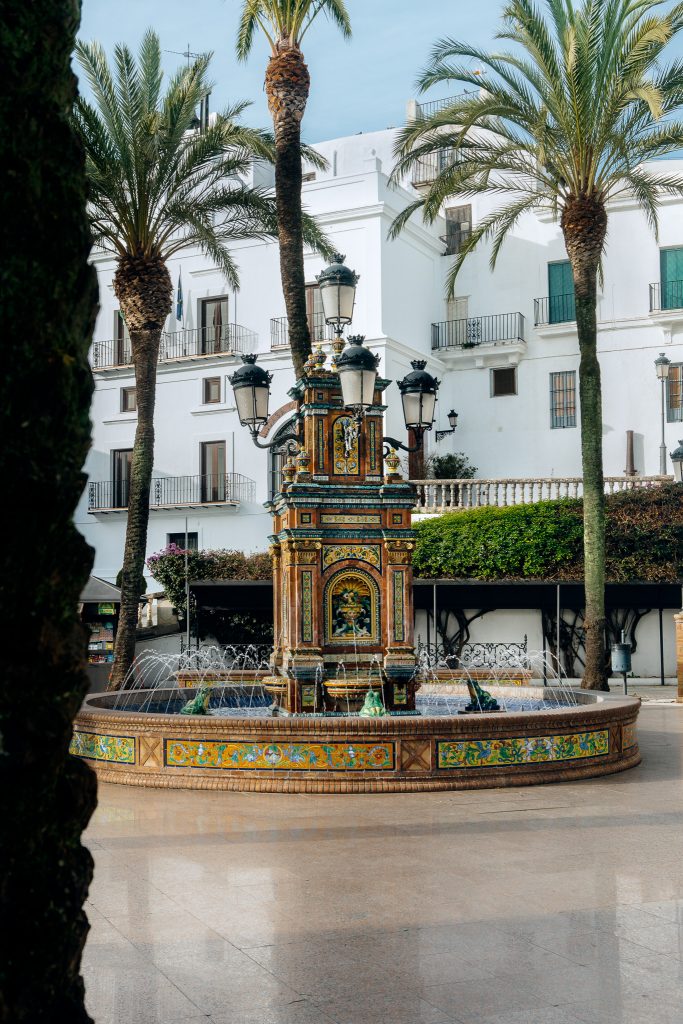
Exploring Plaza de Espana, also known as the Plaza de los Pescaitos (Square of the Little Fish), is one of the best things to do in Vejer de la Frontera. Interesting fact is that many consider it to be one of the most beautiful squares in all of Spain! Its most iconic part is a fountain, decorated with tiles from Seville and four water-spouting frogs.
Plaza de Espana is a bustling place full of small shops, cafes, and restaurants, perfect for a short break while simply watching the people go on with their daily lives.
Plaza de Espana is also home to noteworthy buildings like Town Hall, beautiful Hotel La Casa del Califa dating back to the 10th century, and the 16th century Puerta de la Villa – one of the entrances to the walled town.


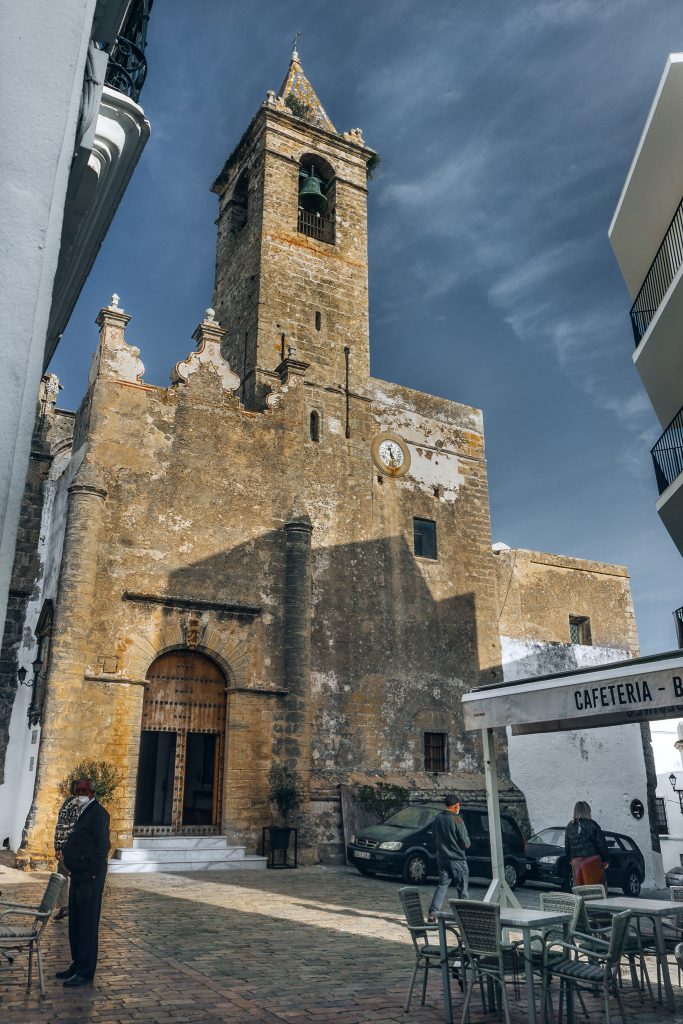
Iglesia del Divino Salvador
Iglesia del Divino Salvador is the main church in Vejer de la Frontera, built on the site of a former mosque. It’s located in the highest part of the town, within the town walls. One half of the church dates back to the middle of the 16th century (late-Gothic), while the other half dates to the earlier period, probably Gothic-Mudejar.
Inside, the most striking feature is the altarpiece, carved out by Francisco de Villegas in the 17th century. Entrance to Divino Salvador Church is free during opening hours.
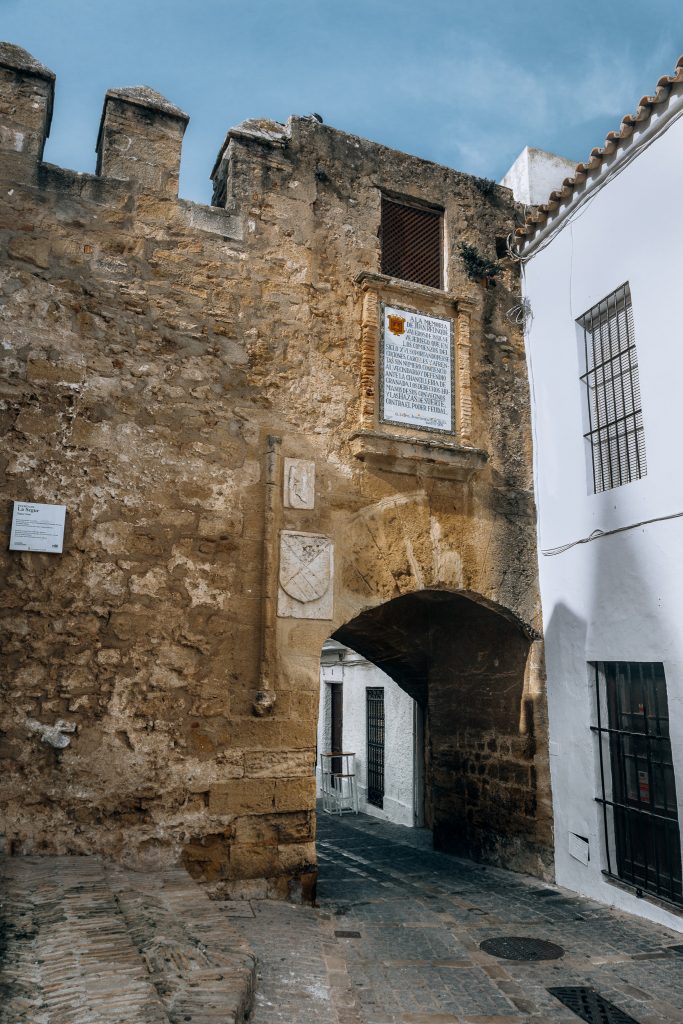
Puerta de la Segur
Puerta de la Segur is a historic gate located right next to the Divino Salvador Church, built in the 15th century. It was the most accessible entrance, so it was fortified the most and heavily defended.

Mirador de la Cobijada
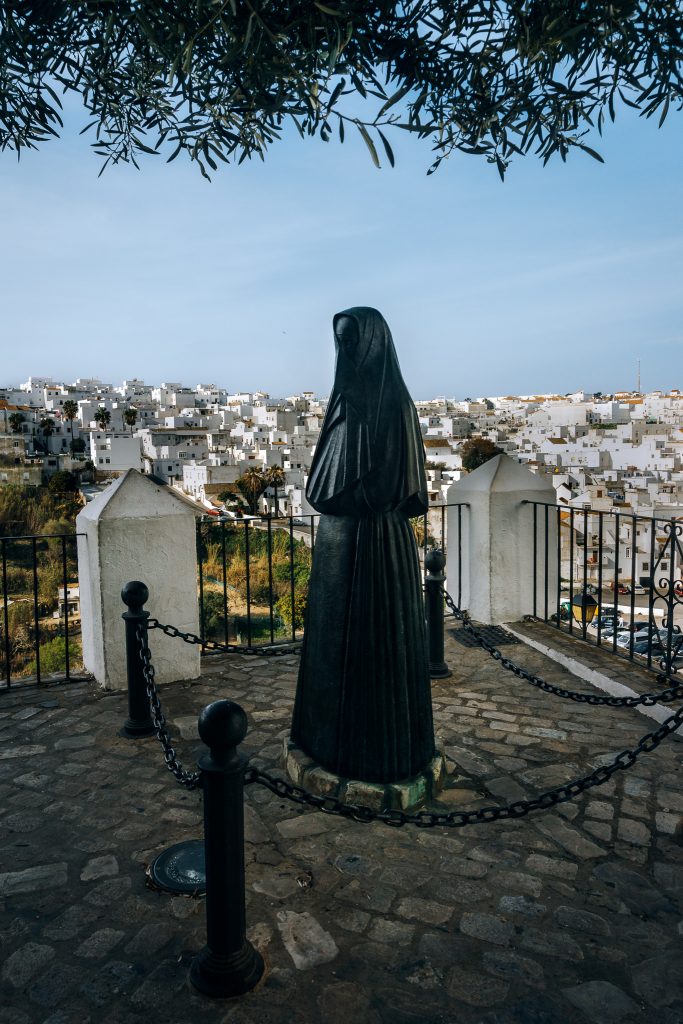
Mirador de la Cobijada is the most visited viewpoint in town. It’s a great spot from which you can enjoy amazing views over the newest part of the city, which was designed in the style of all Andalusian white villages.
But the real reason why Mirador de la Cobijada is so popular is because of the statue of La Cobijada. It presents a woman in a traditional all-black Castilian outfit worn by women in the 17th and 18th centuries, which is a symbol of Vejer de la Frontera. La Cobijada leaves only one eye uncovered, and thanks to that many confuse it with a burqa. La Cobijada was banned after the civil war in the 1930s and nowadays you can spot it only during festivals and ceremonies.

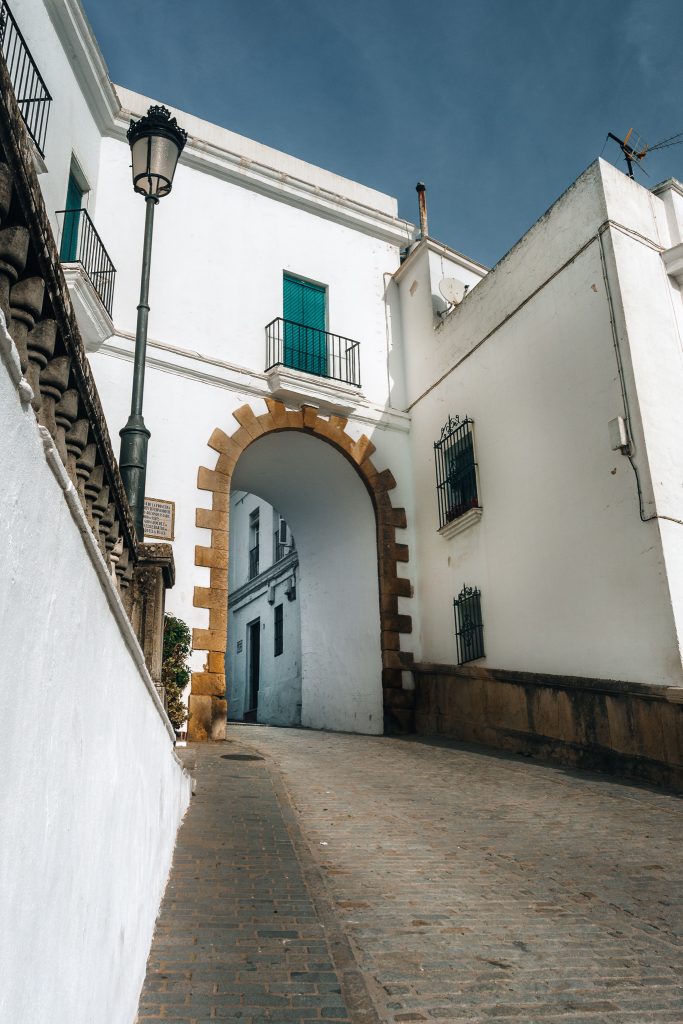
Arco de la Puerta Cerrada
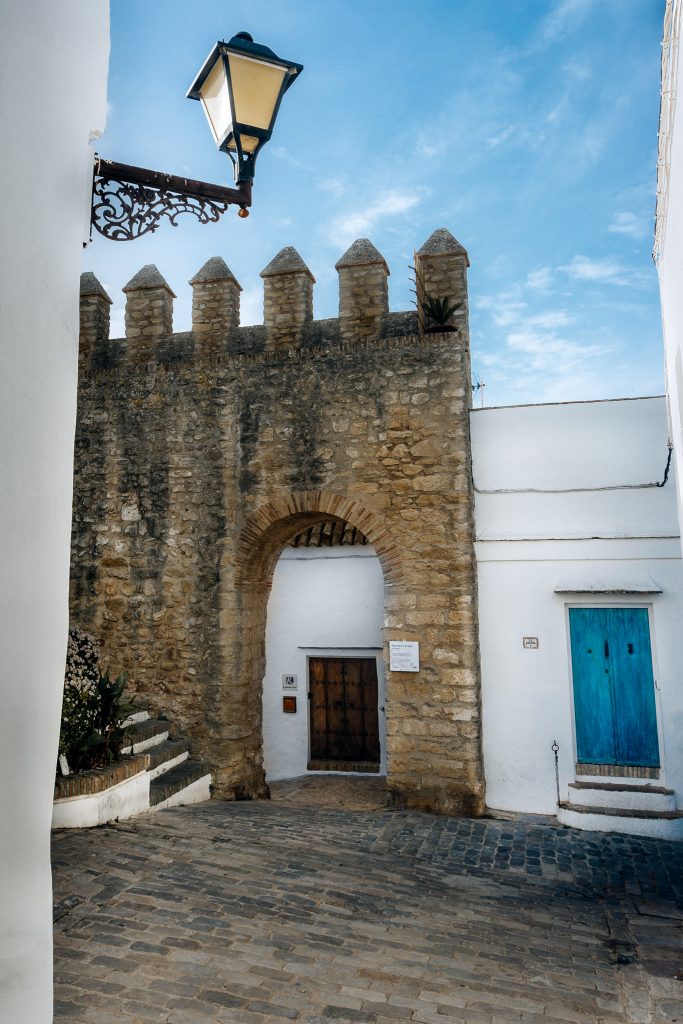
Arco de la Puerta Cerrada, or the Arch of the Closed Gate in English, is located close to Mirador de la Cobijada.
It dates back to the 11th century, and its name derives from a time when it was closed (from the Middle Ages until the 17th century) to push back the attacks.
Arco de las Monjas
Another unique place to see in Vejer de la Frontera is Arco de las Monjas (eng. Arch of the Nuns), also known as Arcos de la Juderia. It’s located in the old town and was built after the earthquake in 1773 to support the wall and the vault of the main chapel of Antiguo Iglesia, the Old Church. Currently, it’s one of the most photographed spots in Vejer.
Antiguo Iglesia
Antiguo Iglesia, also known as the Convento de Nuestra Señora de la Concepcion, connects directly to the Arco de las Monjas. The building dates back to the 16th century and is a great example of the Renaissance style from this period. The earthquake damaged the church in 1773, and the restoration took place in the 1990s.
Currently, the church houses the Municipal Museum of Customs and Traditions of Vejer de la Frontera.


Castillo de Vejer
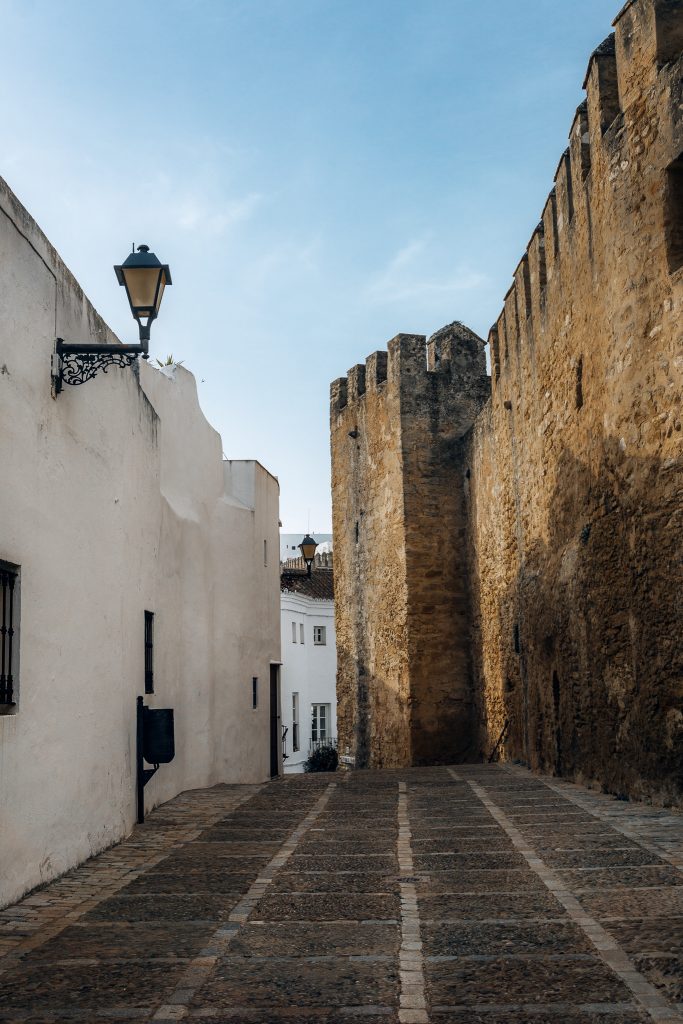
Vejer Castle occupies the highest point of the town. It was built in the 10th and 11th centuries, on the site of another Moorish construction and was declared a National Monument in 1931. You can visit the castle for free.
Casa del Mayorazgo
Casa del Mayorazgo is a Baroque-style house from the 18th century. Although it’s privately owned, it’s open to the public. Visitors can admire its two courtyards full of potted plants, part of the old town walls, and a tower overlooking Plaza de España. There’s no entry charge but it would be nice to leave a tip in the money box to help the owners maintain the hundreds of flowerpots they have.
Puerta de Sancho
Puerta de Sancho is the oldest and best-preserved gate to the old town dating back to the 13th century. It’s located right next to the Casa del Mayorazgo.

Ruta Molinos de Viento
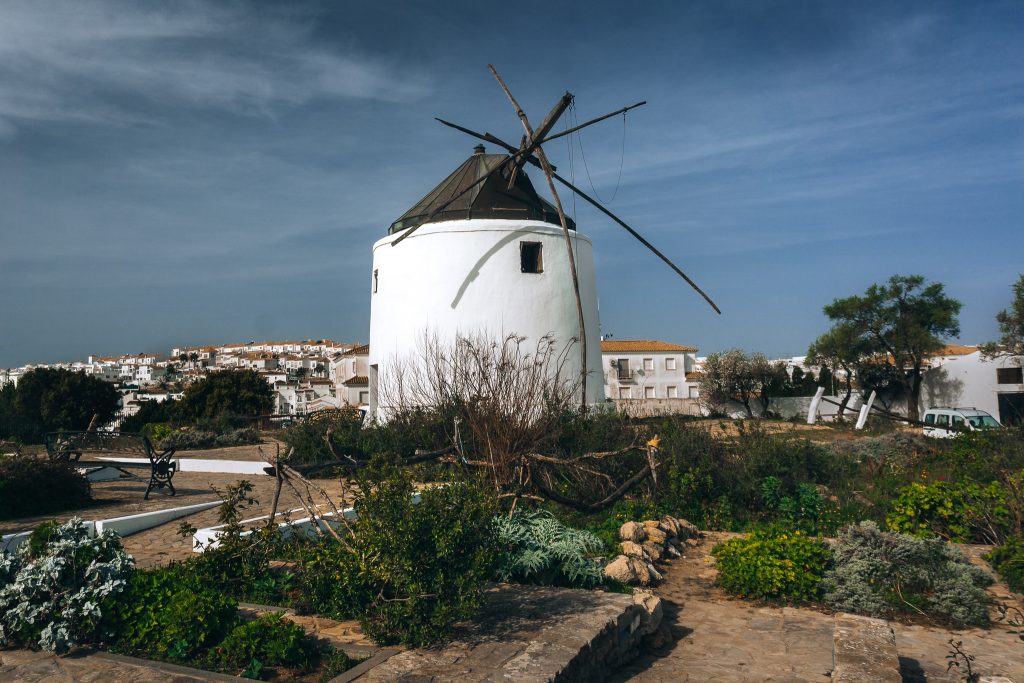
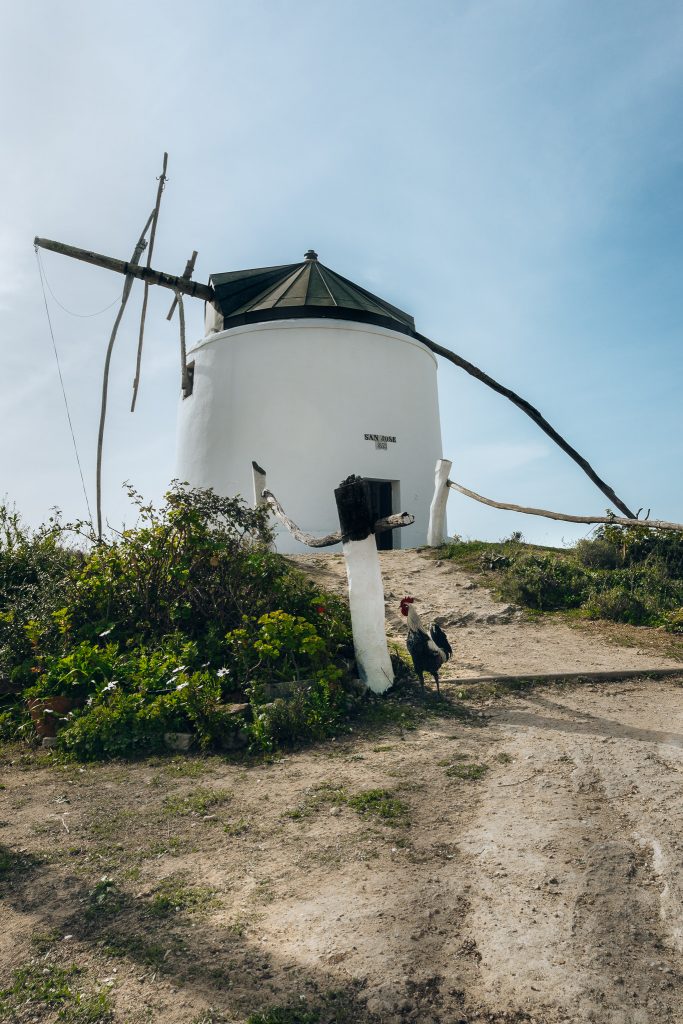
After ticking off all the things to do in Vejer de la Frontera old town, it’s time to see the famous Vejer windmills. In the past, they were grinding the wheat, but today they are part of the landscape and play an important role in preserving the town’s historical legacy. Windmills were built according to the Carthaginian design – lower towers and thicker walls made them better adjusted to the strong winds that are common in the area.
You can admire two of the windmills in Parque Los Molinos – both are in very good condition and sometimes one is even open for the visitors to see from the inside.
Your other option is to walk Ruta Molinos de Viento. The route is 9.65km long, and it takes about 2 hours to walk.
Beaches in Vejer de la Frontera
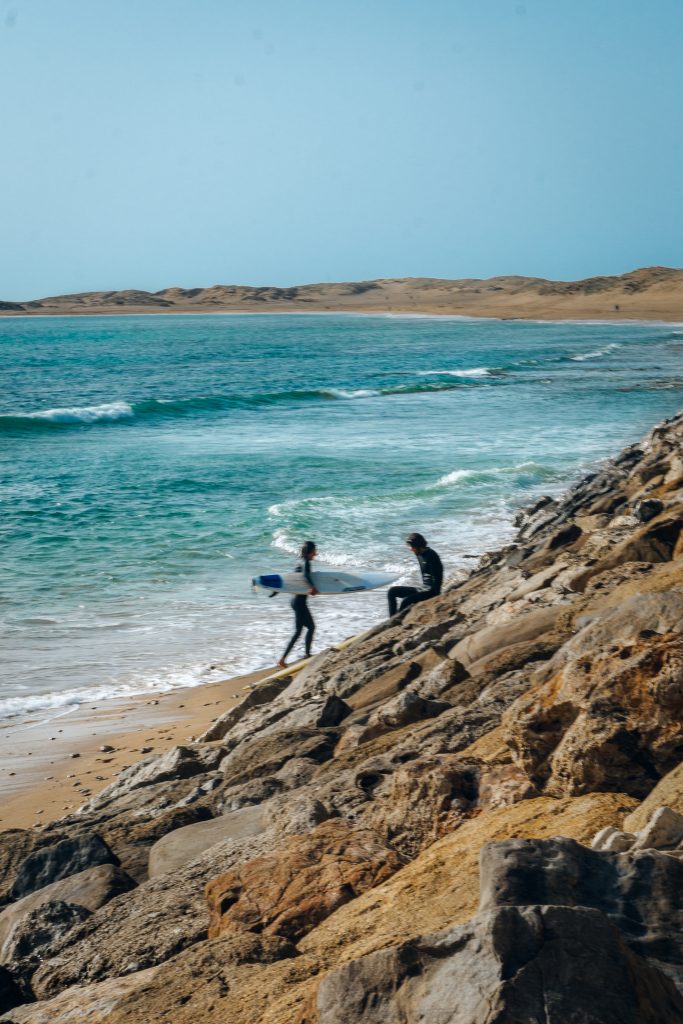
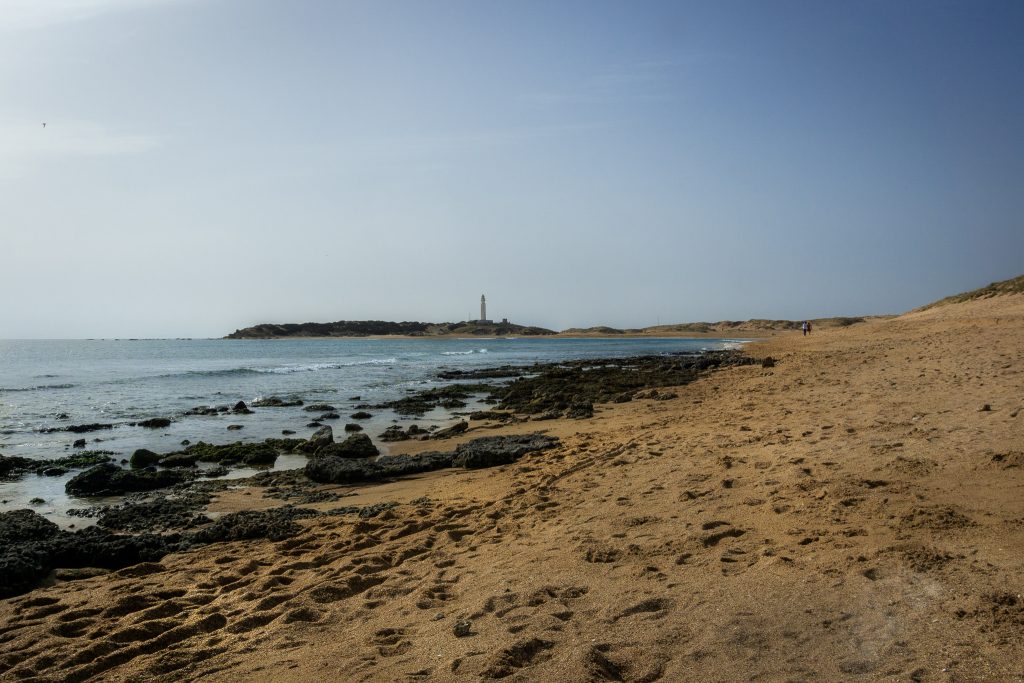
Only a few kilometers from the Vejer historic centre, some great beaches are located. Among them, you’ll find Playa del Palmar, Playa de los Caños de Meca, or Playa el Pirata.
Playa del Palmar, the main beach of Vejer with golden sand and crystal blue waters, is one of the most unspoiled areas in the Province of Cadiz and one of the best beaches in Southern Spain!
Hitting one of the beaches, even for a moment, is definitely one of the most relaxing things to do in Vejer de la Frontera.
How to get to Vejer de la Frontera, Spain?
Vejer de la Frontera is located 55km from Cadiz, 60km from Tarifa, 90km from Gibraltar and 160km from Sevilla. The most convenient way to get to the town is by car or by bus.
Where to park in Vejer de la Frontera?
There are a few parking lots to choose from in Vejer de la Frontera, both paid and free ones. We recommend leaving a car in this large and free parking right next to the Tourist Office. From it, you can walk right to the old town in less than 10 minutes.
To Vejer de la Frontera by bus
You can quite easily get to Vejer de la Frontera by bus. For example, a trip from Cadiz will take about 1 hour, 40 minutes from Tarifa, and 1.5 hours from Gibraltar. To learn more about bus connections that might interest you, visit rome2rio.com website.
To Vejer de la Frontera by train
Unfortunately, there is no train station in Vejer. The closest ones are located in Cadiz (60km away) and Algeciras (75km away). From them you can take a bus to Vejer. You can check out a map of available train connections on acprail.com.
Vejer de la Frontera Camping
If you’re traveling by camper, places like Camping Canos de Meca or Camping Bahía de la Plata might interest you. They are located near Vejer.

Explore local attractions
Things to do in Vejer de la Frontera, Spain – Summing up
Hopefully, we’ve inspired you to visit Vejer de la Frontera, a very charming white village in Andalusia. It’s a great destination for a day trip with many amazing things to do and places to discover. We’re sure that you’ll have a great day here! Just lose yourself in the maze of whitewashed streets, admire the views, go see windmills, and absorb the village’s amazing vibe. Enjoy!
Our opinion about Vejer de la Frontera
For us, a visit to Vejer was a day trip from Tarifa where we lived for a few weeks. We visited it in early March and back then village streets were very quiet and sightseeing was a pure pleasure.
Vejer enchanted us from the first steps and we spent a really lovely few hours there. Until today it’s one of our favorite places in the Province of Cadiz and one of the most beautiful white villages we’ve visited. We’ll remember it very fondly.

Restaurants, accommodations, and map
Check out various recommended places below.
Where to eat in Vejer de la Frontera?
Here are your best, high-rated options in Vejer de la Frontera: